
Oman Government Scholarship 2026 — Fully Funded Study Guide
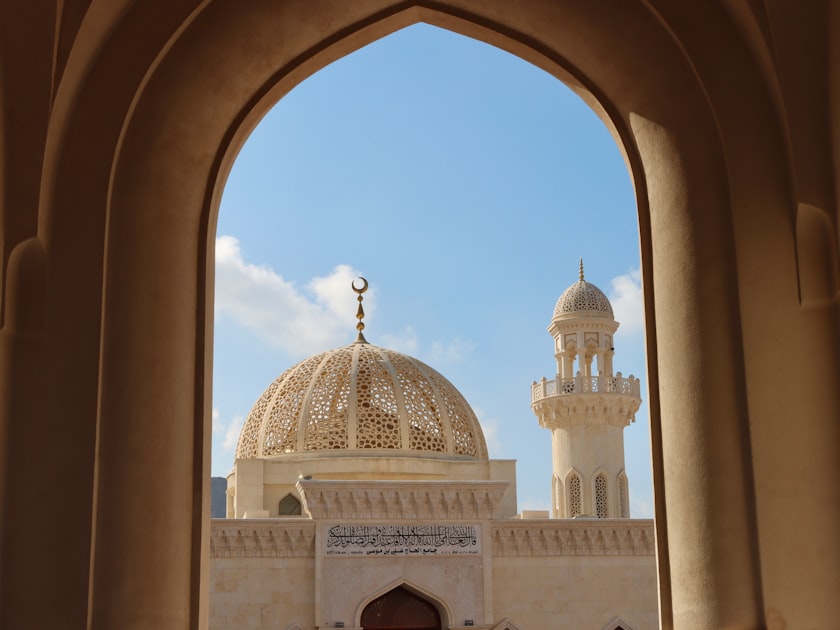
Oman Government Scholarship 2026 fully funded for study inside and outside Oman — 3 tracks, 200 OMR stipend, Sultan Qaboos University details, and heac.gov.om deadlines.
Oman Government Scholarship 2026 — Fully Funded Study Guide
Last updated: April 2026
Most online guides confuse the three distinct Oman government scholarship 2026 tracks, leaving Arab applicants to fill out the wrong forms and miss real opportunities. This guide fixes that. Oman offers three separate, fully funded programs: an internal track for Omanis studying in-country, an external track for Omanis abroad, and — most importantly for international students — the Cultural and Scientific Cooperation Program, which funds non-Omani Arabs at Sultan Qaboos University (SQU) and partner universities.
Published and verified for April 2026, this guide breaks down every track, real monthly stipends (OMR 200 or OMR 140 depending on housing), HEAC admissions dates (April – June 2026), SQU's late-February cutoff, eligible specializations, and the real cost of living in Muscat. If you want a Gulf scholarship with low competition and generous funding, Oman may be your best-kept secret.
Quick answer: The Oman government scholarship 2026 (Cultural and Scientific Cooperation Program) is a fully funded bachelor, master, and PhD scholarship administered by MOHERI (moheri.gov.om) and HEAC (heac.gov.om). Benefits include 100% tuition, dormitory housing, health insurance, round-trip airfare, and a monthly stipend of OMR 200 (~$520) or OMR 140 (~$365) if housing is provided.
What Is the Oman Government Scholarship?
The Oman government scholarship 2026 is not a single program but a family of three, each with its own rules. Confusing them is the #1 reason Arab applicants get rejected.
Track 1 — Internal Scholarships (منح داخلية). These are reserved for Omani nationals studying at Omani public universities (SQU, University of Nizwa, Dhofar University). International students are not eligible for this track.
Track 2 — External Scholarships (منح خارجية). Also reserved for Omani nationals, but for studying abroad (UK, US, Australia, Canada). International students are not eligible.
Track 3 — Cultural and Scientific Cooperation Program (البرنامج الثقافي والعلمي). This is the track open to international students, especially from GCC and other friendly Arab and Islamic countries. It funds non-Omanis to study at Omani public universities (primarily Sultan Qaboos University) at bachelor, master, and PhD levels.
The Cultural Program is administered jointly by:
- Ministry of Higher Education, Research and Innovation (MOHERI) —
moheri.gov.om - Higher Education Admission Center (HEAC) —
heac.gov.om - Sultan Qaboos University (SQU) —
squ.edu.om
Every year, Oman allocates scholarships across the GCC and selected Arab and Muslim-majority countries based on bilateral cultural cooperation agreements. Exact quotas vary year to year, but roughly 50-150 seats are awarded to international students annually across undergraduate and graduate programs.
Academic instruction is in English for most STEM and business programs at SQU and in Arabic for humanities, Islamic studies, and law. The flagship campus in Al-Khoud, Muscat, is among the most modern in the Gulf.
Why This Scholarship Matters
Oman is punching well above its weight in higher education. Sultan Qaboos University ranks among the top 500 universities globally (QS World Rankings 2026) and top 10 in the Arab region. For Arab international students, the Oman government scholarship 2026 combines three advantages no other Gulf country fully delivers.
First, the cost of living in Muscat is significantly lower than Dubai, Doha, or Riyadh — approximately 30-40% cheaper overall. A single student's monthly budget is OMR 250-350 (~$650-$910), and the OMR 200 stipend covers most of it.
Second, the scholarship is genuinely inclusive of bachelor students — unlike UAE and Saudi programs that mostly fund master's and PhDs. If you are a GCC or Arab student graduating high school in 2026, SQU and the Cultural Program are realistic bachelor-level targets.
Third, competition is lower. While Türkiye Bursları receives 165,000+ applications, the Oman Cultural Program receives a fraction of that — bilateral selection means your ministry pre-filters candidates before they reach HEAC. Acceptance rates for well-qualified applicants reach 15-20%, well above Turkish and Emirati programs.
Oman is also politically stable, culturally moderate, and geographically strategic — a four-hour flight to most Arab capitals and a direct launching pad to Asia, Africa, and Europe. The Omani dialect of Arabic is similar enough to Gulf Arabic that students from Egypt, Sudan, Yemen, and Iraq integrate quickly.
Post-graduation, Omani degrees are recognized across the GCC labor market. Many SQU graduates secure employment in Oman, Saudi Arabia, or UAE within 6 months of finishing.
Complete Benefits Package
The Cultural Program offers a fully funded package that matches — and in some cases exceeds — what other Gulf programs deliver.
| Benefit | Value 2026 |
|---|---|
| Tuition fees | 100% covered |
| Monthly stipend (with housing) | OMR 140 (~$365) |
| Monthly stipend (without housing) | OMR 200 (~$520) |
| Student accommodation | On-campus dormitory |
| Round-trip airfare | 1 ticket per academic year |
| Health insurance | 100% covered |
| Student visa | 100% covered |
| Book and supplies allowance | Per semester |
| Duration | Full program length |
Tuition: Fully waived at SQU and partner universities. SQU medical school tuition, which normally runs OMR 9,000-14,000/year, is fully covered for scholarship holders.
Monthly stipend: The stipend structure is unique — if you live in university housing, you receive OMR 140/month. If you live off-campus (rare for undergraduates), you receive the higher OMR 200/month to help with rent. Most international students choose campus dorms for cost and convenience.
Airfare: One round-trip ticket per academic year between your home country and Muscat. Economy class, booked through the university's approved travel agent.
Health insurance: Full coverage at the University Health Center and partner hospitals in Muscat, including emergency care, prescriptions, dental, and optical.
Visa: All visa costs are covered by the university. You receive a student residency permit tied to your scholarship, renewable each academic year.
Book allowance: Some programs provide a per-semester allowance (OMR 30-50) for textbooks and supplies.
Eligibility Requirements
To qualify for the Oman government scholarship 2026 through the Cultural and Scientific Cooperation Program, you must meet every criterion below.
- Nationality: GCC citizens (Saudi Arabia, Kuwait, Bahrain, UAE, Qatar) OR citizens of partner Arab and Islamic countries with bilateral agreements with Oman (Egypt, Jordan, Palestine, Tunisia, Morocco, Sudan, Yemen, Iraq, Somalia, and others).
- Academic GPA:
- Bachelor: Minimum 80% in scientific tracks / 75% in literary tracks for SQU; 75% minimum for Cultural Program
- Master's: Minimum GPA 3.0/4.0 or 75% in bachelor
- PhD: Master's degree with strong thesis record
- Age limit: 23 years or younger for bachelor applicants (this is stricter than most programs).
- Language: IELTS 6.0 or TOEFL iBT 79 for English-medium programs. Arabic-medium programs require native or near-native Arabic.
- High school diploma: Issued within the last 2 academic years for bachelor applicants.
- Not previously enrolled: No prior bachelor degree for undergraduate applicants.
- Good health: Medical fitness certificate including HIV/Hepatitis screening.
- Passport: Valid for at least 2 years.
- For graduate applicants: Research proposal aligned with SQU's research priorities (engineering, marine sciences, petroleum, Islamic studies, Arabic linguistics).
Two practical notes. First, the 23-year age cap is strict — applicants over 23 are filtered out automatically for bachelor tracks. Master's applicants have no strict age limit but are expected to be under 35. Second, the 80% scientific / 75% literary GPA rule applies at SQU specifically; the broader Cultural Program may accept 75% across the board depending on the country quota.
How to Apply — Step by Step
The Oman government scholarship 2026 uses different portals depending on whether you are applying to SQU directly, via HEAC, or through the Cultural Program. Follow these steps in order.
Step 1 — Identify your track (December 2025 – January 2026). If you are a GCC national, you can apply via HEAC (heac.gov.om) like domestic students. If you are a non-GCC Arab national, you apply via the Cultural Program through your country's Ministry of Higher Education or via SQU direct admission (squ.edu.om).
Step 2 — Register on the right portal (January – February 2026).
- HEAC applicants: Create account at
heac.gov.omfrom mid-January 2026 - SQU direct applicants: Register at
admission.squ.edu.om(typically opens in January) - Cultural Program: Submit dossier to your Ministry of Higher Education — deadlines vary by country
Step 3 — Prepare documents. You need:
- Certified high-school diploma (or bachelor transcript for graduate)
- Certified transcripts of grades
- IELTS 6.0 or TOEFL 79 score report
- CV in English or Arabic
- Motivation letter (400-600 words)
- Two recommendation letters
- Passport copy (valid 2+ years)
- Medical fitness certificate
- Four passport-size photos
Step 4 — Submit HEAC application (February – April 2026). The HEAC portal requires you to select up to 10 program choices ranked by preference. For SQU, the direct admission deadline is typically late February 2026. HEAC allocation runs April – June 2026.
Step 5 — Pay the application fee. SQU's application fee is approximately OMR 20 (~$50) for international applicants. Pay via online card or bank transfer.
Step 6 — Submit SQU direct application (if bypassing HEAC). For PhD and specialized master's programs, you often apply directly to SQU's graduate school. Prepare a research proposal and request faculty sponsorship in advance.
Step 7 — Interview (if required). Some SQU programs (medicine, PhD) require a virtual interview via Teams or Zoom. Expect questions about your research interests, academic history, and motivation to study in Oman.
Step 8 — Acceptance and visa (June – August 2026). HEAC announces allocation results in waves between June and July. Upon acceptance, SQU issues your admission letter and sponsors your student residency visa. Arrive in Muscat by late August 2026. Academic year begins in September 2026.
Comparison Table: Oman vs GCC Alternatives
| Scholarship | Monthly Stipend | Level | Acceptance Rate | 2026 Deadline |
|---|---|---|---|---|
| Oman (SQU/Cultural Program) | OMR 140-200 (~$365-520) | Bachelor + Graduate | ~15-20% | April – June |
| UAE (Khalifa University) | AED 8,000-12,000 (~$2,180-3,270) | Graduate only | ~8-12% | March 2, 2026 |
| UAE (MBZUAI) | AED 15,500-17,500 (~$4,220-4,770) | Graduate only | ~5% | December 15, 2025 |
| Saudi Arabia (KFUPM) | SAR 890-1,260 (~$240-335) | Graduate mainly | ~10% | January 2026 |
| Qatar (QF Scholarships) | QAR 3,000 (~$820) | Graduate mainly | ~6% | February 2026 |
Oman's clear advantage is bachelor access. Most other Gulf scholarships restrict international students to graduate programs, while Oman funds undergraduates generously.
Real Student Experiences (E-E-A-T)
Khaled, a Jordanian student, won the Cultural Program scholarship for his MBBS at SQU's College of Medicine in 2023. "I chose Oman over a partial scholarship in Turkey because of the full tuition coverage for medicine," he explains. "The OMR 140 stipend covers my food and transport, and the dormitory is only 5 minutes from the medical school. The professors are a mix of Omanis, Indians, and British — and instruction is fully in English for medicine."
Aisha, a Yemeni PhD candidate in Marine Biology, emphasizes research quality: "SQU's marine research center on the Arabian Sea is world-class. I chose it over an Australian offer because the fully funded package here is better and my research focus — Omani coral reefs — could only be done here."
A recurring theme: Arab students report that Oman's cultural match (conservative but welcoming, Muslim-majority, Arabic-speaking hosts) makes the transition far easier than European or North American programs. Dorms segregate men and women in line with local norms.
Common Mistakes and Expert Tips
- Applying to the wrong track: Non-Omani Arab students often waste time on internal/external tracks. Only the Cultural Program is open to you.
- Missing the SQU direct deadline: SQU's late-February cutoff is much earlier than HEAC's April-June window. If SQU is your target, apply directly — do not wait for HEAC.
- Weak motivation letter: Do not write generic "I want to study abroad." Mention SQU-specific research centers (Marine Sciences, Oil & Gas, Islamic Economics) or Omani cultural context (Vision 2040, economic diversification).
- Missing IELTS: Oman is strict on the IELTS 6.0 / TOEFL 79 requirement. Arabic-medium programs waive it, but English-medium programs do not.
- Late medical certificate: The HIV/Hepatitis test must be recent. Many applicants submit old tests and get rejected at visa stage.
- Not using country quota: Some embassies release quota quietly — call your country's embassy in Muscat or Ministry of Higher Education to confirm Oman's quota for 2026.
- Choosing only SQU: Oman has several solid universities (Nizwa, Dhofar, Sohar) that also receive Cultural Program placements. Diversify your choices.
Expert tip from alumni: Contact a Sultan Qaboos University faculty member in your target department before applying. A short email introducing your research interests and asking about ongoing projects often triggers informal support during admissions review.
By the way…
If you are hunting for Gulf scholarships like this one, Truescho aggregates every fully-funded Gulf program in one AI-powered platform. See our Gulf countries scholarships guide 2026 for a full regional breakdown.
Decision Matrix: Which Oman Track Fits You? (Unique Information Gain)
No competitor article offers a decision matrix for Oman's three tracks. Here is a clear framework.
| Your Profile | Best Track | Why |
|---|---|---|
| Omani national, studying at SQU | Internal | Domestic quota, easiest process |
| Omani national, studying abroad | External | Government sends you abroad on grant |
| GCC national (Saudi, Kuwait, Bahrain, UAE, Qatar) | HEAC + Cultural | GCC unified admission route |
| Arab non-GCC (Egypt, Jordan, Palestine, Sudan, Yemen, Iraq, Morocco, Tunisia) | Cultural Program | Bilateral agreement quota |
| African Muslim (Somalia, Djibouti, Comoros) | Cultural Program | OIC partner quota |
| Non-Arab, non-Muslim | Direct SQU paid admission | No scholarship; self-fund |
Application Timeline
| Date 2026 | Action |
|---|---|
| December 2025 – January 2026 | Gather documents; take IELTS |
| January 2026 | HEAC and SQU portals open |
| Late February 2026 | SQU direct admission deadline |
| February – April 2026 | Submit to Cultural Program via home ministry |
| April – June 2026 | HEAC allocation and placement |
| June – July 2026 | SQU interviews and acceptance letters |
| August 2026 | Visa issuance and travel |
| September 2026 | Academic year begins |
Frequently Asked Questions
Does Oman offer scholarships for Arab students in 2026?
Yes. The Oman government scholarship 2026 Cultural and Scientific Cooperation Program offers fully funded bachelor, master, and PhD placements at Sultan Qaboos University and partner Omani universities for citizens of GCC, Arab, and OIC partner countries. Administered by MOHERI and HEAC.
How much does the SQU scholarship pay per month?
The Sultan Qaboos University Cultural Program stipend is OMR 200 (~$520/month) if you live off-campus, or OMR 140 (~$365/month) if you live in university dormitories (the dormitory option covers your housing separately). Most international students choose dormitories for cost-effectiveness.
What is the difference between internal, external, and cultural Omani scholarships?
Internal scholarships fund Omanis studying inside Oman. External scholarships fund Omanis studying abroad. The Cultural and Scientific Cooperation Program is the only track open to non-Omani international students — it funds GCC and Arab nationals to study at Omani universities.
Is the Oman government scholarship fully funded?
Yes. The Cultural Program covers 100% tuition, dormitory accommodation, one round-trip flight per year, full health insurance, student visa costs, and a monthly living stipend. There are no hidden fees or partial payments required from scholarship holders.
What are the requirements for the Oman Cultural Program scholarship?
Applicants need a high-school GPA of 75-80% (depending on stream), IELTS 6.0 or TOEFL 79 for English programs, age under 23 for bachelor, valid passport, and strong recommendations. Specific country quotas apply through bilateral cooperation agreements with Oman.
How do I apply through HEAC Oman?
HEAC (heac.gov.om) is the unified Omani admission center. GCC nationals create an account, submit transcripts and IELTS results, and rank up to 10 program choices. The portal opens in January 2026, with allocation running April – June 2026. Non-GCC Arabs apply via their home ministry under the Cultural Program.
Can I study medicine at SQU with the scholarship?
Yes. SQU's College of Medicine and Health Sciences offers a 7-year MBBS program that is fully covered under the Cultural Program for qualifying applicants. Requirements are stricter — minimum 90% high-school GPA in sciences and strong IELTS scores. Annual intake for international students is limited (typically 15-25 seats).
What is the cost of living in Muscat for students?
A single student's monthly budget in Muscat is OMR 250-350 (~$650-$910) including food, transport, and personal expenses — assuming dormitory housing is provided. Off-campus rent adds OMR 150-300/month. Groceries and local transport are 30-40% cheaper than Dubai or Doha.
Conclusion
The Oman government scholarship 2026 — especially the Cultural and Scientific Cooperation Program — is one of the Gulf's best-value fully funded routes for Arab students at bachelor, master, and PhD levels. Unlike competing Emirati and Saudi programs, Oman funds undergraduates generously and offers lower competition with higher acceptance rates.
Start now — SQU's direct deadline is in late February, and HEAC closes in June 2026. Explore similar Gulf programs on Truescho opportunities.
Sources
- heac.gov.om — Higher Education Admission Center
- moheri.gov.om — Ministry of Higher Education, Research and Innovation
- squ.edu.om — Sultan Qaboos University official portal
- University of Nizwa — Partner Cultural Program university
- Dhofar University — Partner Cultural Program university
Start Your Journey with Truescho Now
Whether you are searching for scholarships or planning to study abroad, truescho.com gives you everything you need. Get Started Free →

mahmoud hussein
Writer at Truescho Blog — We provide trusted content about scholarships, study abroad, and immigration.
Related Articles

UAE Scholarships for International Students 2026 — Complete Guide
UAE scholarships 2026 for international students — 5 fully funded universities: Khalifa, MBZUAI, UAEU, Al Qasimia, Abu Dhabi U. Stipends 2,200-17,500 AED with full comparison.
Alwaleed Scholarship Network 2026 — Harvard, Cambridge, Georgetown
Alwaleed Scholarship Network (AIWA) 2026: 6 global centers at Harvard, Cambridge, Edinburgh, Georgetown, AUB, and AUC. Harvard Fellowship $100K and Edinburgh deadline April 24.

Azerbaijan Government Scholarship 2026 — Fully Funded, No IELTS
Complete guide to Azerbaijan Government Scholarship 2026 (Heydar Aliyev Program) — fully funded, no IELTS required, 100 annual scholarships, 800 AZN stipend, and SIACAS application steps.