
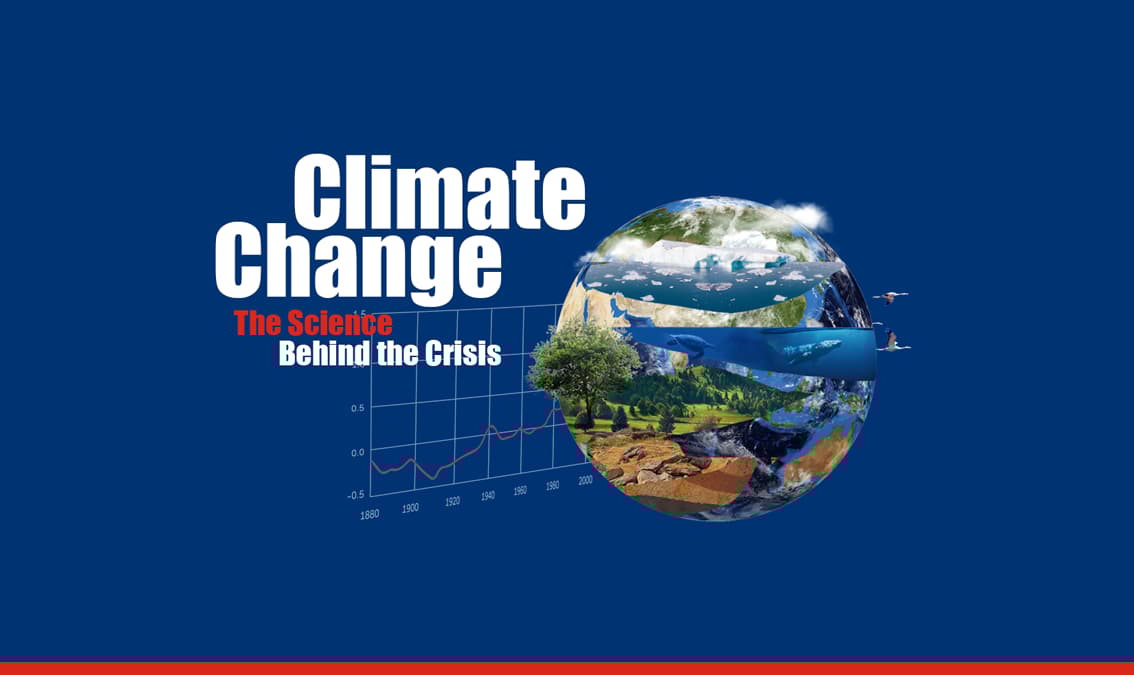
Climate Change: The Science Behind the Crisis - Part 2
Tel Aviv University
In this course we will take a journey from the Sun to the Sea to understand the science behind our changing climate. Are the present-day changes in our global climate really linked to our human activities here on Earth? And are there solutions available to solve the climate crisis?
About this Course
In part 2, we will dive down into the oceans that cover 70% of the planet to understand how the oceans impact our climate. We will visit the frozen parts of the Earth (the cryosphere), and the vegetated parts of our planet (the biosphere). How does the cryosphere impact sea level rise in the future? How does the biosphere impact carbon dioxide in the atmosphere? We will take a trip to a volcano to understand how large volcanic eruptions can also impact the Earth’s temperature. Could we produce an artificial volcano to offset global warming? After studying all the different important components of the climate system, we will learn how computer models put all this information together to estimate what may happen to our global and regional climates in 2050 or 2100. What are the various scenarios for the future? How accurate are these forecasts? And towards the end of the course, we will talk about what can be done to deal with the climate crisis. It is not all bad news. There are some very exciting solutions out there. 3b
What You'll Learn
- The Oceans : Oceans cover 70% of the area of the Earth, and hence have a huge impact on the climate of the Earth. The ocean currents, temperatures, and absorption of carbon dioxide are all key features that influence the global climate.
- The Cryosphere : Some parts of the planets are always frozen below 0C. These include glaciers, sea ice, land ice and permafrost regions (frozen ground). The cryosphere is responding dramatically to rising temperatures, with impacts on sea level rise, ocean currents and global temperatures.
- The Biosphere : Vegetation around the planet also has an important role in modulating the Earth’s climate. Both on land and in the oceans plants absorb CO2 via photosynthesis, while also impacting land temperatures, albedo and moisture balance.
- Volcanoes : While volcanoes may not seem relevant to the discussion about climate change, we know that large volcanic eruptions in the past have resulted in a significant cooling of global temperatures. Hence, we need to understand the science behind this global cooling.
- Climate Forecasts : After understanding the different key aspects of the climate system, we can now discuss global climate models and how they are used to simulate the climate system (past, present, and future). What are the scenarios for 2100?
- Solutions : Finally, after understanding the problem we face, we can also address the possible solutions. What is the road map to get to net-zero emissions by 2050? Can we do it? What are the alternatives?
Instructors
Colin Price
Professor