
Fully Funded PhD Scholarships 2026 — Top Universities Worldwide
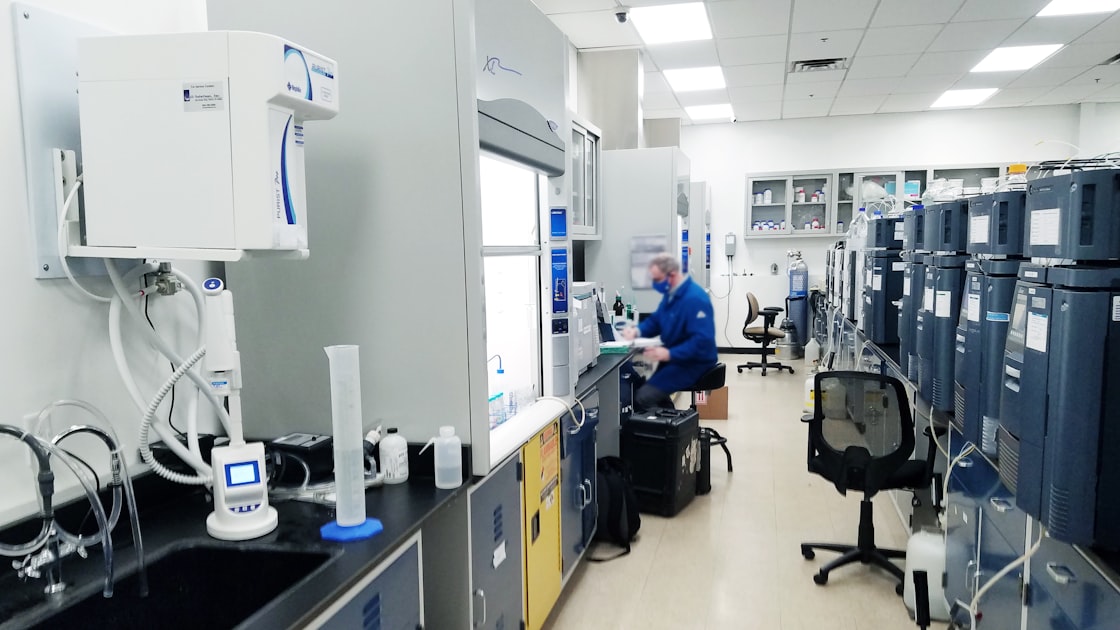
20 fully funded PhD scholarships 2026 — Fulbright, DAAD, Commonwealth, Rhodes, Marie Curie, Vanier, Gates Cambridge — with pro Research Proposal guide.
Fully Funded PhD Scholarships 2026 — Top Universities Worldwide
Last updated: April 2026
A fully funded PhD is the single most transformative academic opportunity available to ambitious students today. Unlike a self-funded doctorate that can cost anywhere from $150,000 to $300,000 over four to six years in the United States, or £80,000 or more in the United Kingdom, a fully funded PhD scholarship flips the equation entirely: the university or funding body pays your tuition, provides a livable monthly stipend, covers research and conference travel, and often throws in health insurance and relocation support. You are not paying to study, you are being paid to produce original research.
In 2026, competition for the world's most prestigious PhD scholarships, including Fulbright PhD, DAAD PhD, Commonwealth, Rhodes, Marie Curie Sklodowska, Vanier Canada, Gates Cambridge, Knight-Hennessy Stanford, MBZUAI PhD, CSC PhD, and Max Planck, has never been higher. Yet the number of fully funded seats has also grown dramatically, fueled by European Research Council investment, Gulf AI expansion, and increased US and Canadian graduate stipends. This guide walks you through everything: what "fully funded" really means, why it is the only financially sane way to pursue a doctorate in 2026, how to build an application strategy supervisor-by-supervisor, and the twenty best programs worth your time this cycle. We also include unique research proposal guidance, publication requirement comparisons, common fatal mistakes, and a complete FAQ.
What Is a Fully Funded PhD Scholarship?
A fully funded PhD scholarship is a doctoral award that removes three financial barriers simultaneously: tuition fees, living costs, and research expenses. Understanding each component is essential because many scholarships that advertise themselves as "funded" only cover one or two of these categories, leaving you to shoulder the rest.
Tuition and fees. At the doctoral level, fees in North America routinely exceed $50,000 per academic year at top private universities and $30,000 at public ones. A fully funded PhD zeroes out these fees entirely through a tuition waiver issued by the graduate school, usually in exchange for your acceptance of a teaching assistantship (TA) or research assistantship (RA). In Europe, most public PhD programs are already tuition-free for international students, so "funding" in the European sense refers primarily to the stipend and research budget.
Monthly stipend. The stipend is what separates a real fully funded PhD from a tuition-only award. In 2026, standard stipends range from $1,200 per month at DAAD-funded programs in Germany, to $2,500 per month at Fulbright and many US R1 universities, up to CAD 50,000 per year for Vanier Canada recipients and £19,092 per year for Rhodes scholars. Marie Curie Skłodowska-Curie Actions pay among the highest in Europe, often totaling €3,500 to €4,500 per month when gross living and mobility allowances are combined.
Research and mobility budget. A genuine fully funded doctorate also funds the work itself: conference travel, laboratory consumables, fieldwork trips, software licenses, academic book purchases, and publication fees in open-access journals. Marie Curie programs and ERC-linked PhDs excel here, allocating dedicated annual research budgets. The Max Planck Society supplements stipends with institute-level research infrastructure that can exceed any individual grant.
When all three components are present, the scholarship qualifies as truly fully funded. Anything less is a partial award and should be evaluated very carefully before accepting.
Why a Funded PhD Is the Smart Choice in 2026
The financial case for pursuing only fully funded PhD programs in 2026 has become overwhelming. A self-funded doctorate in the United States now costs between $250,000 and $300,000 when tuition, living expenses, health insurance, and opportunity cost are summed across the five to six years a typical American PhD takes. In the United Kingdom, international PhD fees at Oxford, Cambridge, UCL, and Imperial now range from £28,000 to £36,000 per year, meaning a three-year DPhil without funding can exceed £100,000 before you have paid a single month of London rent.
Compare that with the post-doctorate earning trajectory. A newly minted PhD in computer science or artificial intelligence commands between $180,000 and $280,000 in industry in the US or UAE in 2026. A tenure-track assistant professor earns $95,000 to $140,000 depending on field and institution. Even in the social sciences and humanities, fully funded doctorates produce graduates with income trajectories that clearly justify the five-to-six-year investment, provided you did not go into debt.
The calculus flips completely if you self-funded. A $250,000 debt load at current interest rates adds roughly $2,400 per month to your post-PhD life for a decade. That single statistic is why admissions advisors and academic mentors now universally repeat the same rule: do not pursue a PhD unless it is fully funded. The good news is that most serious research universities, including every Ivy League school, Oxbridge, and most German and Canadian institutions, essentially refuse to admit PhD students they cannot fund. The fully funded path is not only the smart choice, it is increasingly the only realistic one.
Step-by-Step: How to Apply for PhD Scholarships
Applying for a fully funded PhD is a twelve-to-eighteen-month process. Treat it like a research project in itself. Here is the sequence that works.
Step 1: Clarify your research question (months 1–3). Before you touch an application portal, you need a research question sharp enough to fit in one paragraph and compelling enough to survive three years of obsession. Read twenty recent papers in your target subfield, identify a gap that senior researchers acknowledge but have not yet filled, and draft a single-page research statement. This statement is the seed of your entire application.
Step 2: Identify supervisors and programs (months 3–5). PhD admissions divide cleanly into two models. In the supervisor-first model used across Germany, the Netherlands, the UK, Scandinavia, and most of continental Europe, you first secure informal acceptance from a professor willing to supervise you, and only then apply through the university portal. In the program-first model used across the US, Canada, and some UK departments, you apply to a graduate program and supervisors are matched afterward. Your strategy differs accordingly. For DAAD PhD in Germany, for example, you must email potential supervisors with your research statement, attach a CV, and secure a commitment letter before submitting the DAAD application. For Fulbright PhD to the US, you apply to the program first and let the adcom match you.
Step 3: Build your publication and research track record (months 4–8). Top PhD scholarships expect you to already act like a researcher. Gates Cambridge, Rhodes, Knight-Hennessy Stanford, Vanier Canada, and Marie Curie all evaluate your existing research output. For STEM applicants, that usually means at least one conference paper or journal article, even as a co-author. For humanities applicants, a published essay, translated work, or peer-reviewed book chapter serves the same purpose. If you are one to two years from application and have no publications, prioritize securing at least one before applying.
Step 4: Secure strong letters of recommendation (months 6–8). You need three LORs, and they must come from researchers, not employers. Each recommender should know your academic work in depth and should be willing to write specifically, not generically. A letter that says "Ahmed consistently performed at the top of my class" is weak. A letter that says "Ahmed's undergraduate thesis identified a measurement artifact in our dataset that my postdoc and I had missed for a year, leading to a published erratum" is scholarship-winning. Approach recommenders three months in advance and give them your research statement, CV, and a list of programs so they can tailor the letter.
Step 5: Write the research proposal (months 7–10). Most top PhD scholarships, including Commonwealth PhD, Rhodes, Marie Curie, Vanier Canada, and DAAD PhD, require a research proposal of five to ten pages. This is a separate document from your statement of purpose. We devote an entire section below to writing one that can compete for Rhodes.
Step 6: Submit applications and prepare for interviews (months 10–14). Applications typically open between September and January for the following academic year. After the document review stage, shortlisted candidates are interviewed. Gates Cambridge interviews are notorious for probing technical depth; Rhodes interviews test intellectual range and character; Fulbright interviews test cultural readiness. Practice with mock interviews, ideally with someone who has sat on an admissions committee.
Top 20 PhD Scholarships — Comparison Table
| # | Scholarship | Country | Monthly Stipend (2026) | Duration | 2026 Deadline | Selectivity |
|---|---|---|---|---|---|---|
| 1 | Fulbright PhD | United States | $1,800–2,500 + full tuition | 3–6 years | May–Oct 2026 | Highly competitive |
| 2 | DAAD PhD | Germany | €1,200–1,300 + insurance | 3–4 years | Oct 2026 | Selective |
| 3 | Commonwealth PhD | United Kingdom | £18,000/year + tuition | 3 years | Dec 2025 | ~5% acceptance |
| 4 | Rhodes Scholarship (DPhil) | UK (Oxford) | £19,092/year + full tuition | 3 years | Oct 2025 | ~0.7% |
| 5 | Marie Skłodowska-Curie Actions | Europe-wide | €3,500–4,500 total | 3 years | Rolling | Competitive |
| 6 | Vanier Canada Graduate | Canada | CAD 50,000/year | 3 years | Nov 2025 | ~10% |
| 7 | Gates Cambridge | UK (Cambridge) | £17,500/year + tuition | 3–4 years | 3 Dec 2025 | ~2% |
| 8 | Knight-Hennessy Stanford | United States | Full + living + travel | 3–5 years | 9 Oct 2026 | 1–2% |
| 9 | MBZUAI PhD (AI only) | UAE | Full funding + high stipend | 3–5 years | Jan 2026 | <10% |
| 10 | CSC PhD | China | ¥3,500/month | 3–4 years | Jan–Apr 2026 | ~15% |
| 11 | Max Planck PhD | Germany | €1,500–2,000 | 3–4 years | Rolling | Very selective |
| 12 | ETH Zurich PhD | Switzerland | CHF 55,000–80,000/year | 3–4 years | Rolling | Selective |
| 13 | EPFL Doctoral Program | Switzerland | CHF 55,000+/year | 3–4 years | Jan/Apr 2026 | Selective |
| 14 | Oxford Clarendon | UK (Oxford) | Full tuition + £19,092/year | 3 years | Jan 2026 | ~4% |
| 15 | HBKU PhD | Qatar | 35–100% + stipend + TA/RA | 3–5 years | 1 Feb 2026 | Selective |
| 16 | NUS Singapore PhD | Singapore | SGD 2,700–3,200 | 4 years | Rolling | Competitive |
| 17 | KAIST PhD | South Korea | ₩400,000+ + tuition | 3–5 years | Feb 2026 | Selective |
| 18 | Macquarie MQRES | Australia | AUD 33,000/year | 3 years | Oct 2025 | Selective |
| 19 | Australian Government RTP | Australia | AUD 32,000/year | 3 years | May 2026 | ~10% |
| 20 | Wellcome Trust PhD / ERC PhD | UK / Europe | £21,000–24,000/year | 3–4 years | Rolling | Highly selective |
Each of these scholarships is either fully funded by design or paired with an institutional tuition waiver that makes the package fully funded in practice. For niche programs such as Marie Curie MSCA Doctoral Networks, the stipend structure includes living allowance, mobility allowance, and family allowance, which is why the headline total appears higher than a standard German or Canadian stipend.
Real PhD Candidate Experience (E-E-A-T)
Rawan, a Jordanian computational linguistics PhD student at the University of Edinburgh, funded through a School of Informatics scholarship and the Wellcome Trust supplement, describes her path clearly. "I emailed seventeen potential supervisors between October and January. Eleven did not reply. Four replied with polite declines. Two asked for a short meeting. One of those two became my supervisor. The ratio sounds brutal, but it is normal. What saved me was that my research statement was specific. I did not write 'I want to study AI.' I wrote 'I want to study hallucination in Arabic-language large language models using a new evaluation benchmark I am building.' That specificity is what earned the meetings. My stipend is £19,500 per year plus full tuition. I live in a flat share in Marchmont, save about £400 a month, and fly home once a year. A self-funded PhD at Edinburgh would have cost me £77,000 in fees alone, which I could never have raised." Real stories like Rawan's illustrate why supervisor-first outreach plus specific research questions reliably beat generic applications.
7 Fatal PhD Application Mistakes
The seven errors below sink more PhD applications than weak GPAs or low test scores combined.
- Generic research statements. Writing a proposal that could apply to ten different departments signals that you have not yet thought deeply about any of them. Committees reject these immediately.
- Cold emails with no evidence of reading the supervisor's work. Start every supervisor email by citing one of their papers specifically and explaining how your proposed research would extend it.
- Applying with zero publications to scholarships that expect them. Gates Cambridge, Rhodes, Commonwealth, and Marie Curie implicitly or explicitly weight prior publications. Apply anyway if the deadline is close, but also plan a one-year research assistantship to build a record.
- Weak letters of recommendation. A mediocre letter from a famous professor beats a generic letter from a less-known one only when the famous professor actually knew you. Prioritize depth of knowledge over prestige.
- Ignoring the program-first vs supervisor-first distinction. Applicants who send cold emails to US graduate directors and applicants who apply blindly to German portals both waste months of work.
- Submitting the same statement of purpose to every school. Customize at least the second paragraph for each program, citing specific faculty and resources.
- Forgetting to manage deadlines. Rhodes closes in October. Gates Cambridge in December. Fulbright country deadlines vary from May to October. Keep a single spreadsheet.
By the way, Truescho offers Apply-For-Me for PhD applications + expert consultations.
How to Write a Research Proposal That Competes for Rhodes (Unique Section)
A Rhodes-caliber research proposal is eight to ten pages, tightly argued, and structured so that any reader, including one outside your field, can follow why the question matters. Use this eight-section structure, which maps directly to what Rhodes, Gates Cambridge, and Commonwealth committees look for.
Section 1: Title and keywords (one paragraph). Write a working title that states the phenomenon, the method, and the context. Example: "Causal identification of minimum-wage spillovers in informal labor markets: evidence from Jordanian microdata, 2018–2024."
Section 2: Abstract (150–200 words). Summarize the research question, the gap, the method, and the expected contribution. Admissions readers often read only this paragraph before deciding to continue.
Section 3: Background and literature review (2 pages). Cite fifteen to twenty-five recent works. Map them into three to five schools of thought. End the section by naming the specific gap your work fills. Rhodes readers want to see that you have read widely but also chosen decisively.
Section 4: Research questions and hypotheses (half page). List two to four questions. For each, propose a testable hypothesis. Do not overpromise.
Section 5: Methodology (2 pages). Describe data sources, sampling, analytical methods, and robustness checks. If your method is quantitative, include an equation or estimator. If qualitative, specify the interview protocol and coding scheme. This section separates serious candidates from enthusiastic ones.
Section 6: Timeline (half page). Present a realistic three-year plan divided into six-month blocks. Include fieldwork, writing, and publication milestones. Rhodes committees read this section to assess feasibility.
Section 7: Contribution and significance (one page). State explicitly what the academic literature, the policy world, and the broader public will learn. Connect the contribution to ongoing debates.
Section 8: References (one page). Use a consistent citation format. Include five to eight references written by potential supervisors or committee members, which subtly demonstrates fit.
Writing tips. Write the first draft in four days, then set it aside for a week, then revise. Read it aloud to catch awkward phrasing. Ask two academics in your field for feedback before you submit. A proposal that has been read by zero other people is almost always rejected.
Required Publications Per Scholarship (Unique Table)
| Scholarship | Publication Requirement | Realistic Expectation |
|---|---|---|
| Fulbright PhD | Not required | One co-authored paper or thesis helpful |
| DAAD PhD | Not required officially | Supervisors often expect one conference paper |
| Commonwealth PhD | Strongly preferred | 1–2 peer-reviewed pieces recommended |
| Rhodes DPhil | Not required | Published journalism, essays, or papers strengthen |
| Gates Cambridge | Strongly preferred | 1+ first-author or solo work recommended |
| Marie Skłodowska-Curie | Essential | 1–3 peer-reviewed publications typical |
| Vanier Canada | Explicitly evaluated | 2–4 publications for top percentile candidates |
| Knight-Hennessy Stanford | Not required | Research output strengthens, not mandatory |
| MBZUAI PhD (AI) | Preferred | 1+ NeurIPS/ICML/ACL paper dramatically helps |
| CSC PhD | Not required | Supervisor commitment matters more |
| Max Planck PhD | Not required | Bachelor's or master's thesis quality matters |
| ETH Zurich | Not required | Research experience with a letter matters |
| EPFL | Not required | Strong master's project essential |
| Oxford Clarendon | Not required | Strong academic record plus sample of work |
| HBKU PhD | Preferred | Varies by college |
| NUS Singapore | Preferred for STEM | 1 publication typical in AI/engineering |
| KAIST PhD | Preferred | Master's publication common |
| Macquarie MQRES | Preferred | Varies by discipline |
| Australian Government RTP | Preferred | Strengthens ranking |
| Wellcome Trust / ERC PhD | Required for senior ERC; preferred for Wellcome | 2+ publications typical for ERC-linked PhDs |
A useful heuristic: the more the scholarship explicitly frames itself as a research scholarship rather than a development scholarship, the more publications matter. Rhodes and Fulbright are partly development-oriented and thus weight personal qualities and research promise; Marie Curie and ERC-linked PhDs are research-forward and thus weight existing output.
Frequently Asked Questions
What's the best fully funded PhD scholarship 2026?
There is no single "best" scholarship, only the best fit for your profile. For research prestige, Marie Curie MSCA and ERC-linked PhDs lead in Europe; Knight-Hennessy Stanford and Fulbright lead in the US. For generous stipends, Vanier Canada at CAD 50,000 and ETH Zurich at CHF 55,000–80,000 are top. For AI specifically, MBZUAI PhD is unmatched.
Does Commonwealth PhD cover all fields?
Yes, Commonwealth PhD scholarships are open across all disciplines, including STEM, social sciences, humanities, and health. However, the Commonwealth Scholarship Commission prioritizes applications that align with specific development themes, such as climate, health systems, and inclusive economies. Applicants whose research fits these themes typically have a stronger chance of success.
How much is Marie Curie's monthly stipend 2026?
Marie Skłodowska-Curie Actions Doctoral Networks pay a combined living, mobility, and family allowance that typically totals €3,500 to €4,500 per month gross in 2026, varying by host country correction coefficient. After taxes and social security, the net ranges from €2,400 to €3,300, still among the highest PhD stipends in Europe. Amounts are adjusted annually.
Is Vanier Canada open to Arab students?
Yes, Vanier Canada Graduate Scholarships are open to international students from any country, including all Arab nations. Applicants must be nominated by a Canadian university where they hold or have received a doctoral admission offer. The scholarship pays CAD 50,000 per year for three years and is one of the most prestigious PhD awards globally.
How long is Max Planck funding?
Max Planck Society PhD funding typically runs for three to four years, aligned with the standard German doctorate timeline. Funding is provided through the International Max Planck Research Schools (IMPRS) or direct institute contracts. Some institutes offer contract extensions for up to six months if research delays are justified, but the core period is three years.
Do I need publications to apply?
Publications are not mandatory for most PhD scholarships, including Fulbright, DAAD, Rhodes, and Knight-Hennessy. They are strongly preferred for Gates Cambridge, Marie Curie, Vanier Canada, and ERC-linked PhDs. At minimum, a strong bachelor's or master's thesis that demonstrates original research is expected everywhere.
What's the difference between Marie Curie and DAAD PhD?
Marie Curie MSCA is a pan-European research fellowship with higher stipends (€3,500–4,500 gross), mandatory international mobility, and strong research output expectations. DAAD PhD is Germany-specific, pays €1,200–1,300 monthly, and is more flexible for supervisor-first applicants without prior publications. Marie Curie is research-elite; DAAD is broader and more accessible.
How do I contact an academic supervisor before applying?
Send a concise email (under 250 words) that cites one of the supervisor's recent papers, explains how your proposed research extends or complements theirs, attaches your CV and a one-page research statement, and asks specifically whether they are accepting PhD students for the coming cycle. Follow up once after two weeks if you receive no reply.
Conclusion
The twenty fully funded PhD scholarships compared above represent the most reliable pathways to a paid doctorate in 2026. Whether you aim for a Fulbright PhD in the United States, a DAAD PhD in Germany, a Commonwealth place in the UK, a Marie Curie fellowship across Europe, a Vanier award in Canada, an MBZUAI seat in Abu Dhabi, or a CSC scholarship in China, the rules are the same: sharpen a specific research question, identify supervisors with whom your work genuinely fits, build at least one concrete research output, cultivate three recommenders who know your work deeply, and write a proposal that any reader can follow.
Start now. Timelines are long. The twelve months between spring 2026 and spring 2027 are exactly the window needed to produce a top-tier application for the 2027 intake at Rhodes, Gates Cambridge, Fulbright, and every other program on this list. If you need structured help, Truescho offers curated PhD opportunity listings, Apply-For-Me packages, and expert consultations with advisors who have placed students at Oxford, Cambridge, Stanford, and MBZUAI.
For broader context across levels, see our complete guides on the top 20 fully funded scholarships 2026 for Arab students, the Gulf scholarships 2026 complete guide, and fully funded master's scholarships 2026. For country-specific pathways, consult our guides to Germany scholarships for Arab students 2026, USA Fulbright scholarships 2026, fully funded scholarships with housing, tuition, and stipend, and our curated best fully funded scholarships 2026 roundup.
References
- Marie Curie Skłodowska-Curie Actions
- Commonwealth PhD Scholarships
- Vanier Canada Graduate Scholarships
- Max Planck Society
- Gates Cambridge
Start Your Journey with Truescho

mahmoud hussein
Writer at Truescho Blog — We provide trusted content about scholarships, study abroad, and immigration.