
Qatar Work Visa 2026 — Documents, Fees & Step-by-Step Application
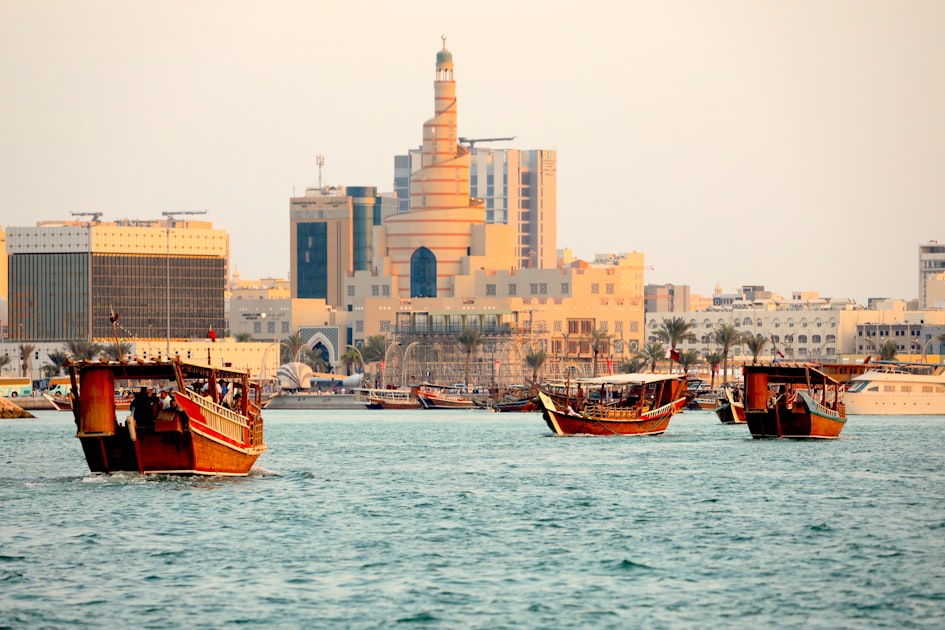
Complete Qatar work visa 2026 guide: required documents, new fees, Ministerial Decree 32/2025, NOC removal & step-by-step application process.
Qatar Work Visa 2026 — Documents, Fees & Step-by-Step Application
Last updated: April 2026
If you are preparing your qatar work visa 2026 application, you are arriving at the most reformed moment in Qatar's labour history. Since the Kafala overhaul of 2020 and the more recent Ministerial Decision No. 32 of 2025, workers can now switch employers without a No-Objection Certificate (NOC), the exit-permit requirement has been removed, the minimum wage is fixed at QAR 1,000 plus QAR 500 housing and QAR 300 food allowance, and annual work permit fees have been standardized at QAR 100. This guide breaks down every fee, document, deadline, and worker-rights protection you need before you fly to Doha.
Truescho's mobility team has cross-referenced the Ministry of Interior portal (MOI), the Ministry of Labour platform, and the latest 2025-2026 ministerial decisions with hundreds of real applications processed for Egyptian, Pakistani, Indian, Filipino, and Sudanese candidates. We will walk you through the timeline (commonly 4-8 weeks from offer signature to Qatari ID card), the 10 most common rejection reasons, and how the post-Kafala framework actually works in practice — not just in theory.
AI Overview Answer: A Qatar work visa in 2026 requires an entry visa (QAR 200), conversion to a Work Residence Permit (QAR 500), an annual work permit fee (QAR 100 under Ministerial Decision 32/2025), a medical fitness exam, biometrics, and an attested degree. Total typical cost is QAR 800-1,800 plus medical fees, and processing takes 4-8 weeks. The employer is legally required to cover all government fees.
What is the Qatar Work Visa in 2026?
The Qatar work visa in 2026 is a two-stage permission system. First, the employer secures an entry visa (also called a "work visa for employment" or Block Visa quota) from the Ministry of Interior. Once you arrive in Qatar, this entry visa is converted into a Residence Permit (RP) with a work endorsement — the plastic Qatari ID card you carry at all times — and an annual work permit registered with the Ministry of Labour.
After the 2020 reforms and Ministerial Decision 32/2025, three structural changes define the new system. First, the No-Objection Certificate (NOC) requirement has been abolished: a worker can change employers without the previous sponsor's permission, provided the legal notice period has been served. Second, the exit permit has been removed for the vast majority of private-sector employees, meaning you no longer need your employer's signature to leave Qatar. Third, the non-discriminatory minimum wage of QAR 1,000 (plus housing and food allowances or actual provision) applies to all nationalities and sectors.
The visa ties you to a single employer (the "sponsor"), but transfers between employers are now an administrative process via the Ministry of Labour electronic platform — typically completed within 5-15 working days. Family sponsorship is possible if you earn at least QAR 10,000 monthly (or QAR 6,000 plus employer-provided housing) and your job category is on the approved list.
There are several visa categories beyond the standard work visa: the Work Visa for GCC Residents (faster processing for residents of other Gulf countries), the Family Visit Visa with right-to-work conversion, the Business Visa (90-day, single or multiple entry), and the new Visa for Highly Skilled Talents introduced as part of Qatar's 2030 vision diversification. Most expats from Egypt, Pakistan, India, the Philippines, and Sudan use the standard Work Residence Permit pathway.
Why the 2026 Qatar Visa Reforms Matter
Qatar has spent the last six years rebuilding its labour-mobility framework, and 2025-2026 brings the most expat-friendly version yet. The motivations are partly post-World Cup economic diversification, partly compliance with the International Labour Organization (ILO) Cooperation Agreement signed in 2018, and partly pure competition: the UAE Golden Visa, Saudi Premium Residency, and Bahrain Golden Visa have raised the bar, forcing Qatar to make its market more attractive to skilled workers.
For expat workers, the practical consequences are significant. Wage protection is now enforced through the Wage Protection System (WPS) — every salary must be paid via licensed Qatari banks, traceable monthly. The Ministry of Labour processed over 110,000 employer-change requests in 2024 alone, demonstrating that the post-NOC system actually works. Heat-protection rules (the summer midday work ban) extend yearly, and the Workers' Support and Insurance Fund covers unpaid wages in the rare cases of employer insolvency.
According to the Qatar Planning and Statistics Authority, the country hosts more than 2.4 million non-Qatari workers as of January 2026, with Indian, Bangladeshi, Nepali, Egyptian, and Filipino communities forming the largest groups. Net migration grew 4.1% in 2025, primarily driven by professional and managerial categories — exactly the segment this guide is written for.
Step-by-Step Guide: How to Apply for a Qatar Work Visa in 2026
Follow the sequence below. It mirrors the Ministry of Interior workflow and is the same one used by licensed Qatari recruitment agencies:
- Receive a signed offer letter from a Qatari employer that includes job title, salary breakdown (basic + housing + food + transport), contract duration, and notice period.
- Get your degree and professional certificates attested. Egyptians: MOFA + Qatar Embassy. Indians: MEA + Qatar Embassy. Pakistanis: HEC + MOFA + Qatar Embassy. Allow 3-6 weeks. Without attestation, the visa is not issued.
- Employer applies for the entry visa quota through the Ministry of Interior's Metrash2 platform or the MOL E-Government portal. Quota approval takes 5-15 working days for most categories.
- Embassy biometrics and medical pre-screening in your home country. The Qatar Visa Center (QVC), present in 11 countries including Egypt, India, Pakistan, Sri Lanka, Nepal, Bangladesh, and the Philippines, captures biometrics, conducts a basic medical, and verifies documents before the entry visa is issued.
- Receive entry visa (PDF) by email from your employer. Typical fee: QAR 200, paid by the employer. The visa is normally valid for 30 days from issuance for entry into Qatar.
- Travel to Qatar. Bring all original attested documents, the entry visa printout, your offer letter, and at least 6 months of passport validity.
- Within 7 days of arrival, complete the in-Qatar medical examination (chest X-ray + blood tests for HIV, hepatitis B/C, syphilis, and TB) at an accredited medical commission.
- Provide biometrics (fingerprints + photo) at the Ministry of Interior service center.
- Sign the formal employment contract through the Ministry of Labour's e-platform — this is the legally binding document, not the offer letter.
- Receive your Qatari ID (Residence Permit) within 1-3 weeks of biometrics. The card is valid for 1-3 years depending on contract length.
Total realistic timeline: 4-8 weeks from offer signature to Qatari ID in hand.
Comprehensive Qatar Work Visa Fees Table 2026
| Item | Fee (QAR) | Who Pays | Notes |
|---|---|---|---|
| Entry Visa (Work) | 200 | Employer | Single entry, 30-day validity |
| Conversion to Work Residence Permit | 500 | Employer | One-time, on arrival |
| Annual Work Permit Fee (MD 32/2025) | 100 | Employer | Standardized 2025 |
| 1-Year Renewal | 300-500 | Employer | Varies by sponsor type |
| 3-Year Renewal | 700-1,000 | Employer | Long-term contracts |
| Late Renewal Penalty | 10/day | Employer | Up to QAR 6,000 cap |
| Medical Exam (Qatar) | 100-150 | Employer | At authorized commission |
| Medical Exam (QVC home country) | USD 35-60 | Employer | Pre-arrival screening |
| Biometric & ID Card | 100 | Employer | One-time |
| Family Visa (per dependent) | 1,000-1,500 | Employee or Employer | Salary threshold QAR 10,000 |
| Health Insurance (mandatory 2026) | 1,000-3,000/year | Employer | Article 4 of Health Law |
The Qatar Labour Law (Law No. 14/2004 and amendments) explicitly states that the employer must bear all government fees for the work visa, residence permit, medical exam, and renewal. Any contract clause forcing the employee to pay these fees is null and void. For broader context on healthcare requirements, our Qatar expat health insurance guide covers the new mandatory coverage rules.
Real Expat Story: Ahmed's 5-Week Journey from Cairo to Doha
Ahmed Mostafa, 29, a senior software engineer from Cairo, signed his offer letter on January 8, 2026 with a QFC-licensed FinTech company in West Bay, Doha. The week-by-week reality looked like this: Week 1, MOFA + Qatar Embassy attestation of his BSc Computer Science degree (cost EGP 1,800, took 6 working days). Week 2, employer applied for entry visa quota — approved on day 9. Week 3, biometrics and pre-medical at the Qatar Visa Center in Cairo (Sheikh Zayed branch). Week 4, entry visa PDF received, flight booked. Week 5, landed in Doha, completed in-country medical (1 day), biometrics (2 days), and signed the employment contract on the MOL platform (same day).
His Qatari ID card arrived 11 days after arrival, putting the total timeline at 38 days from offer signature. Total cost incurred personally (the employer covered government fees): EGP 1,800 attestation + EGP 850 QVC biometrics + flight ticket. His advice: "Start attestation the day you receive a verbal offer — do not wait for paperwork. And read your contract on the Ministry of Labour platform carefully before signing — it overrides the offer letter."
Common Mistakes That Lead to Qatar Work Visa Rejection (and How to Avoid Them)
The Ministry of Interior rejects roughly 6-8% of work visa applications according to ILO data. The most common reasons are entirely preventable:
- Unattested degree — the single biggest cause. Always attest before applying.
- Passport validity below 6 months at the time of entry visa issuance.
- Mismatch between offer letter and quota application (different job title, salary, or category).
- Failed medical screening — pre-existing TB, hepatitis B/C, HIV, or syphilis are disqualifying.
- Criminal record — police clearance certificate (PCC) issues, especially for previous Gulf bans.
- Employer quota exhausted — the company has not refreshed its visa allocation with the Ministry of Labour.
- Wrong job category — applying for a profession outside the company's licensed activity.
Three additional expert tips Truescho's mobility team gives every candidate: never pay an "agent fee" beyond the official documented fees (this is illegal under Qatari law); always insist on receiving the contract via the Ministry of Labour e-portal before resigning your current job; and back up all documents in cloud storage before flying — losing originals at Hamad International Airport is a real risk.
By the way, if you are searching for current Gulf jobs across Qatar, the UAE, Saudi Arabia, and beyond, Truescho Jobs lists hundreds of openings updated daily — and includes verified employer information so you can avoid quota issues.
How the Post-Kafala System Actually Works in Practice
The most misunderstood reform is the abolition of NOC. In practice, here is how a job change works in Qatar in 2026: you give your current employer the contractually required notice (typically 30-60 days for unlimited contracts), the new employer initiates a transfer request on the MOL platform, and the Ministry of Labour processes the change administratively — typically within 5-15 working days. The original employer cannot block the move; they can only file a complaint if you breached your notice period.
The abolition of the exit permit means you can leave Qatar at any time using your passport and Qatari ID. The only remaining exception is for senior managerial roles (CEO, CFO, etc.) where a small percentage (under 5% of all workers) still require employer approval to exit, per labour law amendments.
The minimum wage is QAR 1,000 in cash, plus QAR 500 housing allowance (or employer-provided accommodation meeting Ministry standards), plus QAR 300 food allowance (or meals provided). This is an absolute floor — no nationality, sector, or contract type can pay below this.
Linking Your Qatar Visa to Career Growth
Once your Qatar work visa is in hand, the next questions are: how do you grow your career, switch employers strategically, and eventually qualify for permanent residency? Qatar's permanent residency program, launched in 2018 and expanded in 2024, requires 20 years of legal residence (10 years for children of Qatari mothers), financial self-sufficiency, and good conduct. Each year, a few thousand permits are issued.
For comparison with the UAE pathway, our UAE work contract & Golden Visa guide maps out a faster track (Golden Visa available after 2-3 years on AED 30,000+ basic). If you are also considering education-sector roles, see our Oman & Qatar teaching jobs guide, and for finance-sector salaries, the accountant jobs Gulf 2026 guide.
Frequently Asked Questions (FAQ)
How much does a Qatar work visa cost in 2026?
Total government fees for a Qatar work visa in 2026 are approximately QAR 800-1,800: entry visa QAR 200, residence permit conversion QAR 500, annual work permit QAR 100, medical exam QAR 100-150, biometric and ID card QAR 100. By law, the employer pays all of these. Workers should never be asked to reimburse government fees.
What documents are required for a Qatar work visa application?
You need a valid passport (6+ months validity), an attested Bachelor's degree, an attested professional license if relevant, a police clearance certificate from your home country, a recent medical fitness certificate, six color photographs, the original signed offer letter, and the Ministry of Labour-stamped employment contract.
How long does Qatar work visa processing take in 2026?
The full process typically takes 4-8 weeks from offer signature to Qatari ID card in hand. The employer secures the entry visa quota in 1-3 weeks, biometrics and pre-medical at QVC in your home country take 1 week, post-arrival medical and biometrics take 1-2 weeks, and the residence permit card issuance takes another 1-3 weeks.
Is Kafala still in place in Qatar?
The traditional Kafala system has been substantially dismantled. As of 2020-2026, workers can change employers without a No-Objection Certificate (NOC), the exit permit has been removed for over 95% of workers, and the minimum wage applies to all nationalities. Employers still act as legal sponsors for residence purposes, but workers' freedom of movement is now legally protected.
Can I convert a Qatar visit visa to a work visa?
Yes. Qatar allows conversion of a tourist or family visit visa into a work residence permit if you receive a valid job offer during your stay. The employer initiates the conversion through the Ministry of Interior, and you must complete the standard medical exam and biometrics. Fees and processing times match the standard work visa pathway.
What is the minimum wage in Qatar in 2026?
The non-discriminatory minimum wage in Qatar in 2026 is QAR 1,000 per month in basic salary, plus QAR 500 housing allowance (or employer-provided accommodation), plus QAR 300 food allowance (or meals provided). Total minimum compensation is therefore QAR 1,800 monthly. The minimum applies to all nationalities and sectors, including domestic workers.
Does the Qatar work visa for Egyptians differ from other nationalities?
The legal framework is identical for all nationalities. The minor difference is in attestation procedure (which authorities you visit in your home country) and processing speed at the Qatar Visa Center. Egyptians, Indians, Pakistanis, Filipinos, and Bangladeshis are typically processed within the same 4-8 week window.
When must I apply for the residence permit after arriving in Qatar?
You must complete the residence permit process — including the in-country medical exam, biometrics, and contract signing on the MOL platform — within 30 days of arrival. The medical exam itself should be booked within 7 days for a smooth experience. Failure to complete the process within the deadline results in fines of QAR 10 per day.
Conclusion
Qatar's work visa framework in 2026 is among the most reformed in the GCC. The abolition of NOC, the removal of the exit permit, the QAR 1,800 minimum compensation floor, and the standardized QAR 100 annual work permit fee all favor expat workers. Combined with zero personal income tax and savings rates of 40-65% for mid-level professionals, Qatar offers a compelling package for accountants, engineers, teachers, IT professionals, and healthcare workers from Egypt, India, Pakistan, the Philippines, and beyond.
Your next step: line up the offer first. Browse Qatar jobs on Truescho and filter by Qatar to find current openings with verified employers.
Sources
- Qatar Ministry of Interior — Visa & Residence Services — official visa application portal
- Qatar Ministry of Labour — Workers' Rights Platform — contract registration and complaints
- International Labour Organization — Qatar Cooperation — Kafala reform documentation
- Ministerial Decision No. 32 of 2025 — work permit fee standardization
- Qatar Visa Center (QVC) Network — biometric and pre-medical service
Start Your Gulf Career Journey with Truescho
Whether you are searching for an accountant, IT engineer, teacher, or any other Gulf role, truescho.com/en/jobs gives you everything from verified listings to visa guides to salary benchmarks.

mahmoud hussein
Writer at Truescho Blog — We provide trusted content about scholarships, study abroad, and immigration.

Find the cheapest day to fly
A price calendar that shows you the cheapest dates across the year — compare and book directly via Aviasales.
Service provided by Aviasales, a third-party partner. We may earn a commission on completed bookings.
Traveling abroad? Get an instant eSIM
Internet in 200+ countries with no roaming fees — activate in minutes on arrival.
Service provided by Airalo, a third-party partner. We may earn a commission on completed purchases.
Visa-approved travel insurance
An international policy accepted by Schengen, UK, and other consulates — medical coverage up to €30,000, instant email delivery.
- Accepted for Schengen visa
- Medical cover up to €30,000
- Trip cancellation & delay cover
- Valid worldwide
Service provided by EKTA Traveling, a third-party partner. We may earn a commission on completed purchases.
Flight delayed or cancelled?
Claim up to €600 compensation under EU261 — no upfront fees.
Service provided by a third-party partner. We may earn a commission on successful claims.