
Study Abroad Consultation: How to Choose the Right Country and Major
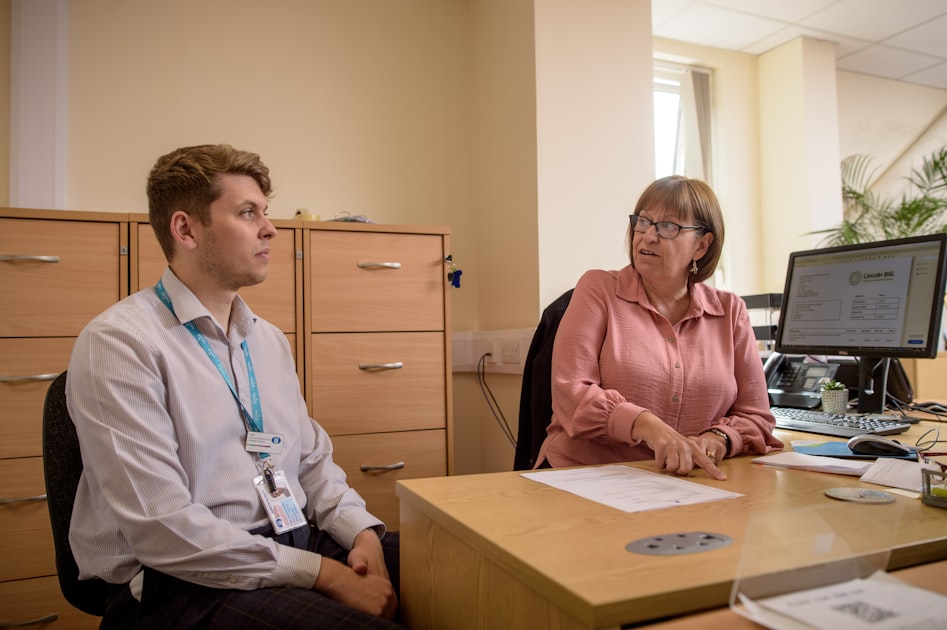
Complete study abroad consultation guide — how to choose the right country, major, and university? Decision matrix, 5 case studies, 18-month calendar, and 20 must-ask advisor questions.
Study Abroad Consultation: How to Choose the Right Country and Major
Last updated: April 2026
A good study abroad consultation is the single highest-leverage decision in your international education journey. Pick the wrong country and you waste three years on a degree that does not transfer. Pick the wrong major and you graduate into a saturated job market. This guide gives you the frameworks, decision matrices, and red flags real Truescho advisors use to guide students from first consultation to visa approval — so you can either self-navigate or know exactly what to demand from any consultant you hire.
Quick answer: A strong study abroad consultation uses a structured decision matrix covering budget, language, career prospects, visa feasibility, and cultural fit to recommend a country and major. Good consultants offer free first sessions, publish their success rate, and never pressure students into a specific university for commission reasons.
What Is a Study Abroad Consultation?
A study abroad consultation is a structured advisory process where an experienced counselor reviews your academic profile, financial situation, career goals, and personal circumstances, then maps them to specific countries, universities, majors, and funding paths. A high-quality consultation is diagnostic first — the consultant spends most of the time asking questions — and prescriptive second, only after your full profile is understood.
Consultations come in three forms. University-based consultations are free but biased toward that specific university. Commission-based consultations are free but biased toward universities that pay commission — often lower-tier institutions. Fee-based independent consultations charge $50-$300 for a session and have no incentive to steer you, which is why most professional advisors in the Gulf and North Africa follow this model.
A consultation does not replace your own research — it accelerates it. Think of the consultant as a senior editor who saves you from 40-60 hours of internet research, helps you avoid obvious mistakes, and flags opportunities you never heard of. The final decision is always yours.
Why This Matters for International Students in 2026
The global student mobility landscape in 2026 is fundamentally different from five years ago. More than 6.4 million students now study abroad (UNESCO 2024), up from 5.3 million in 2019. Emerging destinations like Malaysia (+26% applications in two years), Turkey (hosting 250,000+ international students), and Poland have joined the "big four" (US, UK, Canada, Australia) as mainstream choices. Meanwhile, traditional destinations are tightening immigration: Canada cut international student permits by 35% in 2024, the UK restricted dependent visas in 2024, and Australia increased its minimum savings requirement.
For Arab students specifically, the decision is more complex than ever. A Saudi student with a government scholarship has different optimal paths than an Egyptian self-funded student. An Iraqi applicant faces visa scrutiny that a Kuwaiti one does not. A Moroccan applicant with French as a second language has options that a Gulf applicant without French does not.
Industry data shows that students who work with a professional consultant are 40% more likely to receive their first-choice admission and 30% more likely to secure scholarship funding. The upfront consultation fee is typically recouped many times over in saved time, avoided mistakes, and better funding outcomes.
Step-by-Step Practical Guide: The 18-Month Consultation Roadmap
Month 18-15 before departure — Self-assessment phase. Begin with a structured self-inventory: your GPA, test scores (if any), languages, budget ceiling, family support, career interests, and preferred climate/culture. Write this down. A consultant's first question will be "tell me about yourself" — arrive with a two-page document.
Month 15-12 — Country shortlist. With the consultant, narrow 100+ countries to 3-5 realistic targets using a weighted decision matrix (see Information Gain section below). At this stage, cost, language, and career prospects should be primary filters.
Month 12-9 — University shortlist and application strategy. Pick 6-10 universities across safety (2-3 schools), match (3-5 schools), and reach (1-2 schools) categories. Confirm specific deadlines, which often differ by program even within one university.
Month 9-6 — Test preparation and document gathering. Register for international admission tests, request transcripts, gather references, draft your statement of purpose.
Month 6-3 — Application submissions. Most Fall intake deadlines fall between November-March. Submit applications in this window. A consultant's role here is quality control — they review every SOP, recommendation letter, and CV before submission.
Month 3-1 — Visa and scholarship applications. Once admission offers arrive, pick the best offer, apply for scholarships (if not already funded), then begin the visa process. This is where procedural errors (wrong form, missing document) derail otherwise strong applications.
Month 1-0 — Pre-departure. Book flights, secure accommodation, buy insurance, attend pre-departure orientation.
This timeline assumes a fall intake. For spring intake, compress by 6 months. For programs with rolling admissions (many European bachelor's), you can shorten further, but the sequence stays the same.
Detailed Comparison: How to Evaluate a Consultant
| Criterion | Red Flag | Good Sign | Excellent Sign |
|---|---|---|---|
| Fee structure | "Free but we get commission" (undisclosed) | Transparent fee + disclosed partnerships | Fee-based independent, zero commission |
| First session | Hard sell for specific university | Free diagnostic, no pressure | Free session + written recommendation |
| Success metrics | Refuses to share data | "We've helped 1,000+ students" | Published admission rate, named alumni |
| Countries covered | Pushes one country always | Covers 5-10 destinations | Covers 20+ destinations honestly |
| Response time | Days to reply, messages ignored | Same-day response | Dedicated account manager + written plan |
| Document review | Generic template SOPs | Personalized feedback | 2-3 rounds of iteration per document |
| Scholarship knowledge | "Scholarships are hard, don't bother" | Suggests 3-5 options | Active database of 50+ opportunities |
| Post-admission support | "You're on your own after offer" | Helps with visa | Guides visa + pre-departure + arrival |
| Certifications | None listed | University partnerships | ICEF, QISAN, or equivalent |
| Client contact | No references provided | 1-2 testimonials | 5+ verifiable alumni, LinkedIn profiles |
Real Experiences: Five Arab Student Case Studies
Case 1 — Omar from Cairo, 85% high school average, wants to study medicine. Omar's consultation identified that his average was below direct-admission thresholds for Egyptian medical schools and most European medical programs, but would qualify him for medicine in Turkey private universities ($15,000/year) or Romania ($6,000-$8,000/year). He chose Romania, received a conditional admission letter in February, completed IELTS 6.5 in April, and started in October. Total cost Year 1: $12,000.
Case 2 — Layla from Riyadh, 94% GPA, wants an MBA. Layla's consultation focused on return on investment: at $94,000/year for a US top-20 MBA versus $35,000/year for a top-50 European program, the advisor's decision matrix recommended IESE Barcelona or HEC Paris. Layla chose HEC, received a €10,000 excellence scholarship, and graduated into a consulting role in Dubai at $85,000 base — a 3-year payback.
Case 3 — Hassan from Baghdad, 78% average, limited budget. Hassan's consultation ruled out expensive destinations and focused on fully funded scholarships. He applied to Türkiye Bursları (accepted to Istanbul Technical University for electrical engineering, fully funded), MIS Malaysia (shortlisted), and Egypt for foreigners (accepted). He chose Türkiye Bursları. Total out-of-pocket: $1,200 for pre-departure documents and flights.
Case 4 — Nour from Casablanca, wants to study in France. Nour's consultation focused on Campus France procedures, which are different from standard applications. The advisor guided her through the Études en France portal, arranged a Paris interview, and helped her secure a private apartment via CROUS. Total Year 1 cost: €9,500 (nearly free tuition in public university + modest Paris living costs with CAF rent assistance).
Case 5 — Fatima from Kuwait, undecided between law and business. Fatima's consultation used a career-fit questionnaire that revealed her strong analytical tendencies plus interest in structured problem-solving. The advisor recommended business with a concentration in strategy rather than law. Fatima went to University of Warwick and received a job offer from Bain & Co six months before graduation.
Common Mistakes and Expert Tips
The most frequent mistake students make is anchoring on a single country from the start. A student who arrives already convinced of "I want to study in Canada" is harder to serve than one who arrives with "I want a strong engineering program in an English-speaking country under $25,000/year." The second framing lets the consultant do their job.
A related mistake is choosing the major based on parental pressure. Medicine and engineering are the default recommendations in many Arab households, but they are wildly over-subscribed, and students who do not love the field tend to drop out by Year 2. A good consultation surfaces this issue before it becomes a $50,000 mistake.
Seven expert tips that reliably improve outcomes:
- Come prepared. A 1-2 page personal profile document cuts the first session time in half and leaves more time for advice.
- Ask for data. "What percentage of your students get into their first choice?" Good consultants have the answer memorized.
- Negotiate deliverables. Demand written country + university recommendations after the first session, not just verbal advice.
- Do not pay upfront for the full package. Pay per stage (consultation → application → visa) so you can exit if service quality drops.
- Cross-check every recommendation. If the consultant says "University X has a 70% acceptance rate," verify on the university's own page before applying.
- Insist on written SOPs review. Get detailed comments on your statement of purpose, not just "looks good, submit it."
- Keep your options open until visa approval. Do not decline alternative offers until you have a visa stamp in your passport.
If you want to start with a structured self-assessment before committing to any consultant, Truescho's free consultation service matches you with certified advisors who specialize in your specific country and major combination.
Information Gain: The Decision Matrix Real Consultants Use
The 5-Factor Weighted Matrix
Below is the framework certified advisors use to recommend countries. Each factor is weighted based on the student's priorities. Scores range 1-5 per factor per country.
| Factor | Weight | What it measures |
|---|---|---|
| Budget fit | 25% | Annual cost vs. family capacity |
| Academic quality | 20% | QS ranking, program accreditation |
| Career prospects | 20% | Post-study work rights + local job market |
| Language barrier | 15% | English availability, local language need |
| Visa and immigration | 10% | Approval rate, documentation complexity |
| Cultural fit | 10% | Climate, food, Muslim community, Arab diaspora |
Multiply the country's score by the weight, sum across all five factors. The highest total wins. Do not use this blindly — it is a tool to force structured thinking, not a replacement for nuance.
10 Majors with Strong 2026 Career Outlook
- Artificial Intelligence / Machine Learning — avg. starting salary $100,000+, growth +25% to 2033
- Cybersecurity — growth +33% to 2033, salaries $90,000+
- Data Science — every industry hiring, $80,000-$120,000 entry
- Biomedical Engineering — aging populations in Europe/Japan drive demand
- Renewable Energy Engineering — EU green deal + Gulf energy transition
- Nursing — severe shortage in Canada, Germany, UK, Gulf
- Cloud Computing (AWS, Azure) — every enterprise migration
- Supply Chain and Logistics — post-pandemic reshoring wave
- Actuarial Science — insurance industry growth in Gulf
- Digital Marketing Analytics — combines tech + business, unique positioning
20 Questions to Ask Any Study Abroad Consultant
- What is your fee structure and are you paid commissions by universities?
- How many students have you placed in the past 12 months?
- What is your first-choice admission success rate?
- Which universities are you partnered with?
- Can I speak to 3 former clients who went to countries similar to mine?
- What is your specialty country or region?
- Will you review my statement of purpose in detail or just generic feedback?
- Do you have a written proposal with recommended countries and universities?
- Do you handle visa applications or only admissions?
- What happens if I don't get into any of my target universities?
- Do you offer refunds if the application fails?
- How many rounds of document revision are included?
- Will I have a dedicated advisor or a shared team?
- What is your response time for emails and messages?
- Do you help with scholarship applications?
- Can you help me with pre-departure orientation?
- What's your track record with students from my country?
- Do you have certifications (ICEF, AIRC, QISAN)?
- How do you keep your information updated on deadlines and requirements?
- What's your refund or satisfaction guarantee?
ROI Calculator for Study Abroad
A simple ROI estimate: divide total study cost by expected annual salary post-graduation, multiplied by relevant years.
Example 1: $80,000 total cost for a US CS master's, $110,000 starting salary in US tech → ROI = $80K/$110K × 12 months = ~9 months payback.
Example 2: $25,000 total cost for a Turkish engineering bachelor's (private), $25,000 starting salary in UAE → ROI = ~12 months payback.
Example 3: $12,000 total cost for a Romanian medical degree, $80,000 starting salary as a doctor in Gulf → ROI = ~2 months payback per year worked.
The highest-ROI paths are typically medicine in cheap countries → return to Gulf, or tech degrees from mid-tier countries → global remote work.
Red Flags: How to Spot a Fake or Low-Quality Consultant
The study abroad consulting industry is lightly regulated in most Arab countries. Fraud and low-quality advice are common. These are the warning signs to walk away from:
Guaranteed admission. Nobody can guarantee admission to a specific university. Advisors who promise "100% acceptance" are either lying or steering you to unaccredited institutions that take anyone who pays.
Pushing unknown "partner universities". If the consultant only promotes universities you have never heard of, check their accreditation. Some are legitimate mid-tier schools; many are degree mills that will hurt your career.
Demanding full payment upfront. Legitimate consultants charge in stages — consultation fee, application fee, visa fee. Upfront-only pricing is a red flag for fly-by-night operations.
Refusing to share success data. "We've helped many students" without specific numbers is meaningless. Ask for admission rates, named alumni (who will talk to you), and university acceptance letters as proof.
Pressure tactics and urgency. "This deadline is tomorrow, sign now." Legitimate deadlines are published by the universities themselves — look them up.
No physical office or verifiable business registration. Online-only operations can be legitimate, but they should still have a registered business, tax ID, and verifiable reviews.
Promising to "fake" documents. Walk away immediately. Any consultant who offers to inflate grades, forge certificates, or produce fake bank statements is criminal and will end your career before it starts.
The Pre-Departure Checklist (Final 4 Weeks)
A strong study abroad consultation includes a structured pre-departure checklist. Here is the 30-day countdown used by top advisors:
Weeks 4-3 before departure:
- Confirm flight booking (avoid red-eye if possible)
- Apply for residence permit appointment in destination city
- Order a local SIM card or eSIM for arrival
- Notify your bank of international travel
- Get all documents apostilled and translated (if not done)
- Buy international health insurance if university insurance starts after arrival
Weeks 2-1 before departure:
- Print 5-10 copies of every critical document (passport, acceptance letter, visa, financial proof)
- Join Arab student union WhatsApp groups for your city
- Research nearest mosque, halal grocery, and Arabic community centers
- Book short-term accommodation (hostel or Airbnb) for first 3-5 nights
- Confirm you can receive money transfers in destination country
- Pack essential medications with prescriptions translated
Final 3 days:
- Confirm flight, airport pickup
- Charge all electronics and bring adapters
- Carry cash in destination currency (~$300-$500) for first days
- Screenshot maps, university addresses, emergency contacts
- Family emergency plan: who to call if something goes wrong
Cultural Adaptation: What Arab Students Actually Struggle With
Study abroad consultations rarely cover cultural adaptation in depth, but it is the single biggest reason students drop out. Based on Truescho's five years of post-arrival surveys, these are the top five adaptation challenges for Arab students:
- Food and religious observance. Halal availability, prayer accommodation, Ramadan while studying, social drinking pressure at student events.
- Family communication. Time zone differences, homesickness, family WhatsApp calls disrupting study.
- Academic culture shock. Western universities expect debate, disagreement with professors, peer review. Many Arab students are trained in more deferential classroom styles.
- Financial management. First time managing rent, bills, groceries, and entertainment independently.
- Weather. Northern European winters (November-February) are significantly harder than most Gulf/Egyptian students anticipate.
Good advisors discuss all five before departure and suggest preparation strategies — joining Arab student unions, attending pre-departure orientations, setting up regular family calls, winter clothing budget. Skip this conversation at your peril.
Frequently Asked Questions
How do I choose the right country for study abroad?
Use a weighted decision matrix with five factors: budget fit (25%), academic quality (20%), career prospects (20%), language barrier (15%), and visa and cultural fit (15% combined). Score 3-5 candidate countries on each factor, multiply by weight, sum scores. A good study abroad consultation guides this exercise systematically.
Is paid consultation better than free consultation?
Paid, independent consultations are generally better because the advisor has no financial incentive to push you toward specific universities. Free consultations offered by universities themselves are biased. Free consultations from commission-based agencies often steer students to lower-tier institutions. Always ask: "Who pays you?"
What are the 7 criteria to choose the right university?
The key criteria are: academic ranking for your specific major, faculty quality and research output, tuition and living cost fit, language of instruction, post-study work rights, alumni network strength, and campus life / student support. Ranking alone is insufficient — a top-50 school with the wrong program for your goals is worse than a top-200 school with the right one.
How do I know if a major is right for me?
A strong fit shows up as: sustained interest when you read about the field for 30+ minutes, aligned aptitudes (math for engineering, empathy for medicine, analytics for business), realistic career outlook in your target country, and acceptable compensation in your home market. If three of four boxes check, the major is likely right.
When should I start planning for study abroad?
Start 18 months before your target departure date. This gives you time for test preparation (6 months), applications (3-4 months), visa processing (2-3 months), and pre-departure preparation (1 month). Starting less than 12 months before is possible but stressful.
Should I choose the country first or the major first?
Choose the major first, then the country. A strong major in a weaker country often beats a weak major in a top country, especially in fields where program accreditation matters (medicine, law, engineering). If your major is not strong in your preferred country, change the country.
What's the difference between a university consultant and a private consultant?
University consultants work for specific universities and are free but biased. Private consultants work independently and charge fees ($50-$300 per session) but can recommend the best fit across many institutions. For your first 2-3 sessions, a private consultant is almost always better.
How do I calculate ROI for studying abroad?
ROI = total cost of degree ÷ expected annual salary post-graduation. A 1-year payback is excellent, 2-3 years is good, 4-5 years is acceptable, and longer suggests you should reconsider the country/major combination. Don't forget to factor in scholarship funding which can make ROI instant.
Career Pivots: Using Study Abroad to Switch Fields
One underdiscussed benefit of master's-level study abroad is the opportunity to pivot fields. Unlike most Arab universities which require same-field progression, international universities routinely accept applicants whose bachelor's is in a different field, as long as certain prerequisites are met.
Common successful pivots:
- Undergraduate in mechanical engineering → master's in data science (with online Python/SQL bootcamp as prerequisite)
- Undergraduate in economics → master's in finance or business analytics
- Undergraduate in biology → master's in bioinformatics or public health
- Undergraduate in Arabic literature → master's in translation studies or linguistics
- Undergraduate in any field → MBA (typically 2+ years work experience required)
How to make it work:
- Identify the prerequisite gap. Most universities list "assumed prior knowledge" — specific courses or skills they expect you to have.
- Fill the gap before applying. Coursera, edX, and LinkedIn Learning certificates are now widely accepted as evidence of prerequisite knowledge.
- Address the pivot explicitly in your SOP. Explain why you're pivoting, what you've done to prepare, and what specific skills from your undergraduate work transfer.
- Apply to programs with pivot-friendly reputations. German, Dutch, and UK universities are generally more flexible than US universities on bachelor-to-master field matching.
A well-executed pivot via study abroad can reposition your career for a decade. It requires a year of preparation but often pays off better than staying in an oversaturated original field.
The 5 Things to Get in Writing From Any Consultant
Verbal promises are worthless if things go wrong. Good study abroad consultation always produces written deliverables. Insist on these five:
- A written Statement of Work — what the consultant will do, by when, for how much. Signed before any payment.
- A written country and university recommendation — with specific programs, deadlines, and fit reasoning. Not just a list of universities.
- A written application timeline — with specific dates for each submission, document prep, and test registration.
- Written feedback on every document — SOP, recommendation letters, CV — with tracked changes or detailed comments.
- A refund/success policy in writing — clear terms on what happens if you are rejected from all universities, if visa is refused, or if you are unsatisfied with service.
If a consultant refuses any of these, walk away. The inconvenience of finding another advisor is much less than the cost of being locked into bad service with no recourse.
Post-Admission: The Consultant's Job Doesn't End at the Offer Letter
Many consultants disappear the moment you receive admission. That is a mistake on their part and a risk on yours. The 3-6 months between admission and arrival is when most procedural errors happen. A good study abroad consultation covers the following post-admission services:
Visa application support. Each country has different documentation, interview, and timing requirements. A consultant who has helped 100+ students through, say, German visa applications knows the embassy's preferred document order, common rejection reasons, and interview likelihood by consulate location.
Scholarship negotiation. If you received multiple offers, a strong consultant helps you negotiate additional merit aid from your preferred university using competing offers. This often yields $3,000-$10,000 more per year.
Accommodation sourcing. Finding safe, affordable housing in Munich, Warsaw, or Kuala Lumpur as an incoming student is genuinely hard. Experienced consultants maintain relationships with verified landlords and student housing providers.
Banking and insurance setup. Opening a German bank account from abroad (required for blocked account), arranging mandatory health insurance, getting a Malaysian student bank debit card — all tasks where local relationships save weeks.
Pre-arrival orientation. One 90-minute call covering airport arrival, first-week must-dos, Arab community contacts, emergency resources. Sounds simple; routinely missed.
On-ground support for first 30 days. Introductions to the Arab Student Union at your university, help with the first bureaucratic appointments (Anmeldung in Germany, residence card in Turkey, EMGS collection in Malaysia). Low effort for the advisor, enormous value for the student.
When to Reject a Consultant's Advice
Not every recommendation from a consultant is right for you. Here are three situations where you should push back or seek a second opinion:
Situation 1 — Consultant pushes a single country. If every student they advise ends up in Malaysia or Poland, ask why. It often indicates commission-based partnerships, not genuine fit analysis.
Situation 2 — Consultant discourages a scholarship application. "It's too competitive" is not an acceptable reason. If you meet the stated requirements and have reasonable time to apply, the consultant should help, not deter. Scholarships that go unapplied-for are lost money.
Situation 3 — Consultant recommends a field against your strong preference. If the consultant says "medicine is saturated, pick dentistry instead" but your passion is medicine, listen to the reasoning but ultimately make your own call. Consultants optimize for admission probability; you have to live with the career choice.
A good consultant explains their reasoning and accepts your decision even when they disagree. A bad one pressures. Know the difference.
Digital Tools Every Applicant Should Use
Modern consultation is data-driven. The tools professional advisors use are increasingly available to self-directed students:
- QS Rankings Portal — free university comparison with subject-level rankings
- Studyportals — search master's and bachelor's programs by country, language, cost
- Keystone Academic — similar search with more English-program focus
- Mastersportal/Bachelorsportal — deeper filters
- WES Silver Reviews — crowd-sourced credential evaluation previews
- Shiksha and College Confidential — international student forums with real outcome data
- UniversityChoiceApp (Truescho) — matches your profile to scholarship and university options
Using these tools for 5-10 hours before any paid consultation dramatically improves session quality. You arrive with specific questions, not vague exploration.
Conclusion
A great study abroad consultation is about structure, honesty, and data — not sales pressure. Whether you hire a paid advisor or navigate the process yourself, use the decision matrix, demand written recommendations, verify every claim, and keep your timeline realistic (18 months ideal, 12 months minimum). The Arab students who succeed abroad in 2026 are the ones who spent the first month doing structured thinking, not frantic applying.
Ready to start? Begin by reviewing our 2026 cost breakdown by country and our university requirements and GPA guide. If you prefer a live conversation with a certified advisor who knows your specific country and major combination, Truescho's consultation service offers a free first session and connects you with independent, non-commission advisors.
Sources and References
- UNESCO Institute for Statistics — Global mobility statistics
- ICEF Monitor Industry Reports 2026 — Recruitment trends and consultant data
- QS World University Rankings 2026 — University tier reference
- US Bureau of Labor Statistics Occupational Outlook Handbook — Career growth projections
- Campus France Official Portal — French application procedures
Start Your Journey with Truescho
Whether you are searching for a scholarship or planning to study abroad, truescho.com gives you everything. Get Started Free →

mahmoud hussein
Writer at Truescho Blog — We provide trusted content about scholarships, study abroad, and immigration.
Related Articles

The Complete 2026 Scholarships Guide: 50+ Global Opportunities
Complete 2026 scholarships guide — 50+ real global opportunities organized by continent, field, and stage, with a monthly deadline calendar and Arab-exclusive section.

Fully Funded Masters Scholarships 2026 for International Students
Complete 2026 guide to fully funded masters scholarships — DAAD, Chevening, Fulbright, Erasmus Mundus — with Motivation Letter templates, IELTS-free options, and parallel application strategy.

High School Scholarships Abroad 2026: Complete Guide
Complete 2026 guide to high school scholarships abroad — UWC, Kennedy-Lugar YES, FLEX, Türkiye Burslari Lise — with Motivation Letter templates and hidden opportunities for Arab students.