Study in Morocco: A Complete Guide for Arab and International Students 2026
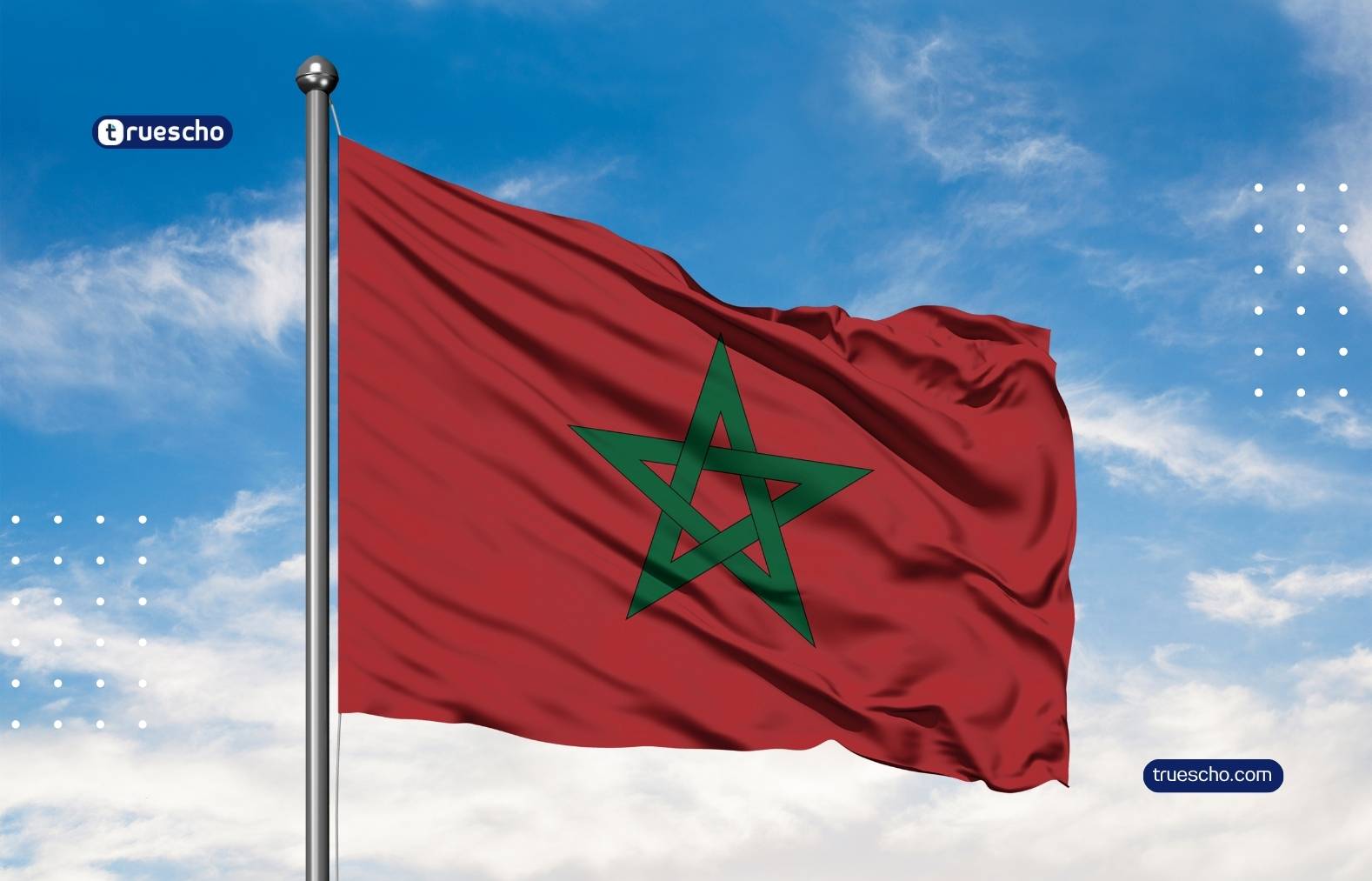
Study in Morocco 2026: a complete guide for Arab and international students covering the higher education system, recognized universities, diploma equivalency, scholarships, and student visa planning.
Studying in Morocco is one of the stronger options for Arab and international students who want higher education in a culturally familiar environment while still benefiting from a structured national university system, recognized institutions, and a wide range of academic pathways. Morocco’s Ministry of Higher Education, Scientific Research and Innovation publishes official information on the country’s higher education structure, public universities, private institutions that are authorized or recognized by the state, and services related to diploma equivalency.
For Arab students in particular, Morocco stands out because it combines Arab, African, and Mediterranean dimensions in one study destination. That matters not only socially, but academically as well. The official ministry pages state that Morocco’s public university higher education sector currently includes 12 public universities grouping 146 institutions, and that Moroccan universities follow the LMD system: Licence, Master, and Doctorate.
Why study in Morocco?
One of Morocco’s biggest strengths is the clarity of its university structure. The official ministry page explains that university institutions are divided into open-access institutions such as faculties of sciences, law, economics, humanities, and multidisciplinary faculties, and regulated-access institutions such as faculties of medicine and pharmacy, dental schools, engineering schools, faculties of science and technology, national schools of business and management, higher schools of technology, and others. This is very useful for international students because it immediately shows that some programs are broadly accessible while others are selective and regulated.
Another major strength is that Morocco already hosts a large number of international students. According to the ministry’s student mobility page, in the 2019–2020 academic year there were more than 25,000 international students pursuing higher education in different training centers in Morocco, including more than 14,500 enrolled in public university institutions. The same page states that 5,000 new registration authorizations were issued that year for students from 76 partner countries. That shows Morocco is not experimenting with international student intake; it already has an established incoming mobility structure.
Morocco also offers an official framework for checking private institutions. The ministry publishes official lists of private higher education institutions that are authorized and operating, as well as institutions recognized by the state, and also publishes accredited program lists for private universities. For an international student, this matters a lot because you should never rely only on a school’s name or marketing claims.
You can also explore the Study in Cyprus for Arab students
Is Morocco a good option for Arab students?
In many cases, yes. Morocco can be an excellent fit for Arab students who want a socially and culturally closer destination while still accessing a formal university system with many public and private options. It can also suit students who value a destination with an established record of receiving foreign students and managing international mobility in a structured way.
But Morocco should not be approached casually. Before applying, students need to understand whether a program is open-access or regulated, whether a private institution is merely authorized or fully recognized by the state, whether their previous qualification may need equivalency, and whether their application route is direct through the institution or linked to a cooperation mechanism such as AMCI in some cases. These are the questions that actually shape the right admission path.
The higher education system in Morocco
The official ministry page explains that Moroccan universities follow the Licence (6 semesters), Master (10 semesters), and Doctorate (3 years after the Master) structure. It also states that university teaching is organized through cycles, tracks, and modules, and leads to national diplomas. Beyond teaching, universities are officially expected to contribute to research, knowledge production, youth preparation for professional life, and national development.
This matters because choosing Morocco means more than choosing a country. It means choosing a type of institution and a mode of access: open-access faculty, selective higher school, private institution, or private university recognized by the state. Each of these pathways can differ in admissions logic, academic environment, and later recognition value.
Recognized universities and institutions
One of Morocco’s strongest practical advantages is that official recognition information is published clearly. The ministry has a dedicated page listing authorized and recognized universities and institutions, linking to the list of private higher education institutions that are authorized and functioning, and to the list of institutions recognized by the state. Official PDF lists also indicate that state recognition is granted for five years, renewable after evaluation.
This is critical for international students. Not every private institution has the same legal or academic standing. Authorization and state recognition are not identical, so applicants should always consult the official ministry lists before making a final decision, especially if they plan to use the degree later for employment, further study, or external recognition abroad.
General admission logic for international students
There is no single universal admission formula for all Moroccan institutions. Requirements vary by institution, program, and access type. But the general logic is clear: the applicant needs the appropriate previous qualification for the target level, must satisfy the academic conditions of the institution or track, may need diploma equivalency depending on the case, and must complete the proper registration route for foreign students.
For some categories of international students, the Moroccan Agency for International Cooperation (AMCI) plays an important role. AMCI states that it supports the academic training of foreign students in Morocco, manages Moroccan government scholarships for international students, and is involved in services such as student accommodation for certain categories. Its academic cooperation page states that more than 12,000 foreign students benefited from Moroccan scholarships in 2019–2020 through AMCI, and that 85% of AMCI’s African students were scholarship holders.
In practice, this means some students apply directly through institutions, while others may be linked to official cooperation channels depending on nationality, scholarship status, and program. So it would be a mistake to assume that every international student follows exactly the same route.
You can also explore the Studying in Argentina for Arab Students
Diploma equivalency in Morocco
Morocco provides an official digital service for diploma equivalency through the e-Équivalence platform التابعة لوزارة التعليم العالي، and the ministry site also publishes sector commission results and official materials related to equivalency. This is especially important for students who hold foreign degrees and want to use them academically or professionally in Morocco.
The user guide for the platform shows that the service allows applicants to enter personal information, training-path data, and supporting materials. This confirms that equivalency is not an informal matter, but a structured digital administrative process. At the same time, students should not confuse university admission with diploma equivalency. They are not always the same thing. Admission may depend on institutional academic evaluation, while equivalency may be needed in other legal or professional contexts.
Language of study
Morocco does not operate with one universal academic language across all institutions and disciplines. In practice, language can vary depending on the institution and field: some areas rely more on Arabic, others strongly on French, and some tracks may involve English to different extents. Since the official pages reviewed here focus more on institutional structure and recognition than on one uniform language rule, the correct approach is not to assume the teaching language. Students should verify it directly on the target institution or program page before applying. That is the only serious way to avoid surprises.
This is not a secondary detail. A program may look perfect academically but still be a poor fit if the student cannot function in its real teaching language.
Scholarships and support for international students
Morocco does not only offer study places; it also has official channels of support for some international students. The ministry’s incoming mobility page mentions free pedagogical places, subsistence scholarships, university accommodation depending on available capacity, medical coverage, and academic support services. AMCI also highlights its role in scholarship allocation and support for foreign students. Still, students should be realistic: not every scholarship or support mechanism is automatically available to every international applicant. Much depends on the cooperation framework, country of origin, nomination route, and specific program.
So students seeking funding should use the correct official channel: the ministry, AMCI, or the target institution, rather than relying on vague promotional posts.
Student visa for Morocco
Students from visa-required nationalities should first verify their status through Morocco’s official entry platform. The acces-maroc.ma system explains that a traveler can check whether they are visa exempt, subject to a consular visa, eligible for AEVM, or eligible for an eVisa, depending on nationality, passport type, residence, additional visa status, travel purpose, and date of birth. The platform guide also makes clear that applicants who are not eligible for electronic entry procedures may need to apply through the appropriate Moroccan embassy or consulate.
Official eVisa conditions also state that eVisa is designed for purposes such as tourism and business, and that it does not create any right to residence in Morocco. That means a student should not assume that eVisa is the proper route for academic stay. The serious approach is to verify consular status and, where necessary, contact the relevant Moroccan diplomatic mission for the appropriate student-related visa process.
You can also explore the Studying in Estonia for Arab Students
Costs and living expenses
The official sources reviewed here do not provide one single government-wide figure that accurately represents the cost of studying in Morocco for all international students. That is normal, because costs vary by institution, type of institution, program, city, and whether the student benefits from scholarship or accommodation support. So any one-size-fits-all number would be unreliable. What can be said with confidence is that the official system does include student services, scholarships, accommodation possibilities, and an established structure for receiving international students.
The practical way to plan is to divide costs into tuition, registration fees, accommodation, daily living, insurance, visa-related expenses, and travel, then verify the exact numbers directly with the chosen institution.
Final verdict: is Morocco worth it?
Yes, in many cases Morocco is absolutely worth considering, especially for Arab students who want a culturally closer environment, a structured and official higher education system, and a wide range of options between public universities and private institutions. Morocco also stands out because it already has real experience in receiving and integrating international students within its higher education institutions.
But students should not approach it casually. Before taking any serious step, they should verify four things: the type of institution, its legal recognition status, the language of study, and the correct visa or nomination route. Students who handle these four issues properly can build a strong academic path in Morocco.
Official sources
Scholarships Expert
Writer at Truescho Blog — We provide trusted content about scholarships, study abroad, and immigration.