
Syrian Residency in Egypt 2026: Renewal, Fines, and the New Exemption
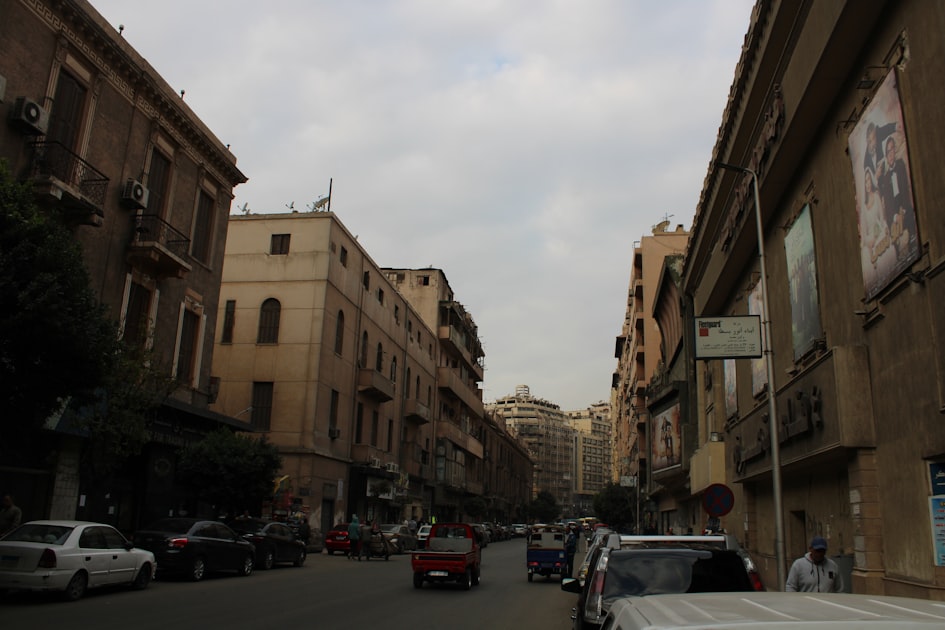
Syrian residency in Egypt 2026: residency types, renewal, fines (5,000 EGP), new departure exemption, and settlement grace period until September 2026.
Syrian Residency in Egypt 2026: Renewal, Fines, and the New Exemption
Last updated: April 2026
If you are a Syrian national already inside Egypt in 2026, your most pressing question is almost certainly about Syrian residency in Egypt — how to obtain it, renew it, or regularize it before the September 2026 deadline. With renewal fees now paid in US dollars, late-fine penalties reaching 5,000 EGP (≈$100) per year of delay, and a new settlement framework offering a path back to legal status for a $1,000 settlement fee, the stakes have never been higher. This guide walks Syrian families, students, workers, investors, and refugees through every type of residency available in Egypt today, the updated fines, the September 2026 regularization window, and the exact paperwork needed at the Mogamma in Cairo or the equivalent passport authority in Giza, Alexandria, or other governorates.
Quick answer: Syrian residency in Egypt is available in seven types (tourist, student, investor, real-estate, UNHCR yellow card, spouse, and work). The annual fee is $150 since October 2024, late fines are 1,500-1,700 EGP for the first three months and 500 EGP per additional month, and a regularization settlement exists for overstayers at $1,000 until September 2026.
What Is Syrian Residency in Egypt?
Syrian residency in Egypt is the legal status granted to a Syrian national to live, study, work, or invest in Egypt for a defined period, typically one year renewable. It is issued by the Egyptian passport authority (Maslahet al-Gawazat) in Cairo (Mogamma al-Tahrir), Giza, Alexandria, and every governorate capital.
Residency is distinct from both the visa and the security approval. The security approval permits boarding. The visa permits entry. Residency permits staying beyond 30 days and legally accessing services like banking, school enrollment, and private healthcare.
In 2026, seven main residency types are available to Syrians:
- Tourist residency — Short-term extension (currently restricted for Syrians)
- Student residency — Linked to university enrollment, annually renewable
- Investor residency — Tied to an Egyptian company or capital investment
- Real-estate residency — Granted for property ownership (tiered by value)
- Spouse/Family residency — For Syrian spouses of Egyptian citizens
- Work residency — Linked to an approved work permit
- UNHCR yellow-card residency — Free international-protection status for refugees
The annual fee for standard residency rose to $150 in October 2024 and is paid in US dollars at the passport authority cashier. This fee is separate from administrative stamps, lawyer fees (optional), and apartment-lease notarization costs.
For any Syrian entering Egypt with a valid visa, converting the 30-day entry stamp into proper residency before it expires is the single most important step to stay out of legal jeopardy.
Why Syrian Residency Matters More Than Ever in 2026
The residency landscape for Syrians has shifted dramatically across the past 16 months.
December 2024 — Exceptions granted to Syrians since 2013 were cancelled. Every Syrian now needs a clearly defined residency type — no more flexible extensions.
July 2025 — A humanitarian waiver exempted Syrians who wished to voluntarily leave the country from accumulated overstay fines, allowing them to depart without being trapped by years of unpaid penalties.
September 9, 2025 — The Egyptian Cabinet extended the status-regularization deadline for all foreigners (Syrians included) by one additional year, until September 2026. This is the single most important date on every Syrian family's calendar.
October 2024 — The annual residency fee was raised to $150 per individual per year, payable in US dollars.
February 2026 — Security campaigns began rounding up Syrians in irregular status. Simultaneously, the Ministry of Interior publicly denied any "blanket deportation policy" and reaffirmed that Syrians who regularize their status before September 2026 will not face action.
Refugee reality check — According to the Refugee Platform of Egypt and the Syrian Network for Human Rights, UNHCR asylum-renewal appointments are being scheduled as far as 2028-2029. This creates a dangerous gap where refugees have valid pending cases but expired physical papers. Understanding your rights in this gap is vital.
Step-by-Step Guide to Syrian Residency in Egypt
Follow these eight steps to obtain or renew your Syrian residency in Egypt correctly.
Step 1 — Determine your residency category. Match your situation to one of the seven types. Students use admission letters; spouses use marriage certificates; refugees use UNHCR yellow cards.
Step 2 — Gather core documents.
- Original Syrian passport with 6+ months validity
- A copy of your entry visa and entry stamp
- Proof of address: notarized apartment lease from the Egyptian Real Estate Registry (Shahar Aqari) or a signed host declaration from an Egyptian citizen
- Utility bill in your host's name (not older than 3 months)
- 4 recent passport photos
- Completed residency application form
Step 3 — Add category-specific documents.
- Student: University enrollment certificate + tuition receipt
- Investor: Commercial registration + tax card
- Real-estate owner: Property deed notarized at the Real Estate Registry
- Spouse: Egyptian marriage certificate + Egyptian partner's national ID
- Worker: Ministry of Manpower work permit
- Refugee: UNHCR yellow card + renewal receipt
Step 4 — Visit the Mogamma or governorate passport office. In Cairo, the Mogamma al-Tahrir is the primary point. In Giza, visit the Dokki passport office. In Alexandria, visit the Montaza office. Arrive early — queues form from 7 a.m.
Step 5 — Pay the fees. The annual fee is $150 in US dollars, plus 150-300 EGP in administrative stamps. Keep every receipt.
Step 6 — Submit fingerprints and photo. The passport authority takes biometric data on the same day for first-time applicants.
Step 7 — Wait for the residency card. Processing takes 5 to 30 working days. The card is printed with your passport details, residency type, and expiration date.
Step 8 — Renew before expiration. Start the renewal process 30 days before your card expires. Late renewal triggers the fines outlined below.
Comparison Table: Residency Types, Fees, and Durations
| Residency Type | Annual Fee | Duration | Key Requirement | Who It Suits |
|---|---|---|---|---|
| Tourist (when available) | $150 | 6-12 months | Lease + host | Short-term families |
| Student | $150 | 1 year | University enrollment | Syrian university students |
| Investor | $150 + stamps | 1 year | Egyptian company | Business owners |
| Real-estate ($100,000) | $150 | 1 year | Property deed | Property-buying families |
| Real-estate ($200,000) | $150 | 3 years | Property deed | Mid-tier investors |
| Real-estate ($400,000) | $150 | 5 years | Property deed | Long-term settlers |
| Spouse of Egyptian | $150 | 1 year | Marriage certificate | Mixed families |
| UNHCR Yellow Card | Free | 6-12 months | UNHCR registration | Refugees |
| Settlement ("Tasweya") | $1,000 | 1 year | Host + overstay declaration | Overstayers before Sep 2026 |
The UNHCR yellow card is the only entirely free option, granting international protection plus access to free UN-funded services — but it requires a successful asylum interview and carries political implications distinct from national residency.
Real Stories & Expert Insights (E-E-A-T)
A long-time family story. Um Muhammad, a Syrian mother of three who arrived in Cairo in 2015, successfully renewed her family's residency in March 2026 under the regularization framework. She paid the $1,000 settlement fee for the head of family, submitted a host-letter from an Egyptian friend, presented her children's UNHCR yellow cards for the dependents, and received a one-year residence card within 18 days. She advises every Syrian family to "start the paperwork the day the fine calculation begins — not the week before the appointment."
Expert insight. Human-rights lawyers from the Egyptian Initiative for Personal Rights (EIPR) emphasize that refugees holding a valid UNHCR yellow card are protected under international agreements Egypt has signed. Even when UNHCR renewal appointments are scheduled into 2028 or 2029, the valid expired-but-pending card provides substantial legal protection during security checks. Always carry the card and the UNHCR appointment receipt together.
Common Mistakes and Truescho Expert Tips
Avoid these costly errors:
-
Waiting until the card expires to renew. Start 30 days earlier — queues and missing documents consume time.
-
Using an unregistered apartment lease. Only leases registered at the Real Estate Registry (Shahar Aqari) are accepted. Informal contracts with landlords are rejected.
-
Confusing the UNHCR yellow card with national residency. The yellow card provides international protection and free UN services; the national residency provides the right to open bank accounts, register property, and enroll in private institutions. Many families need both.
-
Underestimating the fines stack. The first 3 months of overstay cost 1,500-1,700 EGP, and every additional month adds 500 EGP. A full year of silence = roughly 6,000 EGP in fines on top of the settlement fee.
-
Missing the September 2026 deadline. The current regularization window is the most generous framework since 2013. Missing it leaves overstayers exposed to formal deportation.
-
Skipping the Egyptian marriage-certificate notarization for spouses. Syrian marriage papers alone are not enough — they must be stamped at the Egyptian foreign ministry.
- Paying fines to "facilitators" outside the passport office. All fines are paid at the official cashier. Cash paid to middlemen disappears without trace.
If your residency journey in Egypt is becoming too complicated, explore alternative study destinations via Truescho's Apply for Me service or book a one-on-one consultation with a licensed education advisor.
Unique Section: Fines Calculator for Late Residency
Use this simple reference to estimate your fine exposure:
- Month 1-3 of overstay: 1,500 - 1,700 EGP (≈$30-$34) flat
- Each additional month: 500 EGP (≈$10)
- First-time failure to obtain residency: 5,000 EGP (≈$100) per year of delay
- Settlement fee (Tasweya) for overstayers: $1,000 — covers accumulated fines plus one-year residency card
- UNHCR yellow-card renewal: 500 EGP (≈$10) every 18 months
Example 1 (mild): A Syrian overstayed by 4 months = 1,700 + 500 = 2,200 EGP (≈$44).
Example 2 (severe): A Syrian who never registered residency during a 3-year stay = 5,000 × 3 = 15,000 EGP (≈$300) in base fines alone.
Example 3 (settlement): Same 3-year overstayer using the September 2026 window = $1,000 flat, covering fines and a fresh residency card. The settlement is dramatically cheaper than accumulated fines for most families.
Unique Section: What If Your UNHCR Appointment Is in 2028?
If your physical UNHCR card is expired but your renewal appointment is scheduled for 2027, 2028, or 2029, take these steps:
- Keep the appointment receipt from UNHCR Egypt printed and with you at all times.
- Visit the UNHCR office in 6th of October City to request a temporary protection letter (often issued on the spot).
- Carry a copy of your expired card and the appointment receipt together — this combination is recognized as valid pending-status proof by Egyptian authorities in most check scenarios.
- Update UNHCR immediately if you change address — it accelerates emergency interview rescheduling.
This gap is the single most difficult period in any Syrian refugee's legal life in Egypt. Knowing the workarounds and keeping documentation current is non-negotiable.
Frequently Asked Questions (FAQ)
What types of residency are available to Syrians in Egypt?
Seven main types are available: tourist, student, investor, real-estate (tiered by property value), spouse of Egyptian citizen, work, and the UNHCR yellow card for refugees. Most carry a $150 annual fee paid in US dollars, while the UNHCR yellow card is free. Choose the category that matches your actual activity — misrepresenting your category leads to refusal.
How much does residency renewal cost for Syrians?
The core annual fee is $150 in US dollars since October 2024, plus 150-300 EGP in administrative stamps and notarization costs. Overstayers using the September 2026 regularization settlement pay a flat $1,000, which covers accumulated fines plus the first year's card. The UNHCR yellow card renewal is 500 EGP every 18 months.
What are the late-renewal fines?
Late fines are 1,500-1,700 EGP for the first three months of overstay and 500 EGP per additional month. Syrians who never obtained residency at all pay a baseline of 5,000 EGP (≈$100) per year of delay. The settlement window until September 2026 allows a flat $1,000 payment covering all accumulated fines.
What documents are required for residency renewal in 2026?
You need your Syrian passport (6+ months validity), entry visa and stamp, a notarized apartment lease or Egyptian host declaration, a recent utility bill, four photos, and category-specific proof (university enrollment for students, commercial registration for investors, marriage certificate for spouses, UNHCR yellow card for refugees). Every document must be original or officially notarized.
Can I get real-estate residency by buying a property?
Yes. A property worth $100,000+ grants a 1-year renewable residency; $200,000+ grants 3 years; $400,000+ grants 5 years. The property deed must be registered at the Egyptian Real Estate Registry and the funds must be transferred through banking channels. This is one of the most stable legal pathways for Syrians planning long-term settlement.
What is the new exemption and who qualifies?
The July 2025 exemption waives accumulated overstay fines for Syrians who voluntarily wish to leave Egypt — not stay. Separately, the September 2025 regularization framework lets Syrians stay by paying a flat $1,000 settlement until September 2026. The two are different tools: one for leaving, one for regularizing.
What is the September 2026 deadline?
The Egyptian Cabinet extended the status-regularization window for all foreigners — including Syrians — until September 2026. During this window, overstayers can pay a flat $1,000, present a host declaration, and receive a valid one-year residency card. After the deadline, standard fines resume and deportation risk increases.
What is the UNHCR yellow card and how do I get it?
The UNHCR yellow card is an internationally recognized refugee-protection document issued free of charge by the UN Refugee Agency in Egypt. To obtain it, book an appointment through help.unhcr.org/egypt, attend a registration interview at the 6th of October office, and receive a card valid for 6 to 18 months. It grants access to free UNHCR-funded education, health, and legal services.
Conclusion
Syrian residency in Egypt in 2026 is a legal environment of both opportunity and urgency. The September 2026 regularization window is the most generous framework the country has offered since 2013, and the $1,000 flat settlement is a practical lifeline for overstayers. Students, spouses, investors, and refugees each have a specific path — and knowing which one fits your family is the difference between legal stability and last-minute panic.
Before booking any appointment, review our pillar guide on the Egypt security approval for Syrians 2026 and our breakdown of the Egypt visa for Syrians 2026. If your pathway is academic, see Study in Egypt for Syrians 2026. And if the process feels overwhelming, our partners at Truescho's Apply for Me service can map your best option.
Sources
- UNHCR Egypt — Residency and Protection Help — Official refugee protection information
- Egyptian Initiative for Personal Rights (EIPR) — Human-rights coverage of Egyptian residency policy
- Refugee Platform of Egypt (RPEGY) — Independent tracking of refugee regularization
- Syrian Network for Human Rights (SNHR) — Documentation of displaced-Syrian conditions
- Syria Direct — Al-Araby Al-Jadeed Coverage — Reporting on the September 2025 decrees
Start Your Journey with Truescho
Whether you are searching for a scholarship or planning to study abroad, truescho.com gives you everything in one place — verified opportunities, expert consultations, and application support. Get Started Free →

mahmoud hussein
Writer at Truescho Blog — We provide trusted content about scholarships, study abroad, and immigration.
Related Articles

Scholarships for Syrians in Egypt 2026: Top 10 Fully Funded Opportunities
Top 10 fully-funded scholarships for Syrians in Egypt 2026: GUC, MUST, Al-Azhar, AUC. Requirements, deadlines, and application steps.
Study in Egypt for Syrians 2026: Admission, Fees, and the 50% Discount
Study in Egypt for Syrians 2026: admission requirements, fees with 50% discount, top universities, living costs, and registration steps with real numbers.
Egypt Visa for Syrians 2026: Eligible Categories and Required Documents
Egypt visa for Syrians 2026: eligible categories (students, investors, Egyptian spouses, patients), visa types, fees, and required documents.