
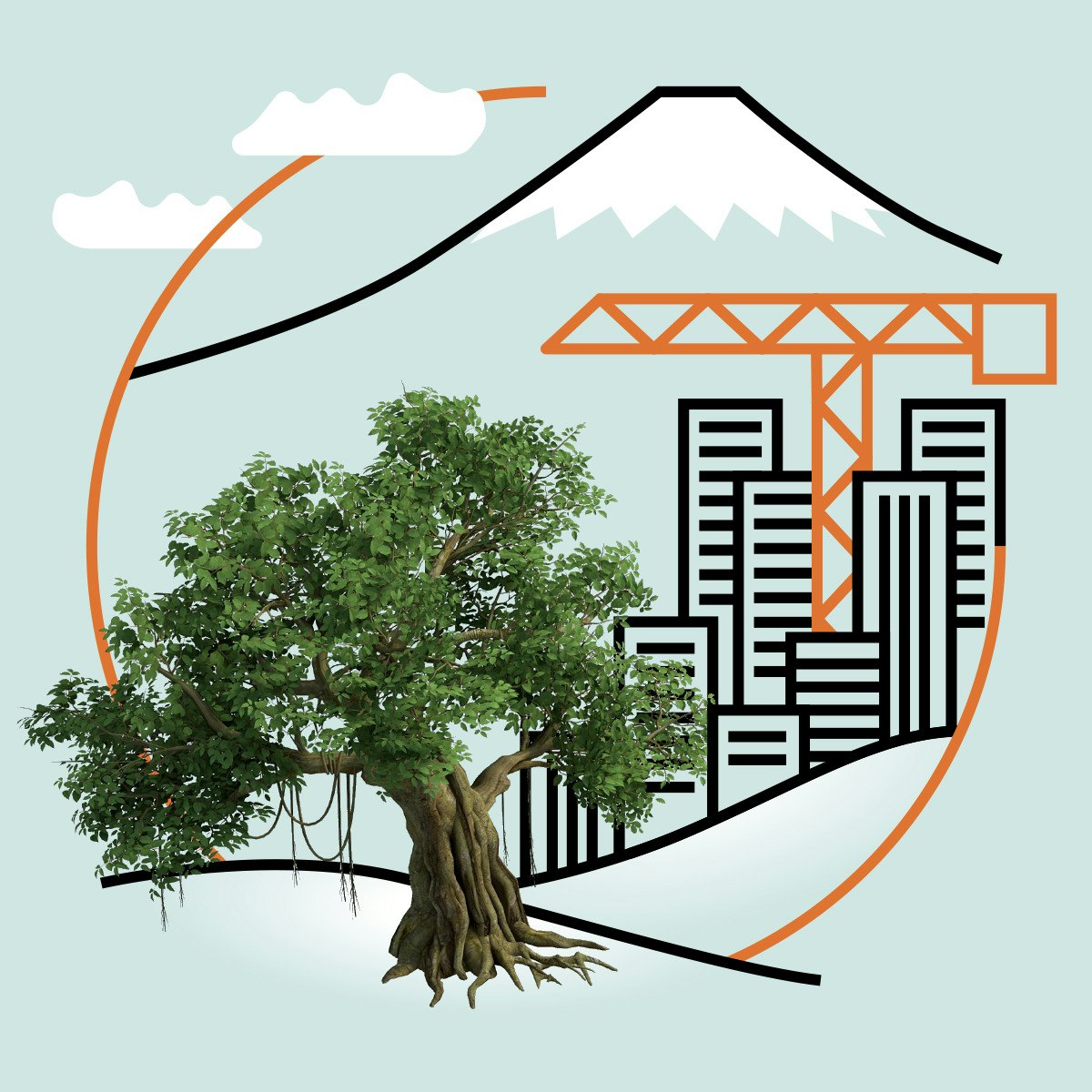
Asian Environmental Humanities: Landscapes in Transition
University of Zurich
Learn about Asian cultural concepts of landscape and their influence on environmental projects in China, India, and Japan through an interdisciplinary environmental humanities approach.
About this Course
In this course, featuring many researchers from the University of Zurich and international institutions, we will introduce you to some of the most vibrant cultural trends addressing landscape appreciation, degradation, protection, and rehabilitation that currently circulate in the Asian hemisphere. You will learn about concepts of landscape in Asian religions, philosophy, social sciences, history and the arts and their reverberation in selected environmental projects in China, India and Japan. Furthermore, we will discuss how they are critically reflected upon in the context of the environmental humanities, and observe how an interdisciplinary approach towards regional ecosystems past and present reaches out beyond pragmatic technological solutions to mitigate environmental damage. Following us on our different paths and trajectories through the five modules of the course, you will encounter many of the reasons why environmental humanities study projects which strive to change people’s prevalent attitudes, values and behavioural patterns in order to redeem the rapidly globalizing crisis, and how they go about it. Having acquainted yourself with the stories Asia’s landscapes – and landscape representations – tell about actual and possible human-nature relationships, you can compare and evaluate their potential to bring about the desired change and define your own range of actions as an informed stakeholder for creating a sustainable future. What is arguably no less intriguing: you will learn how to appreciate a broad range of eco-aesthetic forms that re-enchant our lives by creatively interacting with the more-than-human world. You can follow the five modules of the course consecutively or just study the modules that interest you the most. If you want to earn a certificate, you need to complete all of the modules including the quizzes at the end of each module. THESE ARE THE TOPICS OF THE 5 MODULES OF THIS COURSE: Module 1: Concepts of landscape past and present and their cosmological underpinnings. Module 2: Entangled landscapes comprising cultural flows of concepts and forms, contemporary gardens on the move, nostalgic elegies of demolished sites and rural reconstruction projects. Module 3: Discussion of two religious communities in India (the Parsi-Zoroastrians and the Auroville community) and their relationship with the environment. Module 4: Environmental debates tackling religious concepts and social practices and the problem of waste disposal in India. Module 5: Environmental movements and the impact of Fukushima on attitudes towards nuclear energy in Japan, creative activism including arts projects and documentaries to protest against pollution and landscape degradation and raise environmental awareness in the Sinosphere, and emergent concepts for sustainable community life on the planet
What You'll Learn
- Learn about concepts of landscape in Asian religions, philosophy, and social sciences
- Understand the role of arts in expressing these concepts
- Appreciate selected environmental projects in China, India, and Japan
- Evaluate eco-aesthetic forms and their interaction with the more-than-human world
Prerequisites
- Basic computer and internet skills
- Ability to read course instructions in English and complete short practice activities
Instructors
Andrea Riemenschnitter
Prof.