
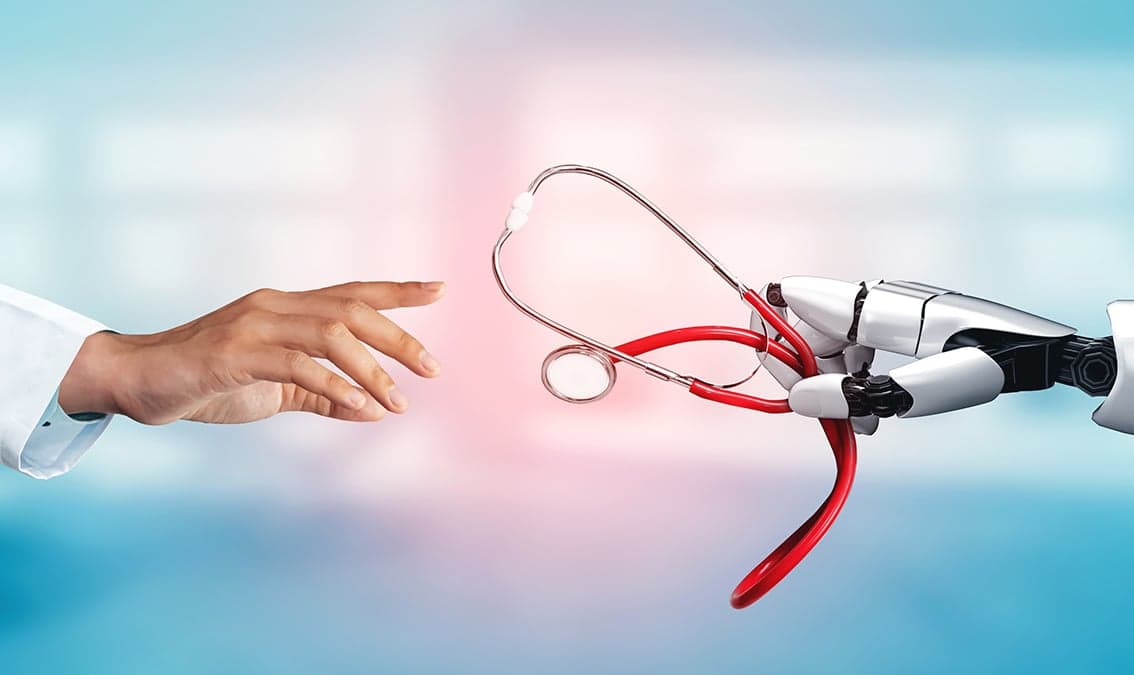
Machine Learning for Healthcare
Massachusetts Institute of Technology
An introduction to machine learning for healthcare, ranging from theoretical considerations to understanding human consequences of deploying technology in the clinic, through hands-on Python projects using real healthcare data.
About this Course
Machine learning methods have revolutionized many aspects of healthcare, from new models that help clinicians make more informed decisions to new technologies that enable individual patients to better manage their own health. Since the 1950s with Kaiser’s first computerized records for chest X-ray reports and blood test results, and the introduction of the pacemaker, clinicians have realized the potential of algorithms to save lives. This rich history of machine learning for healthcare informs groundbreaking research today, as new advances in image processing, deep learning, and natural language processing are transforming the healthcare industry. Using machine learning to improve patient outcomes requires that we understand the human consequences of machine learning, such as transparency, fairness, regulation, ease of deployment, and integration into clinical workflows. Throughout this course, we return to the question: how can machine learning improve healthcare for all? The course begins with an introduction to clinical care and data, and then explores the use of machine learning for risk stratification and diagnosis, disease progression modeling, improving clinical workflows, and precision medicine. For each of these topics we dive into methodological details typically not covered in introductory machine learning courses, such as the foundations of deep learning on imaging and natural language, interpretability of ML models, algorithmic fairness, causal inference and off-policy reinforcement learning. Guest lectures by clinicians and course programming projects with real clinical data emphasize subtleties of working with clinical data and translating machine learning into clinical practice. 3b
What You'll Learn
- Understand how machine learning methods can be used for risk stratification, understanding disease and its progression, and specific clinical applications to mammography, pathology, and cardiology
- Understand practical subtleties of machine learning from clinical data, such as physiological time-series, clinical text, and image data
- Implement and analyze models for supervised prediction, clinical NLP, interpretability analysis, and causal inference from clinical data
Prerequisites
- 6.86x or equivalent machine learning course
- 6.00.1x or proficiency in Python programming
- 6.431x or equivalent probability theory course
- College-level single-variable calculus
- Vectors and matrices
Instructors
David Sontag
Associate Professor
Peter Szolovits
Professor
Zachary Strasser
NIH/NLM Postdoctoral Fellow
Hagai Rossman
PhD Student