
Visualizing the Birth of Modern Tokyo
Massachusetts Institute of Technology
See Tokyo’s modernization through the “100 views” tradition, from the gas-lit 1870s to the jazz era 1930s. From MIT Visualizing Cultures, with the Smithsonian Institution.
About this Course
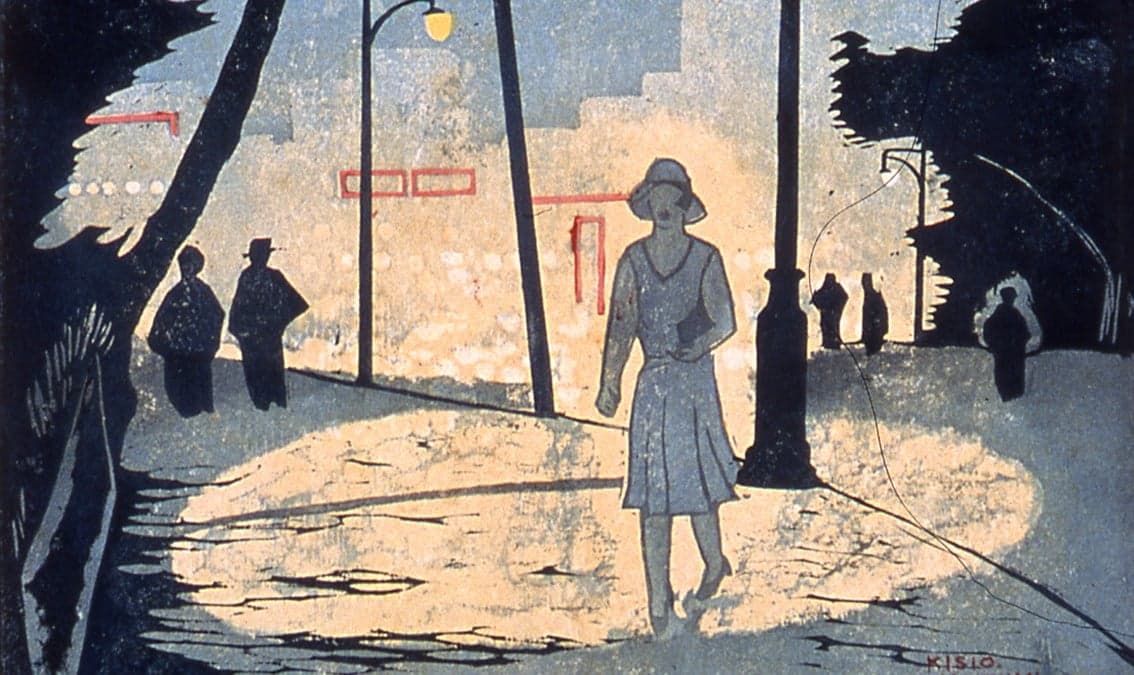
This course shows the emergence of modern Tokyo through artist renderings of its neighborhoods, daily life and nightlife, nested between its recurring destruction by natural disasters and war. Students will learn about the tradition of the “100 views,” and through these composite depictions of the city, will witness the excitement and loss of change. Kiyochika Kobayashi’s woodblock prints of Tokyo in the late 1870s convey a moody view on the cusp of change as the new capital, formerly Edo, begins modernization with Western influences. Koizumi Kishio’s depictions of the “Imperial Capital” in the 1930s show the lively cosmopolitanism and move toward ultranationalism that placed the emperor at its center. Learners will navigate visual primary sources and use them to investigate: • Tokyo, through the many locations depicted at different points in time, especially helpful if they would like visit these sites today; • the Meiji restoration and how Tokyo emerged from the earlier city of Edo to become Japan’s capital; • cultural and political interactions between east and west; • how Tokyo was rebuilt from various forms of destruction; • methods used by scholars and curators of the Visualizing Cultures project and Smithsonian Institution to develop online content and exhibitions; • the ability of visual motifs to capture tangible and intangible qualities of time and place; • how to read image sets, especially useful in the large digital archives of today; • woodblock print series, distribution, and competition from other media. The format of roundtable discussions between art historian, historians, and media specialists sets up a discursive and exploratory style of learning. Learners will be exposed to multiple points of view as the teaching team brings together scholars who have studied the topics from different disciplines. Learners will engage with visual evidence as primary sources to assemble arguments. For teachers, the course presents a number of units from the online resource, MIT Visualizing Cultures (VC). The course instructors are the authors of VC units, and guide students into the rich content on the site. The VC website, widely taught in both secondary and college courses, is the primary resource for this course. Educators can selectively pick modules that target needs in their classrooms; the course can be used in a “flipped” classroom where students are assigned modules as homework. Other Visualizing Cultures courses you may be interested in: Visualizing Japan (1850s-1930s): Westernization, Protest, Modernity (VJx) 3b:T1398,{"@context":"https://sche
What You'll Learn
- understanding how Japan and its capital city evolved
- the study of history and how it uses visual sources
- the study of visual images, large databases and visual communication
- the culture of change in the built environment.
Instructors
Shigeru Miyagawa
Professor of Linguistics and Kochi-Majiro Professor of Japanese Language and Culture
John W. Dower
Professor Emeritus
James T. Ulak
President
Hiromu Nagahara
Associate Professor