
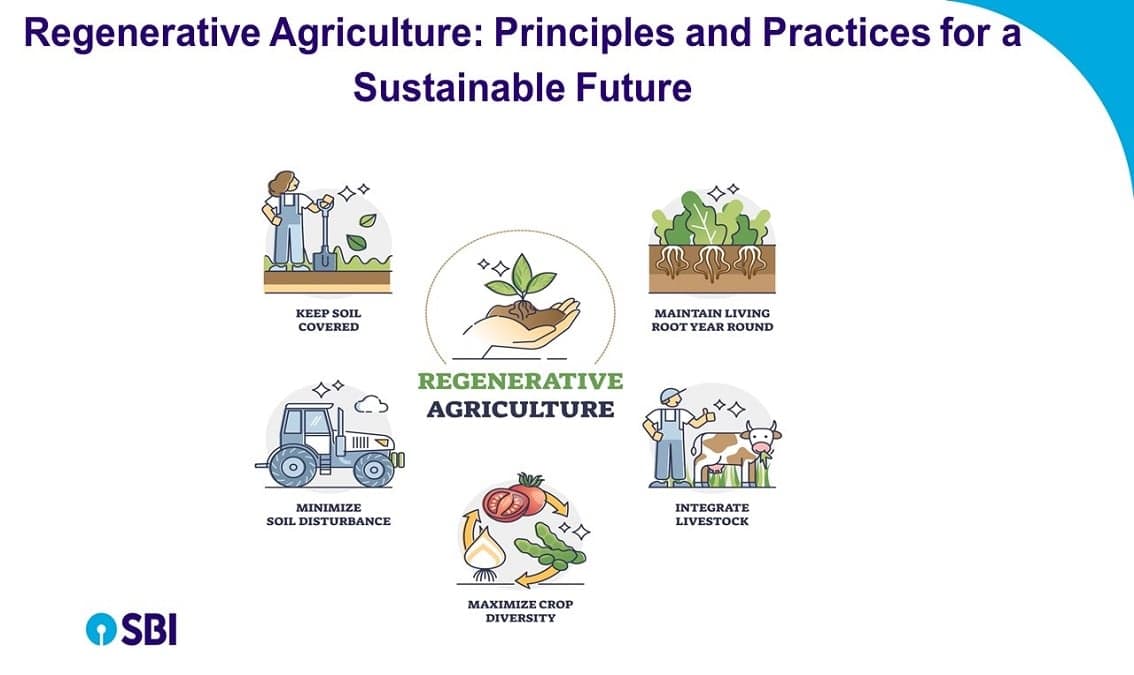
Regenerative Agriculture: Principles and Practices for a Sustainable Future
State Bank of India
Regenerative agriculture is an approach that prioritizes soil health, biodiversity, and ecosystem services to create resilient and sustainable agricultural systems. This course will explore the principles and practices of regenerative agriculture, including: Ø Soil regeneration and carbon sequestration. Ø Cover cropping and crop rotation. Ø Integrated pest management and pollinator conservation. Ø Livestock grazing management and pasture design. Ø Agroforestry and perennial crop systems. Ø W...
About this Course
Regenerative agriculture, the term as reported in various literature, initially came into usage by the Rodale Institute in the early 1980s . Later, in 2014, institute released a paper on Regenerative Organic Agriculture and Climate Change. The extract of the paper talks about sequestering more than 100% of current annual CO2 emissions with a switch to common and inexpensive organic management practices, which they termed 'regenerative organic agriculture.' The farm and other management practices, under the regenerative agriculture, are focusing not only on restoring but also enhancement of soil health, ecosystem, biodiversity and communities. Unlike conventional agricultural practices that often prioritize short-term yields and rely heavily on synthetic chemicals, regenerative agriculture seeks to create sustainable, resilient, and self-sustaining systems. It aims to regenerate the soil, restore ecosystems, and increase carbon sequestration, all while producing food in a way that benefits the environment, farmers, and society at large.
What You'll Learn
- * The principles of regenerative agriculture and its benefits.* Practical strategies for implementing regenerative practices on farms and ranches.* Analyze case studies of successful regenerative agriculture operations.* Skills in farm planning, management, and marketing for regenerative agriculture.* About contribution of financial institutions to regenerative agriculture e.g. Providing Access to Capital, Incentivizing Sustainable Practices, Developing Innovative Financial Products, Advisory Services and Capacity Building and developing risk management tools.