
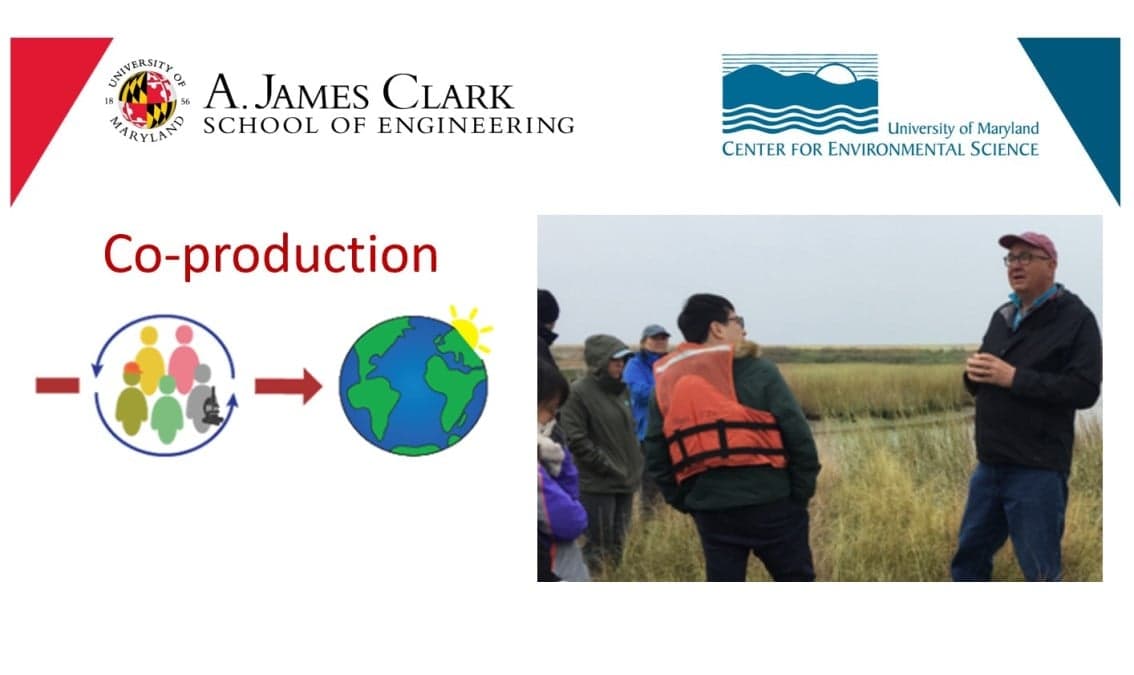
Co-Production: Addressing Complexity with Environmental Adaptive Management
University of Maryland Center for Environmental Science
Lead teams on your complex, distributed environmental projects through modern leadership and agile execution to co-produce powerful and sustainable outcomes.
About this Course
This course explores adaptive leadership and collaborative management for complex environmental projects, moving beyond traditional "top-down" approaches. It equips participants with strategies to drive sustainable outcomes through empowered teams, stakeholder engagement, and iterative decision-making in distributed environments. Key Themes Modern Management Foundations: Shifts from hierarchical leadership to co-production and participatory decision-making. Emphasizes empowering teams closest to the work, fostering ownership, and integrating adaptive practices across stakeholders. Building Effective Partnerships: Techniques to create psychological safety, align purpose, and motivate interdisciplinary teams. Strategies for managing risks, incorporating feedback loops, and maintaining trust across "teams of teams." Adaptive Frameworks & Tools: Implementation of OKRs (Objectives and Key Results), agile execution, and team-design strategies to coordinate action without micromanagement. Emphasis on iterative processes that strengthen partnerships and improve ecological, regulatory, or resource-management outcomes. Applied Learning Case Study Spotlight: Chesapeake Bay’s watershed restoration and fisheries management. Analyzes adaptive management in action, including water quality challenges, regulatory impacts, and iterative solutions for ecosystem health. Demonstrates how shared incentives, stakeholder collaboration, and data-driven adjustments lead to scalable success. Target Outcomes Participants will learn to: Lead distributed teams in climate, biodiversity, land/water management, or international development projects. Design adaptive processes that balance stakeholder interests with ecological sustainability. Apply stewardship principles to influence policy, guide decision-makers, and align incentives for lasting impact. 3b
What You'll Learn
- Assess the scientific and technical issues and management approaches of projects varying in size and complexity
- Determine the most effective use of science and technical information to impact management approaches across a range of environmental issues
- Build and maintain working relationships with project team members in person, and in virtual or hybrid work environments
- Develop project delivery approaches for complex, multi-organization teams
Instructors
Richard Arnold
Director of STEM Engagement
William “Bill” Dennison
Vice President for Science Application
John Johnson
Professional Programs Manager, Clark School of Engineering, University of Maryland
Bill Brantley
Faculty