
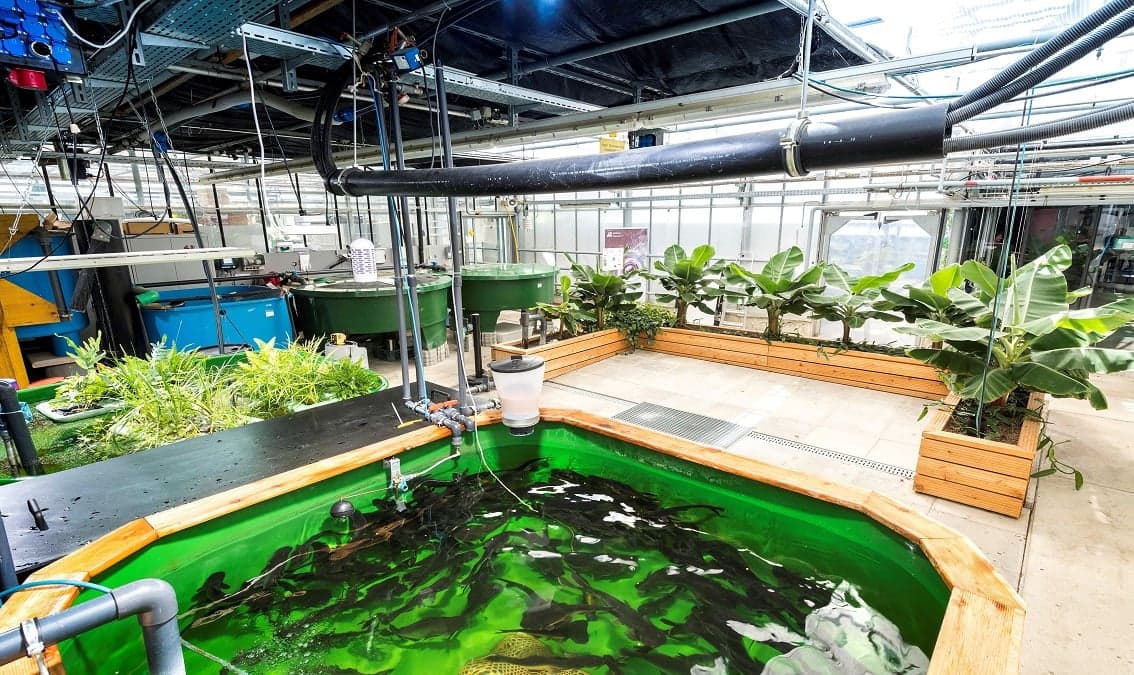
Aquaponics – the circular food production system
ZHAW Zurich University of Applied Sciences
Aquaponics is a polyculture that combines aquaculture and hydroponics cultivation, i.e. fish farming and soil-independent food production, in a circulatory system with the aim of recycling nutrients from fish farming wastewater. In this MOOC course of the ZHAW, you will learn the most important points about aquaponics and how to plan and design such a sustainable production system.
About this Course
Aquaponic technology continues to attract a lot of attention around the globe, especially in the context of urban farming. But how exactly do an aquaponics system work and more important what knowledge do I need to successfully run an aquaponics system? In this course, you will obtain answers to these questions. The curriculum will give you an understanding of central topics in the field of aquaponics. Aquaponics is a circulation technology based on a broad knowledge base: from water chemistry, fish and plant physiology, to engineering and microbiology. It can thus serve as a learning model for inter-and transdisciplinary thinking and acting. This course is for: Everyone interested in Aquaponics with a basic understanding of natural sciences (Biology, Chemistry, Physics) on an undergraduate degree level Professionals in the sector of Aquaculture and Hydroponics Aquaponic practitioners who want to gain additional knowledge on specific topics
What You'll Learn
- Understand the basic technological principles behind aquaponics, be able to assess the advantages and disadvantages of aquaponic systems, and have an insight into current research and potential applications in terms of urban agriculture and vertical farming.
- Be familiar with fish anatomy and physiology, fish feed and growth along with fish health and welfare.
- Understand the principles of fish cultivation in recirculating aquaculture systems (RAS), the required technical components, the calculation of dimensions in terms of engineering, and the important role of water treatment and monitoring.
- Understand basic plant anatomy, physiology, and growing requirements. Know the basic principles of hydroponics and its different cultivation systems. Be able to calculate the nutrient supply in hydroponic systems and determine nutrient supplementation in aquaponics if required.
- Be familiar with the plant varieties suitable for aquaponic systems, learn how to monitor plants, and understand the key factors of integrated pest management.
- Know how to assemble the basic components of an aquaponic system and understand the importance of water flow from one component to another. Be able to plan and design an aquaponic system and calculate its dimensions yourself.
Prerequisites
- Everyone interested in Aquaponics with a basic understanding of natural sciences (Biology, Chemistry, Physics) on an undergraduate degree level
- Professionals in the sector of Aquaculture and Hydroponics
- Aquaponic practitioners who want to gain additional knowledge on specific topics
Instructors
Luca Regazzoni
Researcher at the Institute of Natural Resource Sciences at ZHAW School of Life Sciences and Facility Management
Nathalie Pfister
Research Assistant at the Institute of Natural Resource Sciences at ZHAW School of Life Sciences and Facility Management