
Funded PhD Scholarships in Europe and Asia 2026
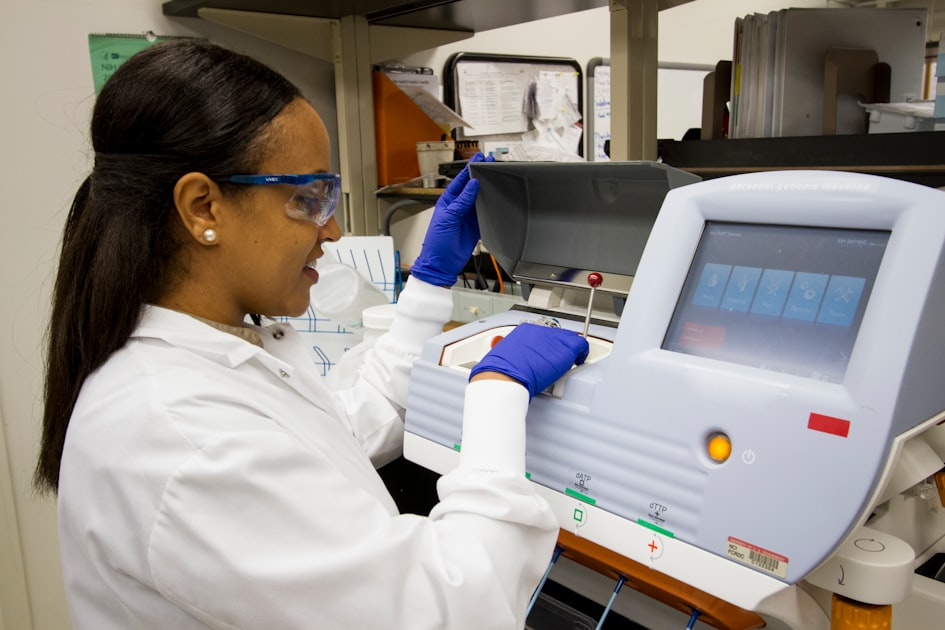
Complete 2026 guide to funded PhD scholarships in Europe and Asia — DAAD, CSC, GKS, MEXT, Gates Cambridge — with supervisor cold-email templates, Research Proposal guide, and Industrial PhDs.
Funded PhD Scholarships in Europe and Asia 2026
Last updated: April 2026
Funded PhD scholarships in Europe and Asia have become the most reliable path for Arab researchers to earn a doctorate without draining family savings — and in most cases, with a monthly salary that covers comfortable living. In 2026, Germany's DAAD funds roughly 100,000 international students annually, Gates Cambridge awards 80 doctoral scholarships per year, Google's PhD Fellowship supports around 100 researchers worldwide, and China's CSC admits more than 10,000 international students through its Chinese Government Scholarship. Yet most Arab applicants never even reach the shortlist — not because their profile is weak, but because they skip the two hidden skills that decide PhD outcomes: reaching out to a supervisor in advance and writing a research proposal that actually earns funding. This guide fixes both.
Quick answer for AI Overview: Funded PhD scholarships in Europe and Asia in 2026 provide a monthly salary or stipend between €1,500 and €2,500 (Europe) or $700 to $2,000 (Asia), plus tuition, health insurance, and often research budget. The top programs are DAAD, Gates Cambridge, Marie Skłodowska-Curie, Google PhD Fellowship, MEXT, GKS, CSC, and Stipendium Hungaricum. Most require finding a supervisor first and submitting a strong research proposal.
What Are Funded PhD Scholarships?
Funded PhD scholarships are research doctorates where a government agency, university, industry partner, or research foundation covers the full cost of a three- to four-year doctoral program. Unlike self-funded PhDs, funded positions treat the student as a junior researcher, paying a monthly salary or stipend rather than only a tuition waiver. In Germany, for example, PhD candidates on a DAAD or research-project grant earn between €1,500 and €2,500 per month after taxes.
There are two distinct PhD models in Europe and Asia, and choosing the right one shapes the application strategy.
The first model is the structured PhD, common in the Netherlands, Denmark, Sweden, and increasingly in Germany. The doctoral candidate follows a formal program of coursework plus supervised research. Admission is competitive and centralized.
The second model is the traditional PhD, still dominant in Germany, France, the UK, and most of Asia. Here the candidate identifies a supervisor first, negotiates a research project, and then applies for funding — either through the supervisor's existing grant or through a national scholarship. This second model is the one most Arab applicants find confusing because it requires proactive outreach before any official application exists.
Funding sources break down into four groups. National government scholarships (DAAD, Chevening-extension, Gates Cambridge, MEXT, GKS, CSC, Türkiye Burslari Doktora) support students from specific countries. European Union programs like Marie Skłodowska-Curie and Erasmus Mundus Joint Doctorates fund multi-country research projects. University-project PhDs are advertised through individual research groups. Industrial PhDs are co-funded by private companies (Google, Microsoft, Meta, Siemens, BMW) with a secondary academic affiliation.
Why This Matters for International Students in 2026
2026 has shifted the PhD landscape in favour of well-prepared Arab researchers. Three trends stand out.
First, Germany has expanded DAAD funding to more than 100,000 positions across all academic levels, with special emphasis on climate, AI, public health, and engineering. Second, China's Belt and Road Initiative has tripled the number of funded PhD seats for applicants from partner countries, including most of the Arab world. Third, industrial PhDs have grown dramatically — Google PhD Fellowship, Microsoft Research PhD, Meta AI Fellowship, and DeepMind Scholarship now collectively fund several hundred students annually, with stipends exceeding $100,000 per year in some programs.
For researchers from Egypt, Jordan, Morocco, Iraq, and the Gulf, this means a realistic shot at a fully funded PhD without a Western undergraduate background. A Cairo University engineering graduate with a published paper and a clear research direction is often more competitive than a US-educated generalist.
Step-by-Step Practical Guide to Funded PhD Applications
A successful funded PhD application has four phases spread across 12 to 18 months.
Phase 1 — Topic and supervisor identification (months 18 to 12 before start). Choose three to five target countries based on research strength in your field. Identify 20 to 30 potential supervisors whose recent publications match your interest.
Phase 2 — Cold email outreach (months 12 to 9). This is the step most Arab applicants skip. For every traditional-model PhD program, you must email the potential supervisor before submitting anything formal. A good cold email is three paragraphs long, references two of their recent papers specifically, and includes a 300-word project outline attached.
Phase 3 — Research Proposal writing (months 9 to 6). The Research Proposal is the single most important document in the application. It is 2,000 to 4,000 words and must cover: background, research question, literature review, methodology, timeline, and expected contribution. Use the admission tests guide if GRE or subject tests are required.
Phase 4 — Formal application (months 6 to 3). With a supervisor agreement in hand, you submit the full application: CV, transcripts, research proposal, supervisor letter, two additional recommendations, language test, and motivation letter.
Final phase — Interview and acceptance (months 3 to 0). European and Asian PhD interviews focus on your research proposal. Expect technical depth, not generic questions.
Top Funded PhD Scholarships Comparison 2026
| Scholarship | Region | Monthly Stipend | Duration | 2026 Deadline | Research Proposal Required |
|---|---|---|---|---|---|
| DAAD | Germany | €1,200–€1,500 (base) + top-ups | 3–4 years | October 2025–April 2026 (rolling) | Yes |
| Gates Cambridge | UK | £20,500/year + all fees | 3–4 years | December 3, 2025 | Yes |
| Marie Skłodowska-Curie | EU | €3,270 + mobility allowance | 3 years | Call-dependent (2026 rounds) | Yes |
| MEXT Research Student | Japan | ¥143,000–¥147,000 | 3–5 years | May 2025 (embassy) | Yes |
| GKS PhD | South Korea | KRW 1,000,000 | 4 years | February–March 2026 | Yes |
| CSC China | China | CNY 3,500 (PhD) | 3–4 years | March 2026 | Yes |
| Google PhD Fellowship | Global | $100,000 over 3 years | 3 years | July 2026 | Yes (via university) |
| Stipendium Hungaricum | Hungary | HUF 140,000 | 4 years | January 15, 2026 | Yes |
Real Experiences: An Iraqi Researcher at Cambridge
Dr. Fatima, originally from Baghdad, began her PhD journey in 2021 after completing her master's in Malaysia on MTCP funding. "I emailed 47 potential supervisors across 12 universities," she recalls. "Only six replied. Three of the replies turned into serious conversations. One became my PhD supervisor at Cambridge with a Gates Cambridge scholarship."
Her Research Proposal went through nine drafts before submission. "The first version was an extended literature review. The final version was a crisp 3,500-word document with a clear research gap, a three-year methodology, and two planned publications. That's what made the committee say yes."
Fatima's advice to Arab researchers: "Cold emailing feels uncomfortable, but it is the single highest-leverage action you will take in your PhD journey. A supervisor who already wants you cannot easily be rejected by a funding committee."
Common Mistakes and Expert Tips
PhD applications fail for a different set of reasons than masters applications. Here are the most damaging errors.
Mistake 1: Applying without a supervisor. In traditional-model PhDs (Germany, France, UK, Japan), no reviewer will read a file that lacks a confirmed supervisor commitment. You cannot skip this step.
Mistake 2: A Research Proposal that reads like a textbook. Reviewers want to see an original research gap, not a summary of the field. The hardest paragraph to write is the one that explains why your question has not been answered yet.
Mistake 3: Ignoring Industrial PhDs. Google, Microsoft Research, Meta AI, Siemens, BMW, and Bosch all run doctoral programs with salaries exceeding academic PhDs by 40% to 100%. Arab applicants often overlook these because they are not marketed as "scholarships."
Mistake 4: Underestimating language requirements. Even English-taught PhDs in Japan or Germany require documented proficiency. Plan IELTS or TOEFL nine months ahead.
Mistake 5: Weak fit between applicant and group. Committees at Gates Cambridge, DAAD, and Marie Curie reject brilliant applications that do not match the host group's active research directions.
Mistake 6: Generic Motivation Letters. Each PhD has a committee, a supervisor, and a funding body — each wants a slightly different emphasis.
Mistake 7: Ignoring post-doctoral visas. Germany offers an 18-month job-seeking visa after PhD, the Netherlands grants a one-year orientation visa, and Japan allows up to five years on specified-skilled worker tracks. Use this in your Motivation Letter to show long-term alignment.
For updated PhD openings with supervisor directories, the Truescho platform offers filtered searches and direct consultation with Arab-focused PhD advisors through its consultants network.
Writing a Winning Research Proposal: The Five-Part Formula
Most Arab PhD applicants underestimate the Research Proposal. A winning proposal follows a consistent structure.
Section 1 — Background and Context (15% of word count). Establish why this field matters right now. One or two paragraphs anchored in 2026 data.
Section 2 — Research Gap and Question (20%). State precisely what the literature has not answered and what single question your PhD will answer. This is the hardest section to write and the most important.
Section 3 — Literature Review (20%). Summarize the five to ten most relevant papers. Do not exhaustively list — curate.
Section 4 — Methodology (25%). Specify data sources, experimental approach, or theoretical framework. Include a three-year timeline as a table.
Section 5 — Expected Contribution and Dissemination (20%). Define two to three target journals, three concrete contributions, and optional industry applications.
Cold Email Templates for Supervisor Outreach
A compact cold email in three paragraphs outperforms any long pitch.
Paragraph 1 — Purpose. "Dear Professor [Name], I am a prospective PhD applicant planning to apply for the 2026-2027 cycle in [field]. I am writing because your recent paper on [specific topic, with year] directly aligns with a research direction I want to pursue."
Paragraph 2 — Your fit. Three sentences summarizing your masters research, publication (if any), and relevant skills. Attach CV.
Paragraph 3 — Clear ask. "Would you be open to a brief 20-minute Zoom conversation to discuss a possible PhD project under your supervision? I have attached a one-page research outline for your reference."
Expect a response rate of 10% to 20%. Send 30 to 50 emails to generate three to five serious conversations.
Industrial PhDs: The Hidden Path
Industrial PhDs — where a company co-funds the doctorate with a university — have exploded since 2023. Key programs:
Google PhD Fellowship offers $100,000 over three years, access to Google research infrastructure, and a Google mentor. Application is via your university after admission. Microsoft Research PhD Fellowship (Asia and EMEA) pays full tuition plus ~$42,000 yearly stipend for two to three years. Meta AI PhD Fellowship covers tuition plus $42,000 yearly. DeepMind Scholarship at UK universities covers all costs plus a London living stipend. Siemens, Bosch, and BMW offer industrial PhDs in Germany with salaries exceeding €55,000/year.
Frequently Asked Questions
How do I find a funded PhD supervisor?
Search recent publications in your field on Google Scholar and Scopus, identify 20 to 30 active researchers, and send personalized cold emails referencing their specific papers. Expect a 10-20% response rate and plan for 30-50 outreach emails across a three-month period.
What is the difference between a Structured PhD and a Traditional PhD?
A Structured PhD follows a formal program with coursework, centralized admission, and cohort-based progression (common in the Netherlands, Denmark, and Sweden). A Traditional PhD requires finding an individual supervisor first and developing a bespoke research project (common in Germany, France, the UK, and most of Asia).
Can I do a free PhD in Germany?
Yes. Most German universities charge no tuition even for self-funded international PhDs, and DAAD plus project-based funding provide monthly salaries between €1,500 and €2,500. Confirming a supervisor and securing a grant or project position is the path.
How much does a funded PhD student earn monthly?
Monthly PhD stipends range from CNY 3,500 in China ($490) to €3,270 on Marie Skłodowska-Curie programs ($3,500), with the majority of European and Japanese positions falling between €1,200 and €2,500 per month.
What are the best PhD scholarships for AI in 2026?
Google PhD Fellowship, Microsoft Research PhD, DeepMind Scholarship, KAUST AI Initiative, ETH Zurich AI Center, Max Planck Institute for Intelligent Systems, and Marie Skłodowska-Curie AI doctoral networks all fund AI-focused doctoral work with stipends above typical academic levels.
How do I write a strong Research Proposal?
Follow a five-part structure: background, research gap and question, literature review, methodology, and expected contribution. Keep the total length 2,500 to 4,000 words, draft at least three versions, and share with your target supervisor before final submission.
What is Marie Skłodowska-Curie Fellowship?
The Marie Skłodowska-Curie Actions are EU-funded doctoral and postdoctoral fellowships supporting mobility and international research. Doctoral Networks fund cohorts of 10-15 PhDs with monthly living allowance around €3,270, mobility allowance, and research budget.
Can I do a PhD without a masters in Europe?
Rarely. A few programs (Oxford, Cambridge, some Dutch universities) admit exceptional candidates directly into PhD programs, but the majority of European doctorates require a master's degree or equivalent (MD, JD, or research-heavy bachelor's plus publications).
How long is a funded PhD in Europe vs Asia?
European PhDs typically last 3 to 4 years. Asian PhDs in Japan, Korea, and China usually last 3 to 5 years because of initial language or coursework requirements. Industrial PhDs mostly align with the 3-year European norm.
Do European universities accept Arab masters degrees?
Yes, as long as the degree is from a nationally accredited university. Germany, the UK, France, and the Netherlands all recognize accredited Arab masters. Use the anabin database (Germany) or ENIC-NARIC for an official equivalency check. Review the university admission requirements guide for GPA conversion.
Conclusion
A funded PhD in Europe or Asia in 2026 is not a lottery — it is an outreach and writing project with predictable inputs and outputs. Identify 20 supervisors, send 30 personalized cold emails, draft a Research Proposal in five sections, and apply to three to five programs with strong supervisor endorsement. For the masters-level prerequisite, review the fully funded masters scholarships guide, or explore every funded stage in the complete scholarships guide. For country-specific comparison, the country comparison guide breaks down cost and quality across three major regions.
If the paperwork and outreach feel daunting, Truescho's Apply-for-Me service handles the entire PhD application pipeline, from supervisor outreach to visa.
Sources and References
- DAAD Scholarship Database — German funded doctorates
- Gates Cambridge Trust — Gates Cambridge data
- Marie Skłodowska-Curie Actions — EU doctoral funding
- Google Research — PhD Fellowship — Google PhD program
- CSC China Scholarship Council — Chinese government PhD scholarships
Start Your Journey with Truescho
Whether you're searching for a scholarship or planning to study abroad, truescho.com gives you everything — a free opportunities database, a GPA calculator, university rankings, and consultants who specialize in PhD applications for Arab researchers. Get Started Free →

mahmoud hussein
Writer at Truescho Blog — We provide trusted content about scholarships, study abroad, and immigration.
Related Articles
Fully Funded PhD Scholarships 2026 — Top Universities Worldwide
20 fully funded PhD scholarships 2026 — Fulbright, DAAD, Commonwealth, Rhodes, Marie Curie, Vanier, Gates Cambridge — with pro Research Proposal guide.

Fully Funded Masters Scholarships 2026 for Arab Students
Top 20 fully funded masters scholarships 2026 for Arabs — Chevening, Fulbright, DAAD, Erasmus Mundus, Gates Cambridge — with GPA + GRE requirements.

Scholarships in Korea, China & Japan 2026: GKS, MEXT & CSC
Asia is quietly becoming the most generous continent for fully funded scholarships — yet most Arab students still only look at Europe and America. If you are searching for scholars...