
Online Courses Catalog
Explore thousands of online courses from MIT, Harvard, Princeton and more — free and paid, self-paced or instructor-led.
25,649 courses available
25,649 results — page 208 of 1069

Computer Graphics
The University of California, San Diego
Learn to create images of 3D scenes in both real-time and with realistic ray tracing in this introductory computer graphics course.

Introducción al diseño de hardware con Verilog
Universidad Galileo
Aprende el lenguaje de descripción de hardware Verilog, utilizado en la industria en el diseño de hardware digital y microprocesadores a la medida.


Computer Forensics
Rochester Institute of Technology
Learn the process, techniques and tools for performing a digital forensics investigation to obtain data related to computer crimes.

Arquitectura de la información y datos digitales
Universidades Anáhuac
Proponer proyectos basados en la integración de la infraestructura tecnológica requerida para la interacción sociodigital y el uso de datos digitales.
Computer Architecture
Harvey Mudd College
This course in computer architecture will take you from an understanding of digital design using combinational logic and synchronous sequential building blocks to building your own single-cycle multicycle, and pipelined microprocessors.

IoT System Architecture: Design and Evaluation
Waseda University
Learn how to design and evaluate architecture through IoT and AI technologies.

Computer Architecture Essentials on Arm
Arm Education
Arm’s 30-year-plus history of designing microprocessors helped fuel the technology revolutions of the modern world. This course will provide you with a fundamental understanding of the architecture of modern microprocessors - from pipelining and branching to cache memories and super-scalar processors. Our lab exercises will bring to life the theory discussed in the course through a range of simulation tools.

Introduction to Microprocessors
Arm Education
An introduction to computer architecture, microprocessors and CPUs. Learn about the basic components of a PC, what they do, how they talk to each other and how object code gets transformed into machine code. The topics covered by this course are key to anyone interested in computer hardware engineering but also an essential foundation for software programming.

Introduction to Mao Zedong Thought | 毛泽东思想概论
Tsinghua University
Mao Zedong founded the People's Republic of China in 1949, but who was he and how did his theories, strategies and policies shape modern China? Mao Zedong Thought is the compass, microscope and telescope for the Chinese Communist Party's governance. This course will take you to explore the ins and outs, subtle implications, and practical implications of these political theories.

Introduction to the Theoretical System of Socialism with Chinese Characteristics | 中国特色社会主义理论体系概论
Tsinghua University
Learn about the contemporary governing practice and guiding ideology of the Communist Party of China. The theoretical system of socialism with Chinese characteristics is the compass, microscope and telescope for the Communist Party of China to govern the country. This course will take you to explore the ins and outs, subtle implications, and practical implications of these political theories.
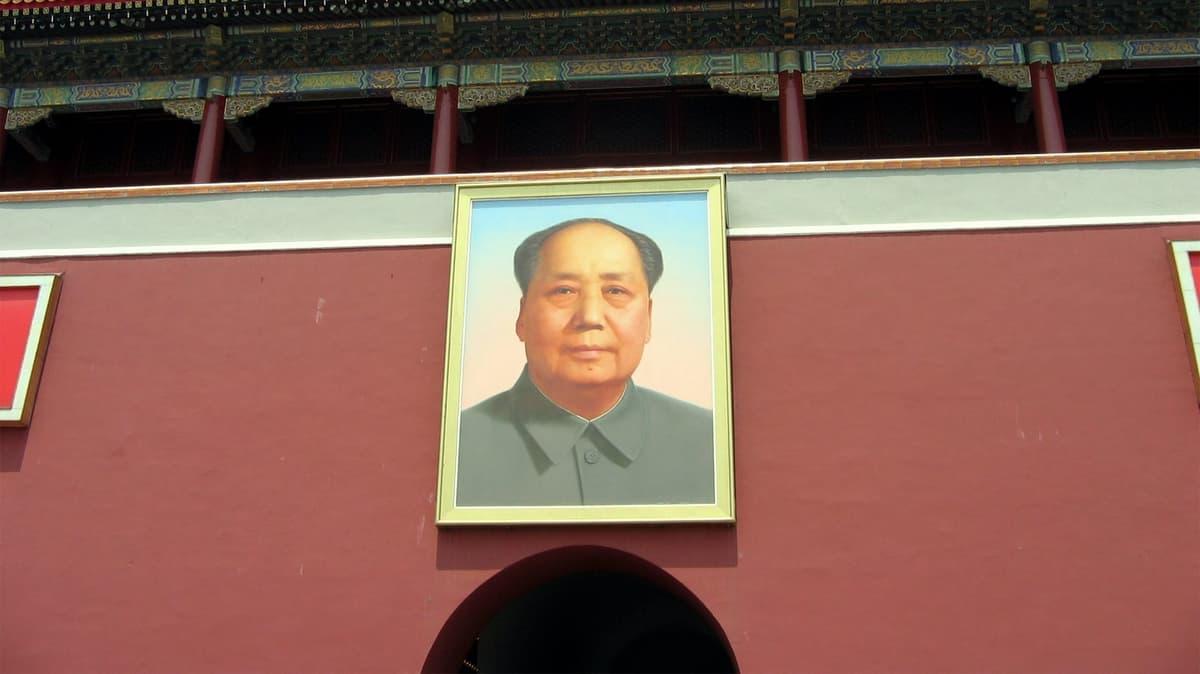
China and Communism
Harvard University
Explore the Maoist period of China, from the Communist Party to the death of Mao and the reopening of China.
High-Impact Feedback & Listening
Washington University in St. Louis
Sharing feedback is an important part of an organization's culture and an effective business tool that reaches across all levels. This course focuses on learner's ability to communicate positive and developmental feedback. They will also learn to receive feedback and to listen to accurately to best understand the speaker’s intended message.
Foundation for Effective Leadership
Washington University in St. Louis
Foundation for Effective Leadership helps participants identify their strengths by focusing on the behaviors that “come naturally” to them. When leaders operate from their strengths and are aware of their weaknesses, they can more effectively coach, delegate, and correct performance problems. This course is part of the Technical Leadership Certificate program.
Coaching: Move People Forward
Washington University in St. Louis
Coaching: Move People Forward shows leaders how to flex their approach to meet the unique needs of the people they're coaching, right where they are, and guide them in successfully achieving a goal. To have this kind of positive impact takes a trusting relationship, and that means coaches must have a better understanding of the other person and themselves.