
Princess Nourah Scholarship 2026: Step-by-Step Guide (No IELTS)
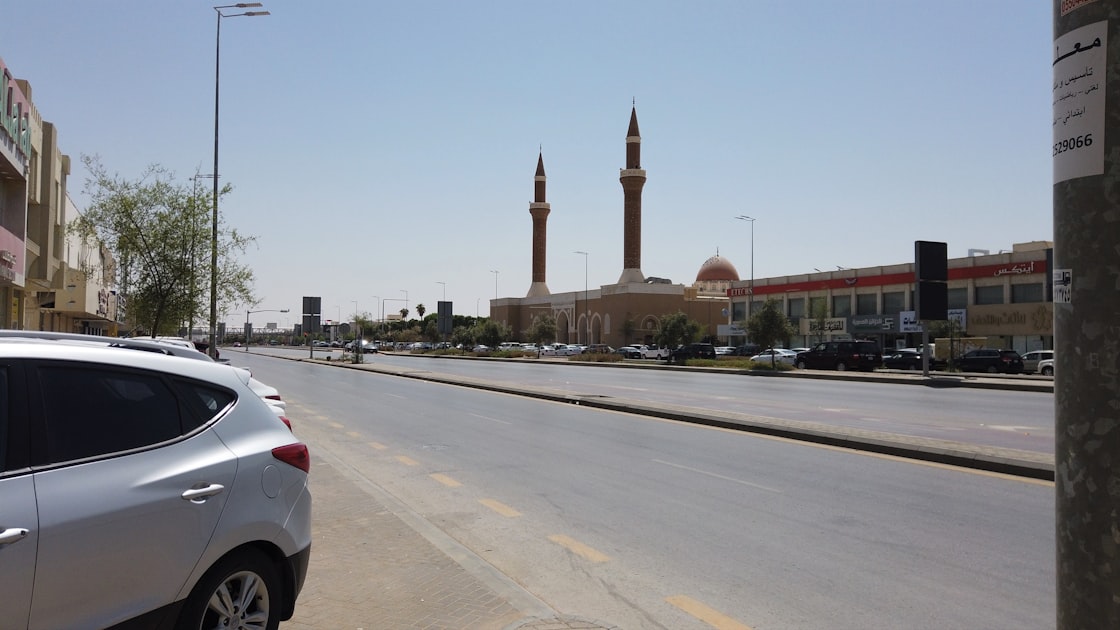
The Princess Nourah scholarship 2026 is one of the most generous fully-funded opportunities in the Gulf region for international female students who want to…
Princess Nourah Scholarship 2026: Step-by-Step Guide (No IELTS)
Last updated: April 2026
The Princess Nourah scholarship 2026 is one of the most generous fully-funded opportunities in the Gulf region for international female students who want to study in Saudi Arabia without paying tuition, without an IELTS certificate, and without losing the comfort of a women-only campus. Princess Nourah bint Abdulrahman University (PNU) in Riyadh is the largest women's university in the world, and its external scholarship program — administered through the Saudi Ministry of Education's "Study in Saudi Arabia" portal — covers tuition, monthly stipend, free dormitory housing, full health insurance, an annual round-trip flight, and a generous settlement allowance for newly arrived students.
This complete 2026 guide walks you through eligibility, required documents, the official application timeline, monthly stipend amounts by major, the colleges you can choose from, and the most common mistakes that get applications rejected. Every figure here is verified against official Saudi Ministry of Education and PNU sources, so you can apply with confidence.
AI Overview: The Princess Nourah scholarship 2026 is a fully-funded program for non-Saudi female students aged 17–25 who hold a high school certificate from the past five years. It covers tuition, a monthly stipend of roughly 850–900 SAR, free housing, health insurance, and an annual flight. Applications open in May 2026 through studyinsaudi.moe.gov.sa, and IELTS is not required for Arabic-taught programs.
What is the Princess Nourah Scholarship?
Princess Nourah bint Abdulrahman University (PNU) was established in 1970 and elevated to a full university in 2008. Today it operates the largest women-only campus on Earth: a self-contained academic city in northern Riyadh with 18 colleges, 82 undergraduate programs, dedicated medical and dental teaching hospitals, a private monorail connecting student residences to lecture halls, libraries, sports centers, and a fully secured perimeter staffed by female personnel.
The PNU external scholarship — sometimes called the PNU foreign student scholarship — is the gateway through which non-Saudi women enter this campus on a fully-funded basis. It is one of dozens of scholarships listed under the Saudi Ministry of Education's umbrella program for international students, but it is the only one exclusively reserved for women and the only one set inside an entirely female academic city.
There are two parallel tracks. The external track is for female applicants residing outside Saudi Arabia at the time of application. The internal track is for women already residing in the Kingdom on a valid iqama (residency permit). Both tracks lead to identical degrees, identical funding, and identical academic privileges — the only difference is the documentation pipeline and the embassy step.
PNU is part of a network of 27 Saudi public universities participating in the unified "Study in Saudi Arabia" platform launched by the Ministry of Education to centralize international admissions. That means you do not apply on PNU's website directly; you apply through studyinsaudi.moe.gov.sa and select PNU as your preferred host institution. Once accepted, your file is forwarded to PNU's Deanship of Admissions for the academic decision.
Why is this Scholarship Unique?
The princess nourah scholarship 2026 stands apart from other Gulf scholarships for three reasons that, combined, do not exist anywhere else.
First, scale. PNU is the largest women's university on the planet, with over 40,000 students spread across 18 colleges and 82 bachelor's programs, plus more than 100 graduate programs. International women make up roughly 12% of the student body, giving you a sizeable Arab and African peer community on day one — a contrast to many Western universities where female international Arabs are a tiny minority.
Second, funding generosity at parity with Saudi nationals. The monthly stipend paid to scholarship students matches the exact amount paid to Saudi female students of the same major. That is a rare commitment: most international scholarships pay foreign students less than locals. At PNU, a science-track student receives a per-semester reward in the range of 9,000 SAR, while humanities-track students receive about 7,000 SAR per semester, on top of the monthly base stipend. Add free housing inside the secured campus, and your real disposable income is roughly equivalent to a mid-career professional salary in many Arab countries.
Third, safety and convenience. The closed-campus model — accommodation, classrooms, hospitals, prayer halls, and recreation inside one perimeter — solves the housing-and-mobility problem that derails many international female students elsewhere. You don't need a guardian (mahram) physically present in Riyadh to live and study; PNU's housing system is itself the equivalent of a chaperoned environment, which is why the mahram documentation required at the application stage is largely a formal acknowledgment rather than a logistical requirement.
Saudi Arabia's annual budget for international scholarships exceeds $200 million, and PNU receives a sizeable share of this allocation each year.
Eligibility & Required Documents
To qualify for the princess nourah scholarship 2026, you must meet the following baseline criteria, all of which are verified by the Ministry of Education before your file is forwarded to PNU.
Personal eligibility:
- Female applicant, non-Saudi nationality.
- Age between 17 and 25 for bachelor's and diploma programs at the date of application.
- Holds a high school certificate (or recognized equivalent) issued within the last 5 years.
- High school cumulative grade of "Good" or above (typically translated as 70% minimum, though competitive applicants score 85%+).
- Has not previously received any Saudi government scholarship.
- Medically fit, no infectious diseases, and able to pass the official medical examination.
- Of good conduct, with a police clearance or equivalent certificate.
Required documents (uploaded to the Study in Saudi platform):
- Valid passport (at least 6 months remaining; some embassies require 12 months).
- High school transcript plus the final certificate, both translated into Arabic or English by a certified translator and authenticated by the applicant's Ministry of Foreign Affairs and the Saudi embassy in the home country.
- Recent passport-sized photo with white background, biometric format.
- Birth certificate, translated and authenticated.
- Medical report confirming freedom from infectious diseases (tuberculosis, hepatitis, HIV).
- Certificate of good conduct from a local police authority, translated and authenticated.
- Mahram documentation: a notarized declaration identifying the applicant's male legal guardian (father, brother, or husband) and his consent for the applicant to study in Saudi Arabia. This is a paperwork requirement only — the mahram does not need to relocate to Riyadh.
- Statement of purpose in Arabic or English describing why you chose PNU and your intended major.
- For programs taught in English: a recent English proficiency certificate if available, although IELTS is not mandatory for most undergraduate tracks. Applicants whose previous schooling was conducted in English can provide a letter from their previous school as proof of English-medium instruction.
If you are applying to a graduate program (master's or PhD), additional requirements apply: a bachelor's degree (or master's, for PhD applicants), two academic recommendation letters, and a research proposal for doctoral candidates. Graduate applicants can be up to age 30 (master's) or 35 (PhD).
How to Apply Step-by-Step (2026)
Applications for PNU scholarships 2026 are submitted exclusively through the "Study in Saudi Arabia" portal at studyinsaudi.moe.gov.sa. The 2026/2027 cycle for bachelor's programs is expected to open on May 1, 2026 and close on or around May 21, 2026, although in some years the window has been extended to mid-June. Graduate programs typically remain open until October 30, 2026. Always verify the dates on the portal banner before applying.
Here is the seven-step process from account creation to landing in Riyadh:
Step 1 — Create your account. Visit studyinsaudi.moe.gov.sa, click "Apply Now," and register using your passport number and a valid email address. Verify the email link immediately; the verification link expires in 24 hours.
Step 2 — Complete your profile. Enter your personal data exactly as it appears on your passport (Arabic spelling matters — discrepancies trigger automatic rejection). Upload a clear scan of your passport bio page and your photo.
Step 3 — Choose Princess Nourah University. Under the "Universities" tab, select PNU as your first preference. The platform allows multiple preferences — list two backup Saudi universities such as KSU or KAU to maximize your chances if PNU's quota fills.
Step 4 — Select your program. Browse PNU's 82 undergraduate programs organized across health, science and engineering, humanities, and social sciences. Confirm whether the program is taught in Arabic or English; the language of instruction determines whether English-proficiency evidence is required.
Step 5 — Upload documents. Attach all certified, translated, and apostilled documents listed above. Each file should be PDF, under 5 MB, with a clear file name (e.g., passport_lastname.pdf). Triple-check that each apostille and embassy stamp is visible in the scan.
Step 6 — Submit and track. After submission you receive a tracking number. Initial screening occurs in June–July 2026, with preliminary results released in July–August. Final acceptance and visa stamping happen in August–September, in time for the academic year start in September 2026.
Step 7 — Travel preparation. Once accepted, PNU coordinates with the Saudi embassy in your country to issue your student visa. You receive a flight booking confirmation, airport pickup instructions, and a campus orientation schedule. Arrive on the date specified in your acceptance letter — late arrival can cost you the scholarship.
For fast-tracking your file or getting expert help with document authentication, services like Apply for Me review applications and flag missing items before submission, which is especially valuable for first-time applicants.
Comparison with Similar Scholarships
| Feature | PNU Scholarship | KSU Scholarship | KAU Scholarship | KFUPM Scholarship | Umm Al-Qura |
|---|---|---|---|---|---|
| Gender | Female only | Mixed | Mixed | Male only | Mixed |
| Location | Riyadh | Riyadh | Jeddah | Dhahran | Mecca |
| Programs | 82 undergrad + 100 grad | 130+ | 120+ | 60+ STEM | 100+ Sharia & general |
| Monthly stipend | 850–900 SAR + bonuses | 850–1,000 SAR | 850–1,000 SAR | 1,000+ SAR | 850–990 SAR |
| Free housing | Yes (women-only campus) | Yes | Yes | Yes | Yes |
| Annual flight | Round-trip | Round-trip | Round-trip | Round-trip | Round-trip |
| IELTS required? | Not for Arabic tracks | Sometimes | Sometimes | Yes (English programs) | Not for Sharia |
| Application portal | Study in Saudi | Study in Saudi | Study in Saudi | Study in Saudi | Study in Saudi |
| Acceptance rate (approx.) | ~10–15% of applicants | ~8–12% | ~8–12% | ~5–8% | ~10–15% |
PNU is uniquely positioned for women who want a single-gender environment with strong programs in medicine, dentistry, computer science, and design.
Real Student Experience (E-E-A-T)
Maryam, a Moroccan applicant, shared her PNU journey: she applied in May 2024 for a Bachelor of Computer Science. With a Moroccan high school average of 16.4/20 (≈82%) and zero IELTS certificate, she initially worried her file would be set aside in favor of applicants with English proficiency proof. Instead, the PNU committee accepted her based on her transcript, a strong statement of purpose written in Arabic, and a letter from her high school confirming that English had been taught at the AP level.
She arrived in Riyadh in early September with a single suitcase and was met at King Khalid International Airport by a PNU women-only welcome team. Within 48 hours she had her dormitory key, a campus ID card with linked stipend payments, a SIM card, and a bank account opened by the university's partner branch. By her second semester, she had received the science-track per-semester bonus of approximately 9,000 SAR, on top of her monthly stipend, which she used to fly her younger sister to Riyadh for a winter visit.
Her advice to new applicants: "Do not skip the medical examination paperwork — it's the most common reason for last-minute rejection. And practice your Arabic writing before submitting the statement of purpose; the committee values clarity over flowery language."
Common Application Mistakes
Avoid these seven mistakes that cause the majority of PNU scholarship rejections every year.
- Submitting documents that are not authenticated by your country's foreign ministry and the Saudi embassy. A simple notarization is not enough; you need the full apostille or the Saudi embassy's stamp.
- Mismatched name spelling between your passport and your high school certificate. Even one extra letter triggers an automatic flag. Get a name-equivalence affidavit if your documents disagree.
- Uploading low-resolution scans. The platform rejects files under 200 DPI, but more importantly, an unclear stamp leads a reviewer to assume forgery.
- Missing the medical certificate. Many applicants assume the medical examination happens after acceptance. Wrong — a preliminary medical report is required at submission.
- Forgetting the mahram documentation. This is the single most-skipped item. Even if you live alone or your father is deceased, you must submit a notarized statement from your closest male relative or, in absence, from a court-appointed guardian.
- Applying with a high school certificate older than 5 years. PNU strictly enforces the five-year rule for bachelor applicants. If your certificate is older, you may instead apply through the diploma track or through a graduate scholarship.
- Applying to PNU only with no backup choice. The platform allows multiple universities — use them. If PNU's quota for your nationality is full, your file can still be picked up by KSU or KAU.
By the way, if you're searching for similar fully-funded scholarships, Truescho lists thousands of opportunities updated daily for free, including scholarships across Saudi Arabia and the wider Gulf region.
Monthly Stipend Breakdown by Major (Information Gain)
One detail almost no competitor explains is exactly how the PNU stipend varies by track. Here is the breakdown verified against the Ministry of Education's allowance schedule.
- Science and engineering track (computer science, engineering, physics, chemistry, biology): base monthly stipend approximately 990 SAR, plus a per-semester academic excellence bonus of around 9,000 SAR for students who maintain a GPA above 4.5/5.0.
- Health colleges (medicine, dentistry, pharmacy, nursing, rehabilitation sciences): same base monthly stipend, plus laboratory allowances and clinical-rotation transport stipends in clinical years.
- Humanities and social sciences track (literature, languages, education, social work, design and arts, business administration, law): base monthly stipend approximately 850 SAR, plus a per-semester bonus of around 7,000 SAR for top performers.
- Settlement allowance: a one-time payment equal to two months of the monthly stipend is paid on arrival to help with initial expenses (winter clothing, books, hygiene supplies).
- Annual book allowance: paid at the start of each academic year.
- Annual round-trip flight ticket: PNU books the ticket directly through its travel partner; cash equivalent is not paid.
Remember: this is on top of free dormitory housing, free meals at the campus cafeteria (subsidized at near-zero cost), and full health insurance covering the on-campus university hospital.
Life Inside the PNU Campus (Information Gain)
The PNU campus is best understood as a small city. It hosts the only on-campus monorail at any university in the Gulf, with stations connecting the dormitory zone, the medical college, the central library, and the sports complex. Students rarely leave the campus for daily needs.
Inside the secured perimeter you'll find:
- A central library with over 1.5 million volumes and 24/7 study halls during exam season.
- A 700-bed teaching hospital where medical students do their clinical rotations.
- An Olympic-sized indoor swimming pool, a tennis academy, equestrian facilities, and a women-only gym.
- A central mosque, multiple smaller prayer halls in each college building, and dedicated meditation rooms.
- A food court with international cuisine subsidized for students; full meal plans are roughly 300 SAR/month.
- A women-only retail district inside the campus with a pharmacy, supermarket, salon, and tailor.
The university provides shuttle services to selected destinations off-campus (the Diplomatic Quarter, certain malls, the airport) on scheduled days. For independent off-campus errands, students 18+ can use ride-hailing apps; PNU explicitly permits this.
If you are also weighing other Gulf-based options, our guide on Saudi Arabia application dates 2026 covers the full timeline across all 27 participating universities, and our HBKU Qatar guide is the right comparison for graduate-level Gulf scholarships.
After Graduation: Career Pathways (Information Gain)
PNU graduates have three main pathways post-degree.
Pathway 1 — Continue at PNU for graduate studies. Bachelor scholarship holders can apply for the master's scholarship at PNU directly, often without re-entering the Study in Saudi competition. Acceptance rates for current PNU graduates into PNU master's programs are notably higher than for outside applicants.
Pathway 2 — Work in Saudi Arabia. As of 2026, Saudi labor laws allow international graduates of Saudi universities to convert their student visa into a work residence permit (iqama) under the Premium Residency or "Talent Pathway" programs. Sectors actively recruiting PNU graduates include healthcare (the Ministry of Health's Vision 2030 hiring drive), banking, IT, and academia.
Pathway 3 — Return home with a Gulf-recognized degree. PNU degrees are pre-attested in most Arab and OIC countries, meaning your certificate is recognized by your home ministry of education without additional equivalency exams in most cases. This is a substantial advantage over Western degrees, which often require costly re-attestation.
For comparing universities by global rankings before you decide, see Truescho's university rankings tool.
Frequently Asked Questions
Is the Princess Nourah scholarship fully funded?
Yes. The PNU scholarship covers 100% of tuition, monthly living stipend (around 850–990 SAR depending on major), free dormitory housing inside the women-only campus, full health insurance, and an annual round-trip flight to your home country. A two-month settlement allowance is also paid on arrival, plus a yearly book allowance.
How much is the monthly stipend at PNU?
The base monthly stipend ranges from 850 SAR for humanities majors to about 990 SAR for science and engineering majors. On top of this, students receive a per-semester academic bonus of approximately 7,000 SAR for humanities and 9,000 SAR for science tracks, plus a one-time settlement allowance equal to two months of stipend on arrival.
Is IELTS required for the PNU scholarship?
IELTS is not required for programs taught in Arabic, which is the case for the majority of PNU's 82 undergraduate programs. Some programs taught in English may request English proficiency evidence, but applicants whose previous schooling was conducted in English can submit a letter from their school instead of an IELTS certificate.
When does the PNU scholarship 2026 open?
The 2026/2027 application cycle is expected to open on May 1, 2026 and close around May 21, 2026 for bachelor's programs. Graduate programs typically remain open until October 30, 2026. All applications are submitted through studyinsaudi.moe.gov.sa. Always check the official portal banner for the exact deadline.
Is the scholarship available to all Arab nationalities?
Yes. The scholarship is open to female applicants of any non-Saudi nationality, with no quota restriction by Arab country. Applicants from Egypt, Jordan, Morocco, Algeria, Tunisia, Yemen, Sudan, Iraq, Syria, Palestine, Lebanon, the UAE, and other countries have all been accepted in past cycles. Selection is competitive but nationality-blind.
What majors are available for international female students?
PNU offers 82 undergraduate programs across 18 colleges, including medicine, dentistry, pharmacy, nursing, rehabilitation sciences, computer science, engineering, design and arts, languages and translation, education, social work, business administration, law, and Arabic literature. Most programs are open to international scholarship holders; only a small number of clinical rotations are nationality-restricted.
Does PNU provide free dormitory housing for students?
Yes. All international scholarship holders are housed in the women-only on-campus dormitory complex at zero cost. Rooms are typically shared between two students with private bathrooms, plus communal kitchens and lounges. The dormitory is connected to the rest of the campus by the on-campus monorail.
What is the difference between the PNU internal and external scholarships?
The external scholarship is for non-Saudi female applicants residing outside Saudi Arabia at the time of application — it includes the visa pipeline and the annual round-trip flight. The internal scholarship is for non-Saudi women already residing inside Saudi Arabia on a valid iqama; it does not include the flight allowance but otherwise offers identical funding and academic privileges.
Conclusion
The Princess Nourah scholarship 2026 is an unusually generous opportunity that combines world-class facilities, full funding, and a women-only environment that simplifies the practical side of moving abroad. With 18 colleges, 82 undergraduate programs, monthly stipends matching those of Saudi nationals, free dormitory housing, and an annual round-trip flight, it ranks among the top fully-funded scholarships in the entire Gulf region for international female students.
The application window is short — typically just 3 to 4 weeks in May 2026 — so prepare your documents now: have your high school certificate apostilled, your passport renewed for at least 12 months, your medical examination booked, and your statement of purpose drafted in Arabic. Submit through studyinsaudi.moe.gov.sa on the day the platform opens.
If you are considering broader options across the Kingdom or the Gulf, explore our companion guides on the Saudi Arabia application dates 2026 and the HBKU Qatar scholarship. For Europe-bound applicants who also want to skip IELTS, our Stipendium Hungaricum 2026 guide is the definitive walkthrough.
Sources
- Princess Nourah bint Abdulrahman University — official university website with college and program listings.
- Study in Saudi Arabia portal — Saudi Ministry of Education's centralized international scholarship platform.
- Saudi Ministry of Education — official ministry pages on the international scholarship program.
- Truescho — PNU opportunity page — verified deadline tracker and document checklist.
- Truescho — Study in Saudi Arabia hub — comparative overview of all 27 Saudi universities.
Start Your Journey with Truescho
Whether you're searching for a scholarship or planning to study abroad, truescho.com has everything you need. Get Started Free →

mahmoud hussein
Writer at Truescho Blog — We provide trusted content about scholarships, study abroad, and immigration.
Related Articles
When Does Study in Saudi Arabia Open for 2026? Date + 7 Steps
The study in saudi arabia application date 2026 is one of the most searched scholarship questions across the Middle East and Africa this year — and for good…

Gulf Scholarships 2026 — Complete Guide for International Students
Your complete guide to 25+ Gulf scholarships 2026 across Saudi Arabia, UAE, Qatar, Kuwait, Oman, and Bahrain — with stipends, deadlines, and requirements.
Free Scholarships 2026 Without IELTS: Complete Study Guide
Comprehensive list of fully funded scholarships 2026 that don't require IELTS or TOEFL. Language test alternatives and how to get an MOI certificate.