
HBKU Scholarship Qatar 2026 — Fully Funded, No IELTS
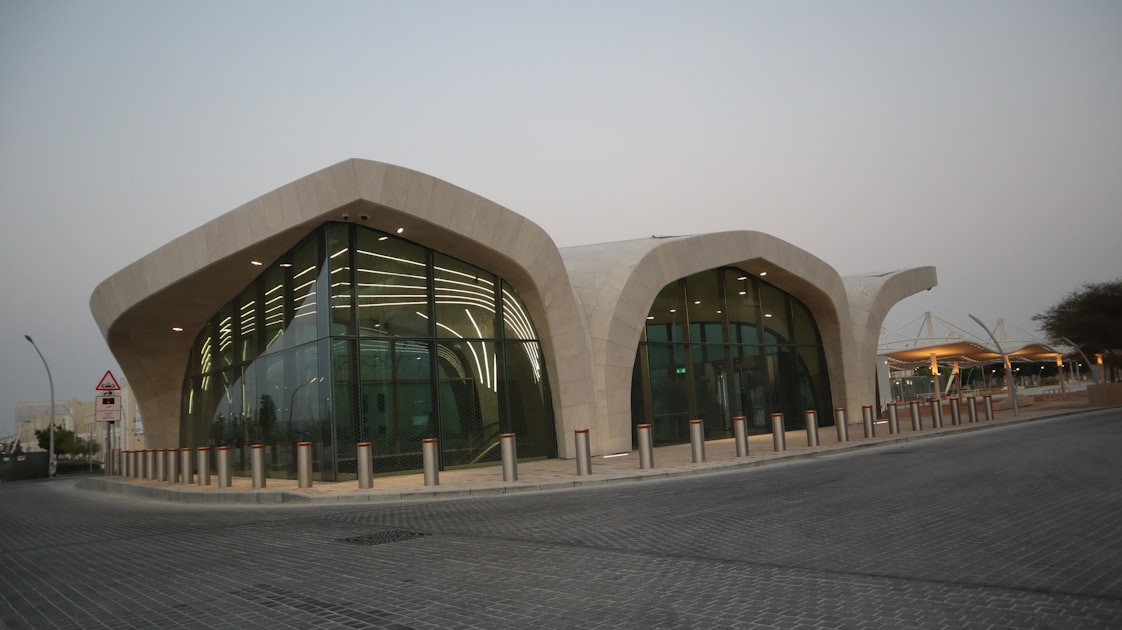
The HBKU scholarship Qatar 2026 is one of the most generous graduate-only scholarships in the Middle East — and one of the few where IELTS can be waived entirely…
HBKU Scholarship Qatar 2026 — Fully Funded, No IELTS
Last updated: April 2026
The HBKU scholarship Qatar 2026 is one of the most generous graduate-only scholarships in the Middle East — and one of the few where IELTS can be waived entirely under specific conditions. Hosted at Hamad Bin Khalifa University (HBKU) in the Education City complex in Doha, the scholarship is funded by Qatar Foundation and supports international, Qatari, and resident students across 7 colleges and 40+ master's and PhD programs. With monthly stipends reaching 9,000 QAR for international PhD candidates, round-trip flights, and a research-driven environment that sits on the same campus as Cornell-Weill Medical College, Georgetown School of Foreign Service, and Carnegie Mellon Qatar, HBKU has become a top alternative to Western graduate programs for Arab students. This guide unpacks the 2026 deadlines, the exact stipend table for each track, the IELTS-exemption rules, and the practical realities of living in Doha as an HBKU graduate student.
The 2026/2027 international deadline closed on 1 February 2026, while Qatari and resident applicants had until 15 March 2026, with a late grace window through 3 May 2026. Classes begin in late August 2026.
What is the HBKU Scholarship?
Hamad Bin Khalifa University (HBKU) is a research-focused graduate university established in 2010 by Qatar Foundation in Doha's Education City. The HBKU scholarship is the funding mechanism by which the university subsidizes admitted graduate students — there is no separate application form for the scholarship itself, since every admitted graduate student is automatically considered for funding based on their academic profile and financial need.
The scholarship operates across seven colleges:
- College of Islamic Studies (CIS) — 7 master's programs and 1 PhD, including pioneering tracks in Islamic finance, Counseling Psychology, and Applied Islamic Ethics.
- College of Humanities and Social Sciences (CHSS) — 6 master's and 1 PhD, with strengths in Translation, Linguistics, and Audiovisual Translation Studies.
- College of Science and Engineering (CSE) — 10+ master's and PhD tracks across IT and Computing, Sustainable Development, and Engineering Management.
- College of Law (CL) — 2 master's and 1 PhD, focusing on International Law and Comparative Law.
- College of Public Policy (CPP) — 2 master's including Public Policy and Islamic Finance Policy.
- College of Health and Life Sciences (CHLS) — 8+ master's and PhD programs, including Genetic Counseling and Biological & Biomedical Sciences.
- School of Economics and Management — recently launched in 2026, completing the seventh college.
Crucially, HBKU is graduate-only — there are no bachelor's programs. This positions it as a research powerhouse rather than a general teaching university, and it is reflected in the funding ratios: roughly 65% of students receive partial or full scholarship support, with full funding more common in STEM and Islamic Studies than in social sciences.
Why is HBKU Unique?
HBKU's value proposition rests on four pillars that distinguish it from regional competitors like Qatar University, the American University of Sharjah, and Khalifa University in Abu Dhabi.
First, the Education City ecosystem. HBKU shares a campus with six branch campuses of US and European universities — Cornell-Weill Medical College, Georgetown School of Foreign Service, Carnegie Mellon Qatar, Northwestern Qatar, Texas A&M Qatar, and HEC Paris. This means HBKU graduate students can audit classes, use libraries, and collaborate with research labs across all seven institutions through a unified Education City ID — a benefit you will not find at any Saudi, Emirati, or Egyptian university.
Second, the funding scale. A fully funded international PhD recipient earns 9,000 QAR per month over 45 months — a total of 405,000 QAR (~$111,000) in stipends alone, before counting tuition waivers and flight tickets. International master's recipients receive 7,000 QAR per month over 21 months, totaling 147,000 QAR (~$40,000).
Third, the IELTS flexibility. While the published minimum is IELTS 6.5 or TOEFL 79, HBKU grants three categories of waivers: applicants whose entire bachelor's degree was English-medium (with a formal letter from the prior institution), applicants from countries where English is the official medium of higher education, and certain Arabic-medium programs at the College of Islamic Studies that do not require English at all.
Fourth, the strategic positioning. Qatar is one of the most accessible Gulf states for Arab passport holders — Tunisians, Egyptians, Lebanese, Jordanians, and Moroccans typically receive student visas in 2–3 weeks. The country also offers visa-on-arrival or e-visas for many other nationalities, making the visa step easier than for Saudi Arabia or the UAE.
Eligibility & Required Documents
Eligibility on the HBKU scholarship Qatar 2026 is determined by a combination of academic merit, fit with the chosen program, and the funding capacity of the host college. Here is the unified checklist.
Academic eligibility:
- Master's applicants: a recognized bachelor's degree, with a minimum GPA of 3.0/4.0 (some programs require 3.3+).
- PhD applicants: a recognized master's degree with strong research potential, GPA 3.3+ preferred, and a defined research interest aligned with an HBKU faculty member.
- All degrees must come from accredited institutions; HBKU verifies through WES or directly with the issuing university.
Document checklist (uploaded via the HBKU online application portal):
- Online application form completed at hbku.edu.qa/admissions.
- Bachelor's diploma + transcripts (master's applicants).
- Master's diploma + transcripts (PhD applicants).
- Statement of Purpose — typically 1,000–1,500 words tying motivation to a specific HBKU faculty research line.
- Two academic recommendation letters signed and on letterhead.
- Curriculum vitae in academic format (publications, conferences, projects).
- Research proposal (PhD only) — 3,000–5,000 words.
- English language certificate (IELTS 6.5 / TOEFL 79) or an IELTS waiver document.
- Copy of valid passport.
- Proof of GPA conversion if your prior institution uses a non-4.0 scale.
- Application fee receipt — currently 250 QAR (waived for residents in select cases).
- Portfolio for arts-related tracks at the College of Humanities and Social Sciences.
The three IELTS-waiver paths are the most-asked-about element of the HBKU application, so here is the explicit detail. Path 1: your bachelor's was English-medium — submit a formal letter from the registrar of your previous university confirming the language of instruction. Path 2: you are from a country where English is the official language of higher education (e.g., Pakistan, India, Nigeria, Singapore) — submit your country's higher-education ministry confirmation or your university's accreditation document. Path 3: you are applying to an Arabic-medium College of Islamic Studies program — IELTS is not required at all, but Arabic proficiency may be assessed at interview.
For a comparable no-IELTS Saudi route, see our guide on the Princess Nourah scholarship 2026, one of the strongest fully funded options for women in the Gulf. Be sure to verify your GPA equivalence using the Truescho GPA calculator before applying.
How to Apply Step-by-Step (2026)
The HBKU process is single-track — you submit directly to HBKU, with no intermediate sending partner. Here are the official steps for the 2026/2027 cycle, repeatable for the 2027/2028 cycle.
Step 1 — Identify your target program (September–October 2025). Browse the seven colleges at hbku.edu.qa/admissions, shortlist programs that match your background, and identify at least one HBKU faculty member whose research excites you. The Statement of Purpose review weights faculty fit heavily.
Step 2 — Open the application (1 October 2025). Create your account and start the online form. The system saves drafts indefinitely; do not feel pressured to submit early.
Step 3 — Submit core documents. Upload your transcripts, diplomas, CV, and statement of purpose. Files must be PDF, max 10 MB each, in English (or with certified English translations).
Step 4 — Request recommendation letters via the portal. The system emails your referees directly with a unique upload link; you cannot submit letters yourself. Build a 2-week buffer for referees to respond.
Step 5 — Submit IELTS or waiver document. Either upload the test report (taken within 2 years) or upload your English-medium letter. If you do not have either, you can submit conditionally and provide it within the first month — but doing so risks delays.
Step 6 — Pay the application fee and submit. The fee is 250 QAR, payable by international card. Once submitted, the application enters review.
Step 7 — Interview (March–April 2026). Most programs conduct a 30–45 minute Zoom interview with two HBKU faculty members. STEM programs may include a technical question; humanities programs focus on research interests.
Step 8 — Funding decision (April–May 2026). Admitted students receive an admission letter that explicitly states the scholarship percentage (60%, 75%, 100%) and the monthly stipend. You have a deadline to accept.
Step 9 — Visa and arrival (June–August 2026). HBKU's International Student Office sponsors your Qatar student residence permit; the process takes 4–6 weeks. Classes start in late August 2026.
Comparison with Similar Gulf Graduate Programs
| University | Country | Level | Monthly Stipend (Intl) | IELTS | Deadline 2026 |
|---|---|---|---|---|---|
| HBKU | Qatar | Master's & PhD | 7,000–9,000 QAR | Waivable | Closed Feb 1, 2026 |
| Qatar University | Qatar | UG + Grad | ~3,000–5,000 QAR | Required | Mar–May 2026 |
| KAUST | Saudi Arabia | Master's & PhD | $2,000–2,500 USD | Required (with waivers) | Rolling |
| Khalifa University | UAE | Master's & PhD | 6,000–10,000 AED | Required | Multiple deadlines |
| KFUPM | Saudi Arabia | UG + Grad | 850–1,000 SAR + housing | Optional | Via Study in Saudi Arabia |
| NYU Abu Dhabi | UAE | Grad only (some) | Variable | Required | Mid-Dec |
HBKU offers the highest absolute stipend in the Gulf for international graduate students and the most flexible IELTS rules. KAUST in Saudi Arabia offers a higher dollar stipend, but the IELTS waiver is harder to obtain and the program is heavily STEM-focused. For broader Saudi options, see the Study in Saudi Arabia platform 2026 guide.
Real Student Experience (E-E-A-T)
Hamza, a Tunisian PhD candidate in Sustainable Development at HBKU's College of Science and Engineering, applied in late 2024 with a master's from the University of Manouba. "I was sure HBKU would reject me because my master's was in French," he recalls. "But my undergraduate program was English-medium, so I attached the registrar letter. The Admissions Office accepted it within a week." Hamza receives 9,000 QAR monthly plus a fully covered round-trip Tunis–Doha flight at the start and end of his 45-month program. His monthly budget breaks down to roughly 3,800 QAR for a shared apartment in West Bay, 1,200 QAR for groceries, 600 QAR for transport, and the rest goes to savings. "Doha is more expensive than I expected. Without the HBKU stipend, I could not survive on a normal Tunisian PhD stipend, which is around 1,200 dinars (~1,400 QAR). HBKU pays six times more." His advice for 2026 applicants: "Reach out to your target faculty member by email before submitting. A 5-minute conversation about their research transformed my Statement of Purpose." For supplementary regional context, the recently published ICANN87 Muscat fellowship 2026 covers a similar Gulf research environment.
Common Application Mistakes (and How to Avoid Them)
HBKU Admissions publishes regular feedback to high schools and Arab universities. The seven most frequent rejection causes for 2026 were:
- Generic Statement of Purpose. Applicants who do not name a faculty member or research project score in the bottom quartile.
- Late submission of recommendation letters. Even if you submit on time, the application is not complete until both referees upload — and many referees miss the deadline. Send reminders 2 weeks and 3 days before the deadline.
- Wrong IELTS-waiver path. Applicants from countries where English is taught (but not the official medium) sometimes claim Path 2 incorrectly. When in doubt, use Path 1 (your specific university's English-medium letter).
- GPA conversion errors. A 14/20 French average is not 3.5/4.0 — use the official WES converter or the Truescho GPA calculator and submit a conversion note.
- Underdeveloped research proposal (PhD). A 1,500-word proposal is too short. The 3,000–5,000 word range with clear methodology and timeline is the norm.
- Skipping the application fee. Some applicants leave the 250 QAR unpaid, which silently invalidates the application — there is no email warning.
- Underestimating Doha living costs. Even with a 7,000 QAR stipend, master's students struggle if they assume Doha rents are like Cairo or Tunis. Plan a budget before you accept.
By the way, if you are exploring multiple Gulf options simultaneously, Truescho lists thousands of fully funded scholarships updated daily, with smart filters for "Gulf only" and "no IELTS." The Truescho university rankings tool also lets you compare HBKU, Qatar University, and Khalifa University side-by-side.
Living in Doha and Education City
HBKU does not provide direct housing — students rent independently from their stipend. Education City is on the western edge of Doha, near Al Rayyan, with quick access to the Doha Metro Green Line. Most HBKU students live in three areas: Al Rayyan and Education City (closest to campus, 4,000–6,000 QAR monthly for a studio), West Bay and the Pearl (premium, 7,000–10,000 QAR for a one-bedroom), or Al Sadd / Mansoura (more affordable, 3,500–5,000 QAR for a shared two-bedroom). Groceries at LuLu Hypermarket or Carrefour run about 1,000–1,500 QAR per month for a student. The Doha Metro and Karwa public buses are cheap and student-friendly (1 QAR per ride, 100 QAR monthly pass), though many students still rely on Uber or Careem because Qatar's heat (May–September) makes walking difficult. Education City itself contains its own library hub (Qatar National Library, one of the most modern in the Arab world), a multi-faith spiritual center, sports facilities at the Tournament Stadium and Oxygen Park, and a network of free shuttle buses connecting all university branches.
HBKU vs Qatar University vs Khalifa University
Many Gulf applicants compare HBKU with Qatar University (the larger national university with both UG and graduate programs, lower stipends, and stricter IELTS requirements) and Khalifa University in Abu Dhabi (private research university with strong STEM focus and slightly higher stipends but a more selective admission rate). The decision usually comes down to three factors. Research depth: HBKU's connection to Education City and Qatar Foundation labs gives it a clear edge over Qatar University. Cost of living: Doha is more expensive than Sharjah but cheaper than Abu Dhabi, making HBKU's stipend stretch further than Khalifa's. Program portfolio: HBKU is graduate-only and excels in Islamic Studies and policy, while Khalifa University is purely STEM-focused. For purely Arab-medium Sharia studies, Qatar Faculty of Islamic Studies (within HBKU's CIS) and Umm Al-Qura in Mecca are typically the top two choices — see our Tashira Amal Qatar 2026 guide for related Qatari educational opportunities.
Frequently Asked Questions
Is the HBKU scholarship fully funded?
HBKU offers partial to full funding depending on the program and applicant profile. STEM programs typically receive 75–100% tuition coverage, while social sciences receive ~60%. International master's students receive 7,000 QAR per month over 21 months; international PhDs receive 9,000 QAR per month over 45 months, plus round-trip flights.
What is the monthly stipend for HBKU master's students?
The international master's stipend is 7,000 QAR per month, paid for 21 months (the standard master's duration). Qatari nationals receive 9,000 QAR, and Qatar residents receive 4,000 QAR.
Does HBKU require IELTS?
The standard requirement is IELTS 6.5 / TOEFL 79, but HBKU grants waivers in three cases: (1) your bachelor's was entirely English-medium, (2) you are from a country where English is the higher-education medium, or (3) you are applying to an Arabic-medium program at the College of Islamic Studies.
What is the difference between HBKU and Qatar University?
HBKU is a graduate-only research university in Education City, founded by Qatar Foundation, offering 7 colleges and 40+ master's and PhD programs with high stipends. Qatar University is the national public university offering bachelor's and graduate programs to a much larger student body, with lower stipends and stricter IELTS rules.
When is the HBKU 2026 deadline?
The international applicant deadline for 2026/2027 was 1 February 2026. Qatari and Qatar residents had until 15 March 2026, with a late grace window through 3 May 2026. Application opens around 1 October each year.
Does HBKU offer bachelor's degrees?
No. HBKU is graduate-only. For bachelor's options in Qatar, applicants typically consider Qatar University, Carnegie Mellon Qatar, or Northwestern Qatar — most of which are also based in Education City.
How long is a PhD at HBKU?
Standard PhD duration at HBKU is 45 months (3.75 years), with the funding package extending across all 45 months. Some students complete in 36 months; extensions beyond 45 months may not be funded.
Does HBKU cover housing?
No, housing is not directly covered. Students rent independently using their monthly stipend. A studio in Al Rayyan or Education City typically costs 4,000–6,000 QAR per month, leaving the rest of the stipend for food, transport, and savings.
Conclusion
The HBKU scholarship Qatar 2026 is the strongest graduate-only opportunity in the Gulf for Arab and international students seeking a research-grade degree without IELTS — provided you fit one of the three waiver paths. With monthly stipends up to 9,000 QAR, full integration with Education City's six US and European branch campuses, and acceptance into a fully bilingual (Arabic + English) academic culture, HBKU sits at the apex of regional graduate options. Plan now for the 1 February 2027 deadline: identify your faculty match in October, draft a research-driven Statement of Purpose, secure your two recommenders by November, and prepare your IELTS waiver letter early. Doha living costs are higher than Cairo or Tunis, but the stipend stretches comfortably with smart housing choices.
For continuous deadline alerts and Gulf-specific scholarship monitoring, Truescho curates fully funded opportunities daily, and the Apply for Me service handles the document polishing for serious candidates. To compare HBKU with European alternatives, review our guides on the Stipendium Hungaricum scholarship 2026 and the HSE Russia Open Doors scholarship — and for women specifically, the Princess Nourah scholarship 2026 is the closest no-IELTS Saudi equivalent. If Qatar's wider scholarship landscape interests you, our Tashira Amal Qatar 2026 guide covers complementary tracks worth applying to in parallel, and the Study in Saudi Arabia 2026 platform guide is essential for anyone hedging across both Gulf states.
Sources
- Hamad Bin Khalifa University — Official Site — official HBKU portal with admissions, programs, and scholarship details.
- HBKU Admissions Portal — single application channel for all graduate programs.
- Qatar Foundation — parent organization of HBKU and Education City.
- Qatar National Library — central research library used by all Education City students.
- Education City — Qatar Foundation — overview of all branch campuses and shared facilities.
Start Your Journey with Truescho
Whether you're searching for a scholarship or planning to study abroad, truescho.com has everything you need. Get Started Free →

mahmoud hussein
Writer at Truescho Blog — We provide trusted content about scholarships, study abroad, and immigration.
Related Articles

HSE University Open Doors Scholarship 2026 for Arab Students
The HSE University Open Doors scholarship 2026 is the simplest gateway for Arab students into a top-tier Russian research university — no IELTS, no application…
Stipendium Hungaricum Scholarship 2026 — Apply Without IELTS
The Stipendium Hungaricum scholarship 2026 remains one of the most accessible fully-funded European scholarship programs for Arab students — and for many…
Swiss Government Excellence Scholarships 2027: ETH, EPFL & All Federal Universities
The Swiss Government Excellence Scholarships 2027 (ESKAS) are the most prestigious fully funded research opportunity in Switzerland for international graduates. Yet most...