
Stipendium Hungaricum Scholarship 2026 — Apply Without IELTS
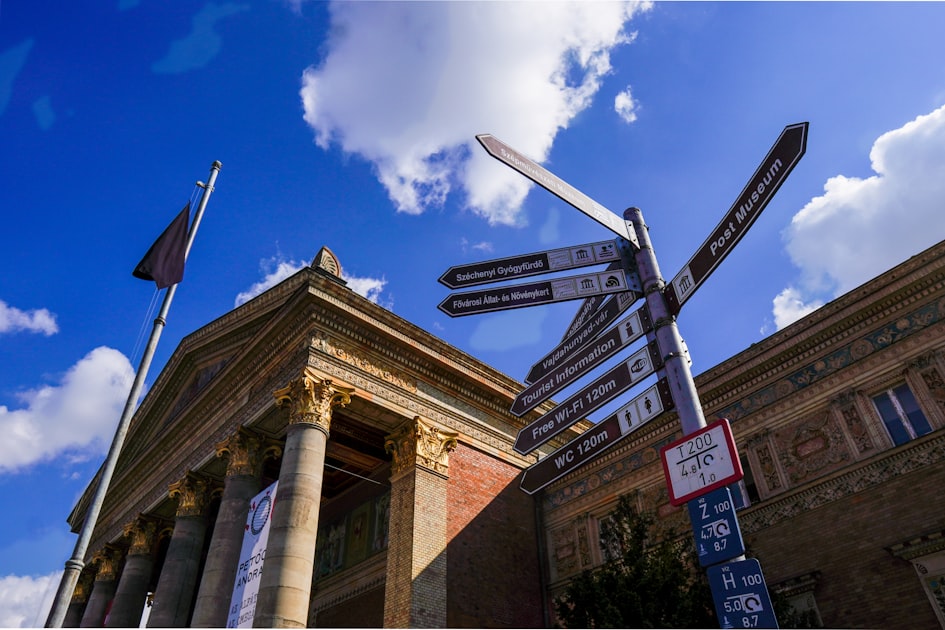
The Stipendium Hungaricum scholarship 2026 remains one of the most accessible fully-funded European scholarship programs for Arab students — and for many…
Stipendium Hungaricum Scholarship 2026 — Apply Without IELTS
Last updated: April 2026
The Stipendium Hungaricum scholarship 2026 remains one of the most accessible fully-funded European scholarship programs for Arab students — and for many candidates the most attractive feature is that it can be obtained without IELTS for the right combination of program and academic background. Funded by the Hungarian government through the Tempus Public Foundation, the scholarship covers tuition, a monthly stipend, housing allowance, and health insurance across 30+ partner universities offering more than 900 English-taught programs. With 15 Arab countries eligible — Egypt, Jordan, Palestine, Lebanon, Syria, Iraq, Morocco, Tunisia, Algeria, Yemen, Libya, Sudan, Saudi Arabia, the UAE, and Qatar — the program has become a go-to path to a Schengen-area degree. This guide walks you through the 2026 deadlines, the complete document checklist, the IELTS-exemption rules, and the city-by-city living-cost reality, so you can apply with full clarity.
The 2026/2027 deadline closed on 15 January 2026 at 14:00 CET. Successful candidates received final results in late June and early July 2026 and start classes in September 2026. The next cycle (2027/2028) opens November 2026.
What is the Stipendium Hungaricum Scholarship?
The Stipendium Hungaricum scholarship is the Hungarian government's flagship international mobility program, established in 2013 and managed by the Tempus Public Foundation. It is structured as a bilateral agreement between the Hungarian Ministry of Foreign Affairs and Trade and the sending partners in 75+ countries, including 15 Arab states whose education ministries (or equivalent agencies) act as the official channel for nominations.
The scholarship funds bachelor's, master's, one-tier master's, PhD, partial studies, and Hungarian language preparatory programs at more than 30 Hungarian universities. The most popular institutions are concentrated in Budapest — Eötvös Loránd University (ELTE), Budapest University of Technology and Economics (BME), Corvinus University of Budapest, Semmelweis University (medicine) — but several large universities outside the capital also participate, including the University of Debrecen, University of Szeged (Hungary's oldest), University of Pécs, and Széchenyi István University in Győr.
What makes the Stipendium Hungaricum unique among European scholarships is the dual application architecture: candidates submit through the centralized DreamApply portal at apply.stipendiumhungaricum.hu while simultaneously being nominated by their home country's sending partner. This double-validation reduces fraud and ensures bilateral fairness — Egypt, for example, receives roughly 200 nominations a year, Algeria around 70, and Tunisia about 50.
The scholarship is genuinely competitive: in 2025, more than 30,000 applicants competed for approximately 5,000 places, an acceptance rate of around 16% globally and slightly higher for Arab applicants who match strong sending-partner quotas.
Why is Stipendium Hungaricum Unique?
Stipendium Hungaricum stands out among European fully funded options for four measurable reasons.
First, the financial package. Successful candidates receive a 100% tuition waiver, a monthly stipend of 43,700 HUF for bachelor's and master's students (the PhD stipend rises to roughly 140,000–180,000 HUF), a 40,000 HUF housing allowance for those who do not stay in dormitories, and health insurance up to 65,000 HUF per year. The package does not include flights, but the combined cash transfers are enough to cover modest living in Budapest, Debrecen, or Szeged — Hungarian cities are notably cheaper than Vienna or Berlin.
Second, the program portfolio. With 900+ programs across natural sciences, engineering, medicine, business, social sciences, and the arts — and most delivered in English — the menu rivals that of Erasmus Mundus.
Third, geographic prestige. A Hungarian degree is recognized across the European Union and qualifies you for the Schengen visa, which means the scholarship doubles as a long-term mobility ticket for graduates considering further studies, conferences, or work across 27 European countries.
Fourth, accessibility for non-English speakers. Hungarian-medium programs do not require IELTS at all and come with a free preparatory year to reach B2 Hungarian. For English-medium programs, IELTS waivers are available if your previous degree was English-medium or if you studied in a country whose official language is English. This dual-language strategy widens the pool dramatically — by some estimates, 40% of Arab Stipendium recipients apply on the IELTS-waiver path.
Eligibility & Required Documents
Eligibility on the Stipendium Hungaricum scholarship 2026 depends on three layers: nationality, program level, and the sending partner's specific quota. Below is the unified document checklist that applies to most applicants, with notes on level-specific items.
Eligibility basics:
- Citizenship of an eligible country (15 Arab states + ~60 others).
- Not a Hungarian citizen.
- Meet the academic level required by the chosen program (e.g. valid high-school diploma for bachelor's, valid bachelor's for master's, valid master's for PhD).
- Eligibility for legal entry to Hungary (no Schengen ban).
- Not currently enrolled in a parallel Stipendium-funded program.
Maximum applications: each candidate can submit to two programs, and must rank them as priority 1 and priority 2. A common strategic mix is one program at a Budapest university (ELTE, BME, Corvinus) and one at a regional university (Debrecen, Szeged, Pécs) where the per-program competition is lower.
Required documents (all uploaded to DreamApply):
- Online application form completed in DreamApply.
- Statement of Application — a structured statement combining motivation, professional plans, and choice of program/university (separate from the free-form motivation letter).
- Free-form motivation letter (1–2 pages, English unless applying in Hungarian).
- Curriculum vitae in Europass format.
- Copy of valid passport (or national ID + a written undertaking to obtain a passport before 1 August 2026).
- High school certificate + transcripts (translated by a certified translator if not in English/Hungarian) — for bachelor's and one-tier master's.
- Bachelor's diploma + transcripts — for master's and PhD.
- Master's diploma + transcripts — for PhD candidates.
- Two academic recommendation letters signed and on letterhead.
- English language certificate (if available) — IELTS, TOEFL, Cambridge, or proof of English-medium prior study.
- Research proposal (PhD only) — typically 2,000–4,000 words.
- Portfolio (for arts/architecture programs at MOME, BME, or Pécs).
- Medical certificate — submitted later if you receive a conditional offer.
- Two passport-size photographs (digital).
If you do not have IELTS, attach the formal letter from your previous university confirming that your degree was taught in English. This single letter resolves more than 80% of IELTS-waiver requests, according to Tempus advisors. For another European, no-IELTS-friendly option, see our guide on the HSE Russia Open Doors scholarship.
How to Apply Step-by-Step (2026)
The Stipendium Hungaricum process is dual-track: you apply to Tempus through DreamApply while your home country's sending partner runs a parallel domestic selection. Here is the full official timeline for the 2026/2027 cycle, with the steps to repeat for the 2027/2028 cycle.
Step 1 — Identify your sending partner (October 2025). Each Arab country has a designated agency that nominates candidates. In Egypt it is the Ministry of Higher Education's scholarship department; in Morocco the Agence Marocaine de Coopération Internationale; in Tunisia the Ministère de l'Enseignement Supérieur; in Jordan the Higher Education Council; in Algeria the Ministry of Higher Education and Scientific Research. Visit your country's sending partner page (linked from stipendiumhungaricum.hu) to learn the local pre-application steps and additional documents some partners require.
Step 2 — Build your DreamApply profile (November 2025). Register at apply.stipendiumhungaricum.hu, create a profile, and complete the personal-details section. Use the same name spelling that appears on your passport.
Step 3 — Choose your two programs. Browse the program search by field, university, level, and language. Most candidates pair one selective program with one safer regional choice. Save them as priority 1 and 2.
Step 4 — Upload all documents (December 2025 – January 2026). Each document slot accepts PDF up to 5 MB. Translations must be from a sworn or government-accredited translator; Tempus rejects machine translations and informal renderings.
Step 5 — Submit before the deadline (15 January 2026, 14:00 CET). Late submissions are auto-rejected; the system closes precisely on the hour.
Step 6 — Sending-partner selection (February 2026). Your home country's agency reviews all applicants from your nationality and forwards a shortlist to Tempus by the end of February. This step is opaque to candidates; the only signal is your DreamApply status changing to "Forwarded by Sending Partner."
Step 7 — University assessment and entrance exams (15 March – 31 May 2026). Selected universities run their own entrance interviews — usually online via Zoom. Bachelor's entry is often based on documents only; master's and PhD candidates frequently face a 30–60 minute panel interview.
Step 8 — Final results (late June – mid July 2026). Tempus publishes results in DreamApply. Successful candidates receive a Letter of Award and instructions on submitting the medical certificate, applying for the Hungarian student visa, and confirming arrival.
Step 9 — Visa and arrival (August – September 2026). Apply for the Hungarian student residence permit (it doubles as a Schengen entry visa) at the nearest Hungarian embassy or VFS center; the process takes 4–8 weeks, so start as soon as you have the Letter of Award. Classes begin in early or mid-September.
Comparison with Similar European Scholarships
| Scholarship | Country | Stipend / Month | Housing | IELTS Required | Deadline 2026 |
|---|---|---|---|---|---|
| Stipendium Hungaricum | Hungary | 43,700 HUF (~$120) | 40,000 HUF allowance | Optional (waivable) | Closed Jan 15, 2026 |
| Erasmus Mundus | EU-wide | €1,400+ | included | Often required | Mid-Feb 2026 |
| DAAD Germany | Germany | €934 | not included | Required | Varies by program |
| Türkiye Bursları | Turkey | 5,000 TL | included | Optional | Feb 2026 |
| HSE Open Doors | Russia | Tuition only | not included | Not required | Closed Dec 30, 2025 |
| Polish NAWA | Poland | 1,500 PLN | partial | Often required | Mar–Apr 2026 |
Stipendium Hungaricum is the most balanced option for Arab students who want a European degree without IELTS, although the absolute cash value is lower than DAAD or Erasmus Mundus. The advantage is acceptance rate — at ~16% globally, it is far more attainable than Erasmus Mundus (~5%).
Real Student Experience (E-E-A-T)
Sara, a Jordanian master's candidate at ELTE Budapest, applied through Stipendium Hungaricum in January 2025 and received an offer in early July. "I had no IELTS," she explains, "but my undergraduate program at the University of Jordan was in English, so I attached the official English-medium letter from the registrar. ELTE accepted it without question." Sara's monthly budget in Budapest is 180,000 HUF — 43,700 from the stipend, 40,000 housing allowance, and the rest from a part-time job at a local startup (the Hungarian student permit allows up to 24 hours of work per week). "Budapest is shockingly affordable compared to Berlin or Amsterdam. A monthly transport pass for students costs 3,450 HUF — under €10. My biggest mistake was waiting too long to learn basic Hungarian. The free language course at ELTE is great, but you cannot rely on English alone outside class."
Common Application Mistakes (and How to Avoid Them)
Tempus publishes anonymized rejection statistics each cycle. The seven most common reasons for 2026 rejection were:
- Missing sending-partner nomination. You can submit a perfect DreamApply profile, but if your home country's sending partner does not forward your name to Tempus, you are out. Always confirm with your local agency before the local deadline (which is usually 2–4 weeks before the Tempus deadline).
- Translations from non-accredited translators. Family members, freelance translators, and ChatGPT outputs are all rejected. Use a sworn, court-accredited translator and stamp every page.
- Picking the wrong program level. Applicants with three-year bachelor's degrees sometimes apply for one-tier master's programs (which require a five-year integrated track). Check the program's specific entry rule.
- Generic motivation letter. Tempus reviewers read 30,000+ letters; generic Chat-style essays score poorly. Tie your motivation to a specific Hungarian professor or research group, by name.
- Skipping the Statement of Application. This is a separate document from the motivation letter and is mandatory. Many applicants only submit the free-form letter and lose points.
- Waiting too long for the medical certificate. Once you receive a conditional offer in July, you have a strict deadline for the medical document. Book the appointment immediately.
- Underestimating Schengen visa lead time. Some Arab embassies issue Hungarian student visas in 4 weeks; others take 12. If you wait until late August, you may miss the start of classes.
By the way, if you are searching for similar fully-funded opportunities in parallel, Truescho lists thousands of scholarships updated daily and offers a curated university rankings tool to compare ELTE, BME, and Corvinus side-by-side. Tunisian, Algerian, and Moroccan applicants can also explore the closely-related Minha Hukuma Slovakia 2026 for a complementary Central European track.
Living Costs in Budapest, Szeged, and Debrecen
The 43,700 HUF stipend plus 40,000 HUF housing allowance equal roughly 83,700 HUF per month (~$230). That sounds tight, but Hungarian living costs are far below Western European norms. Here is a realistic breakdown.
Budapest (capital, most expensive):
- Dormitory: 30,000–55,000 HUF per month.
- Shared flat in District VII or VIII: 80,000–110,000 HUF.
- Monthly grocery budget: 35,000–50,000 HUF.
- Student transport pass: 3,450 HUF.
- Mobile + internet: 5,000–8,000 HUF.
- Total realistic monthly cost (frugal): 120,000–150,000 HUF.
Szeged (south, university town):
- Dormitory: 25,000–35,000 HUF.
- Shared flat: 50,000–80,000 HUF.
- Groceries: 30,000–45,000 HUF.
- Total realistic monthly cost: 90,000–110,000 HUF.
Debrecen (east, second-largest student hub):
- Dormitory: 20,000–35,000 HUF.
- Shared flat: 50,000–80,000 HUF.
- Groceries: 30,000–45,000 HUF.
- Total realistic monthly cost: 90,000–110,000 HUF.
For most students in Szeged and Debrecen, the stipend covers life. In Budapest, expect to add 30,000–60,000 HUF per month from family or part-time work.
ELTE vs BME vs Corvinus: Which Budapest University Suits You?
Three Hungarian universities consistently dominate Arab applicant rankings. Here is how they compare.
ELTE (Eötvös Loránd University) — Hungary's largest and oldest university, ELTE is strong in humanities, mathematics, computer science, and natural sciences. The Faculty of Informatics has the highest concentration of Arab students, and ELTE's Hungarian preparatory program is the most polished in the country.
BME (Budapest University of Technology and Economics) — the country's premier engineering school, BME excels in civil, mechanical, electrical, chemical, and architectural engineering. Its English-medium master's programs are popular with Egyptian and Algerian candidates.
Corvinus University of Budapest — Hungary's leading business school, Corvinus offers economics, management, finance, and international relations programs. It has the smallest Stipendium quota of the three but the highest career placement rate, especially with multinational firms in the CEE region.
If you are unsure, the Truescho university rankings tool lets you filter Hungarian universities by subject and tuition, side-by-side with European peers.
Frequently Asked Questions
What is the deadline for Stipendium Hungaricum 2026?
The application deadline for the 2026/2027 cycle was 15 January 2026 at 14:00 CET in DreamApply. The next cycle (2027/2028) is expected to open in November 2026 with the same January deadline pattern. Always confirm at stipendiumhungaricum.hu.
Is Stipendium Hungaricum without IELTS?
Yes — IELTS is not strictly required. Hungarian-medium programs never require IELTS and include a free preparatory year. English-medium programs can waive IELTS if you provide an official letter showing your previous degree was English-medium, or if you studied in a country whose official language is English.
How much is the Stipendium Hungaricum monthly stipend?
The stipend is 43,700 HUF per month for bachelor's and master's students, plus a 40,000 HUF housing allowance if you live off-campus. PhD candidates receive a higher stipend of 140,000–180,000 HUF. Health insurance is reimbursed up to 65,000 HUF per year.
Which Arab countries are eligible for Stipendium Hungaricum?
Fifteen Arab states are eligible: Egypt, Jordan, Palestine, Lebanon, Syria, Iraq, Morocco, Tunisia, Algeria, Yemen, Libya, Sudan, Saudi Arabia, the UAE, and Qatar. Each has a designated sending partner that runs the local nomination process before the Tempus deadline.
How many programs can I apply to?
You can apply to a maximum of two programs, ranked as priority 1 and priority 2. Many applicants strategically pair a competitive Budapest program with a less-saturated regional university to maximize their chances.
Does the scholarship cover flight tickets?
No. Stipendium Hungaricum does not cover international flights. You must finance your own travel to Hungary. The scholarship covers tuition, monthly stipend, housing allowance, and health insurance only.
What are the best universities in Stipendium Hungaricum?
The most competitive choices are ELTE, BME, and Corvinus University in Budapest, plus University of Debrecen, University of Szeged, and University of Pécs outside the capital. ELTE is best for humanities and computing; BME for engineering; Corvinus for business; Debrecen for medicine.
Can I work in Hungary as a Stipendium student?
Yes. The Hungarian student residence permit allows up to 24 hours of paid work per week during semesters and full-time during official breaks. This is enough to comfortably top up the stipend in Budapest.
Conclusion
The Stipendium Hungaricum scholarship 2026 is one of the most realistic European pathways for Arab students — particularly those without IELTS who have an English-medium undergraduate degree or are willing to learn Hungarian. With a tuition waiver, monthly stipend, housing allowance, and access to 30+ universities and 900+ programs, the scholarship combines academic depth with EU mobility. Plan ahead for the January 2027 deadline of the next cycle: identify your sending partner now, draft your motivation letter, gather notarized translations, and request your IELTS-waiver letter from your previous university. With a structured 12-week preparation, your odds of joining the next 5,000 awardees rise substantially.
For continuous deadline monitoring and curated alternatives, browse the Truescho opportunities database, and let the Apply for Me service handle the document polishing for you. If Hungary is your top choice, you can also compare the program against the HSE Russia Open Doors scholarship and the HBKU Qatar scholarship, and even fall back to Saudi options like the Princess Nourah scholarship or the upcoming Study in Saudi Arabia 2026 cycle.
Sources
- Stipendium Hungaricum — Official Site — Hungarian government scholarship program managed by Tempus Public Foundation.
- DreamApply Stipendium Portal — official application portal where all candidates submit their files.
- Tempus Public Foundation — agency operating the scholarship and publishing yearly statistics.
- ELTE Eötvös Loránd University — flagship participating university with the largest international cohort.
- University of Debrecen — major regional university with strong medical and engineering programs.
Start Your Journey with Truescho
Whether you're searching for a scholarship or planning to study abroad, truescho.com has everything you need. Get Started Free →

mahmoud hussein
Writer at Truescho Blog — We provide trusted content about scholarships, study abroad, and immigration.
Related Articles
HBKU Scholarship Qatar 2026 — Fully Funded, No IELTS
The HBKU scholarship Qatar 2026 is one of the most generous graduate-only scholarships in the Middle East — and one of the few where IELTS can be waived entirely…

Sultan Qaboos University Scholarship 2026: Oman Funding Guide for International Students
Your complete guide to the Sultan Qaboos University Scholarship 2026 in Oman: requirements, full funding, monthly stipend, deadlines, and the official application link.

Scholarships for Syrians in Egypt 2026: Top 10 Fully Funded Opportunities
Top 10 fully-funded scholarships for Syrians in Egypt 2026: GUC, MUST, Al-Azhar, AUC. Requirements, deadlines, and application steps.