
Swiss Government Excellence Scholarships 2027: ETH, EPFL & All Federal Universities
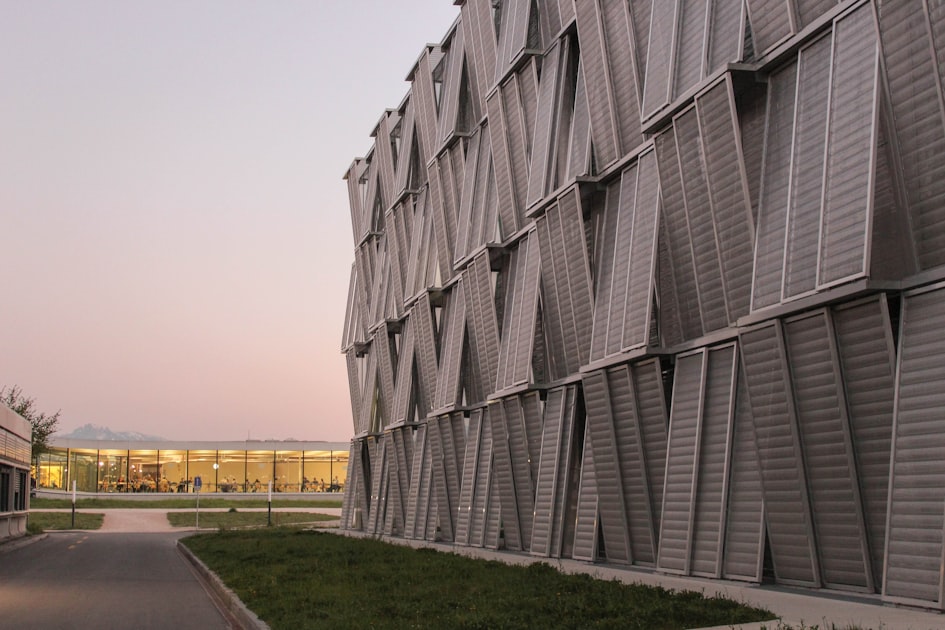
The Swiss Government Excellence Scholarships 2027 (ESKAS) are the most prestigious fully funded research opportunity in Switzerland for international graduates. Yet most...
Swiss Government Excellence Scholarships 2027: ETH, EPFL & All Federal Universities
Last updated: April 2026
The Swiss Government Excellence Scholarships 2027 (ESKAS) are the most prestigious fully funded research opportunity in Switzerland for international graduates. Yet most online guides still reference outdated stipends and old quotas, leaving Arab students in the dark about a major 2026-27 reform. The Swiss Confederation has now raised the monthly research allowance and almost doubled the number of scholarships available worldwide, opening a real window for ambitious applicants from Egypt, Morocco, Saudi Arabia, Jordan, and the wider Arab region.
This guide cuts through the confusion. You will find the new CHF figures, the full list of eligible federal and cantonal universities, the year-long application timeline, and a step-by-step plan for finding a Swiss supervisor before you apply. We pulled every number directly from the State Secretariat for Education, Research and Innovation (SBFI) and cross-checked it against ETH Zurich, EPFL, and FCS bulletins.
Direct answer: Swiss Government Excellence Scholarships 2027 are fully funded research awards offered by the Swiss Confederation through ESKAS, paying CHF 2,450/month for PhD candidates and CHF 3,500/month for postdocs, plus health insurance, a Half-Fare Travel Card, and a one-time CHF 600 housing allowance, with around 500 places open globally for the 2027-2028 cycle.
What Are the Swiss Government Excellence Scholarships?
The Swiss Government Excellence Scholarships 2027 are awarded by the Federal Commission for Scholarships for Foreign Students (FCS) on behalf of the Swiss Confederation. They are administered by SBFI and exist in three main tracks: research scholarships, postdoctoral scholarships, and arts scholarships. All three are designed to attract top young researchers and artists to Switzerland's federal and cantonal universities.
Here is how the program is structured:
- Research Scholarship (PhD or Research Stay) — Open to applicants who already hold a Master's degree and want to do a doctorate or a 12-month research visit at a Swiss university or ETH Domain institute.
- Postdoctoral Scholarship — A 12-month, non-renewable award for early-career researchers who completed a PhD within the last five years.
- Arts Scholarship — Reserved for a smaller number of countries; covers Master's-level study at a recognised Swiss conservatory or art school.
Unlike many European programs, ESKAS is not a tuition-only award. It is a full living-stipend scholarship: tuition at most public Swiss institutions is already low or waived for ESKAS holders, and the monthly allowance is meant to cover housing, food, and basic research costs in Swiss cities such as Zurich, Lausanne, Geneva, and Basel.
The scholarship cannot be combined with another major grant, and you must apply through the Swiss embassy in your home country, not directly to the universities. We will walk through that workflow in detail later in the guide.
Why This Scholarship Matters for Arab Students
For Arab students, the Swiss Government Excellence Scholarships 2027 represent one of the few European awards that combine a top-50 university ecosystem with a stipend large enough to live without a side job. Switzerland hosts two of the world's top-15 universities — ETH Zurich and EPFL — plus 10 cantonal universities and four ETH Domain research institutes (PSI, WSL, Empa, Eawag).
The 2026-27 reform is particularly favourable for the MENA region. The number of awards globally was raised from 281 to roughly 500, and the monthly research stipend was lifted from CHF 1,920 to CHF 2,450 — a 27% increase that finally reflects Swiss living costs. Arab nationalities eligible include Egypt, Morocco, Algeria, Tunisia, Jordan, Lebanon, Palestine, Iraq, Yemen, Sudan, the GCC states, and several others; check the current SBFI list each year because eligibility is updated.
Switzerland is also one of the few countries where you can switch supervisors mid-doctorate, publish in English even at French- or German-speaking universities, and access pan-European research funding through Horizon Europe partnerships. For an Arab student aiming at a future career in academia, biotech, AI, or climate research, ESKAS is a genuine launchpad — not just a study grant.
Full Details and Numbers for 2026-27
The Swiss Government Excellence Scholarships 2027 package is one of the most generous in Europe. Here are the verified figures for the 2026-27 funding cycle (which determines the 2027 intake):
- PhD / Research scholarship stipend: CHF 2,450/month (up from CHF 1,920)
- Postdoctoral stipend: CHF 3,500/month
- Number of scholarships globally: approximately 500 in 2026-27 (up from 281)
- Eligible countries: 180+
- One-time housing allowance: CHF 600 on arrival
- Travel: Half-Fare Travel Card for Swiss public transport
- Insurance: Full Swiss health insurance covered
- PhD duration: 12 months, renewable up to 36 months total
- Postdoc duration: 12 months, non-renewable
- Arts scholarship duration: 9 months
- Application opens: August 2026
- Application deadline: typically between October and December 2026 (varies by country/embassy)
- Selection results: end of May 2027
- Scholarship start: September 2027
To be eligible, you generally need to be under 35 years old, have a Master's degree (or equivalent), and submit a research project that an academic supervisor at a Swiss host institution has agreed to support. The acceptance rate hovers around 5-7% for high-applicant countries, so the supervisor letter is often the decisive factor.
You also need:
- A complete research proposal (typically 5 pages)
- Two academic reference letters
- Proof of language proficiency (English, French, or German depending on host)
- Health certificate (Form D issued by FCS)
- Copy of your diplomas with certified translations
Note that for most Arab countries IELTS is not strictly required — proficiency can be demonstrated through prior English-medium education or an internal letter, but ETH Zurich and EPFL strongly recommend C1 English regardless. If you do not yet have IELTS, see our guide on fully funded scholarships without IELTS for parallel options.
Comprehensive Comparison: All Eligible Swiss Universities
Switzerland has a unique two-tier higher education system. The federal institutes (ETH Zurich and EPFL) are run by the Swiss Confederation and dominate global rankings, while the cantonal universities are run by individual cantons and often specialise in humanities, medicine, or business. ESKAS is valid at all of them.
| University | Type | Location | Main Language | Strong Fields | QS 2025 Rank |
|---|---|---|---|---|---|
| ETH Zurich | Federal | Zurich | English / German | Engineering, CS, Physics, Climate | #7 |
| EPFL | Federal | Lausanne | English / French | AI, Robotics, Energy, Architecture | #26 |
| University of Zurich (UZH) | Cantonal | Zurich | German / English | Medicine, Law, Economics | #91 |
| University of Geneva (UNIGE) | Cantonal | Geneva | French / English | International Relations, Life Sciences | #115 |
| University of Basel (UNIBAS) | Cantonal | Basel | German / English | Pharma, Life Sciences, History | #131 |
| University of Bern (UNIBE) | Cantonal | Bern | German / English | Medicine, Climate, Theology | #138 |
| University of Lausanne (UNIL) | Cantonal | Lausanne | French / English | Biology, Forensics, Public Health | #226 |
| University of Fribourg (UNIFR) | Cantonal | Fribourg | Bilingual FR/DE | Law, Theology, Mathematics | #491 |
| USI (Università della Svizzera italiana) | Cantonal | Lugano | Italian / English | Architecture, Informatics | #340 |
| University of St. Gallen (HSG) | Cantonal | St. Gallen | German / English | Business, Finance, Economics | #437 |
| University of Lucerne | Cantonal | Lucerne | German | Law, Theology, Health Sciences | n/a |
| University of Neuchâtel (UNINE) | Cantonal | Neuchâtel | French | Linguistics, Hydrogeology | n/a |
In addition, four ETH Domain research institutes are eligible hosts: PSI (Paul Scherrer Institute, particle physics), WSL (forest and snow research), Empa (materials science), and Eawag (water sciences). Many ESKAS scholars choose these institutes because of their lower competition and direct industrial collaborations.
For broader university rankings, see Truescho's rankings hub.
Step-by-Step Application Guide
The Swiss Government Excellence Scholarships 2027 application is famously detailed. Treat it as a six-month project, not a one-week task.
- August 2026 — Identify your host and field. Browse the websites of ETH, EPFL, and the cantonal universities. Find 2-3 research groups whose work matches your Master's thesis.
- September 2026 — Email potential supervisors. Send a one-page email with your CV, a 300-word summary of your proposed project, and one of your best papers or projects. Expect a 30% reply rate; do not take silence personally.
- October 2026 — Secure a Letter of Acceptance. Once a supervisor agrees, request a formal letter on university letterhead confirming they will host you under ESKAS. This is mandatory.
- October-November 2026 — Write your research proposal. Aim for 5 pages structured as: background, research questions, methodology, timeline, expected outputs, references.
- November 2026 — Gather supporting documents. Certified diplomas, transcripts, two academic references (the system can auto-email referees), language certificate, passport copy, health Form D.
- November-December 2026 — Submit through the Swiss embassy. Most countries use an online portal (mySwissEducation), but a few still require paper. Confirm the portal link with the embassy in your country.
- January-March 2027 — Embassy and FCS review. Stay reachable; some embassies request short interviews.
- End of May 2027 — Final results announced. Successful candidates receive an official email plus a postal letter.
- June-August 2027 — Visa and housing. Apply for a Swiss D-visa, secure student housing (university residences fill fast), and arrange health insurance.
- September 2027 — Arrival and registration. Pick up the Half-Fare Travel Card and the CHF 600 housing allowance from your university's international office.
If the paperwork feels overwhelming, Truescho's Apply For Me service helps Arab students draft proposals, contact supervisors, and submit ESKAS-compliant files.
Real Stories and Success Cases
Hala, a Moroccan biomedical engineer from Rabat, applied to ESKAS in November 2024 after spending three months emailing labs at EPFL and UNIL. She received two soft refusals and one enthusiastic acceptance from a UNIL group working on cancer immunotherapy. Her research proposal — a 5-page extension of her Master's thesis on tumour microenvironments — was the section the FCS panel commented on most positively. She now lives in Lausanne on the new CHF 2,450 stipend, which she says comfortably covers a shared apartment near the lake plus monthly trips to Geneva.
Yousef, an Egyptian computer scientist, took a different path. He spent his last year of Master's at Cairo University publishing a small workshop paper on federated learning, then cold-emailed an ETH Zurich professor he had cited. After two video calls and a sample chapter, he secured the host letter. His tip: "Do not send generic emails. Reference one specific paper from the lab and propose a concrete extension." Yousef started his ETH PhD in September 2025 — the day before the new stipend rate kicked in.
These stories are typical. The applicants who succeed at ESKAS are not always the highest-GPA candidates; they are the ones who understand that the supervisor relationship is the actual bottleneck, not the embassy paperwork.
Common Mistakes and Expert Tips
Even strong candidates lose ESKAS for predictable reasons. Here are the seven most common pitfalls and how to avoid them:
- Applying without a confirmed host. A research project without a Swiss supervisor letter is automatically disqualified. Get the letter first, write the proposal second.
- Generic supervisor emails. Professors at ETH and EPFL receive 50+ ESKAS-related emails per year. Reference a specific paper, a specific dataset, or a specific gap in their last project.
- Inflated research proposals. A 5-page proposal that promises to cure cancer in 12 months reads as naive. Show humility, scope, and clear deliverables.
- Missing the embassy deadline. Each Swiss embassy has its own internal deadline, often weeks before the FCS one. Confirm dates by phone in October.
- Ignoring language requirements. Even if your host group works in English, ETH and EPFL administrative staff often communicate in German or French. Listing A2 German on your CV is a small but real signal.
- Underestimating reference letters. Choose two referees who actually know your research, not the highest-ranking professor in your faculty. Ask them in person, not by email.
- Forgetting to renew. PhD scholarships are 12-month, renewable up to 36 months. Submit progress reports on time; missing the renewal window forfeits the rest of the funding.
If you want to see all fully funded scholarships in one place, Truescho has a database of thousands of opportunities updated daily — completely free.
Information Gain: How to Find a Swiss Supervisor Before You Apply
This is the section nobody else writes, and it is the make-or-break step.
Where to search
- EPFL People Directory (people.epfl.ch) — filter by lab and keyword.
- ETH Zurich Research Database (research-collection.ethz.ch) — find recent papers, then check the corresponding author.
- SNSF P3 database (p3.snf.ch) — see who is currently funded by the Swiss National Science Foundation; these professors have budget and tend to be active recruiters.
- Cantonal university homepages — each faculty page lists ongoing PhD topics under "Doktorat" or "Doctoral Studies."
What to send
A four-paragraph email:
- One sentence on who you are and your degree.
- One paragraph on your previous research, ideally with one figure or one cited paper.
- One paragraph on your proposed ESKAS project and how it fits the lab.
- One closing sentence asking for a 20-minute video call.
Attach a 1-page CV. Do not attach your full Master's thesis. Send between Tuesday and Thursday, 09:00-11:00 CET.
Half-Fare Card and Housing Allowance Timeline
Two ESKAS perks Arab guides almost never mention: the Half-Fare Travel Card is issued by the university international office in the first week of arrival and gives you 50% off all Swiss trains, buses, and boats for a full year. The CHF 600 one-time housing allowance is paid into your Swiss bank account (you must open one with PostFinance or UBS) usually within 30 days of registration. Use it for the deposit on student housing, which typically equals one month's rent.
Country-Specific Embassy Notes for MENA Applicants
Each Swiss embassy in the MENA region runs its own internal calendar. Cairo typically opens the ESKAS portal in early September and closes in mid-November, with embassy interviews held in late November. Rabat opens slightly later — usually mid-September — with deadline at the end of November. Riyadh and Abu Dhabi run shorter windows targeting October, while Amman and Beirut align closely with the Cairo schedule. Always confirm dates by phone at the start of August; embassy websites are updated late and many candidates miss deadlines they assumed were public. The embassy in your country, not SBFI in Bern, is the gatekeeper for the entire process.
Sample 5-Page Research Proposal Structure
The 5-page research proposal is the make-or-break document. The structure that consistently scores well is: Page 1 — title, abstract (250 words), and three-sentence statement of contribution. Page 2 — background and literature gap (cite 8-12 papers). Page 3 — research questions, hypotheses, and methodology. Page 4 — work plan with a Gantt chart for 12 months and milestones. Page 5 — expected outputs (papers, conference presentations), references, and a brief budget note. Avoid filler. Every paragraph must connect directly to the supervisor's lab — generic proposals fail even when the science is solid.
Frequently Asked Questions
How much is the Swiss Government Excellence Scholarship monthly?
For the 2026-27 cycle, PhD and research scholarship holders receive CHF 2,450 per month, while postdoctoral scholars receive CHF 3,500 per month. The award also includes Swiss health insurance, a Half-Fare Travel Card, and a one-time CHF 600 housing allowance on arrival in Switzerland.
What is the difference between PhD and postdoc ESKAS scholarships?
The PhD/research scholarship lasts 12 months and is renewable up to 36 months total, paying CHF 2,450/month. The postdoctoral scholarship lasts 12 months and is non-renewable, but pays a higher CHF 3,500/month and is reserved for researchers who completed a PhD within the last five years.
Does ESKAS require IELTS?
ESKAS itself does not list a specific IELTS score. However, the Swiss host university often requires C1-level English, French, or German depending on the program. Strong candidates without IELTS can still apply by providing prior English-medium transcripts or an internal language certificate from their home university.
Can bachelor students apply for the Swiss Government Excellence Scholarship?
No. ESKAS is reserved for graduates who already hold a Master's degree (or are about to receive one before the scholarship starts in September 2027). Bachelor-only candidates should look at exchange programs or apply for a Master's first, then ESKAS for their PhD.
When does the Swiss scholarship 2027/2028 application open?
Applications open in August 2026 and close between October and December 2026, depending on your country's Swiss embassy deadline. The scholarship itself begins in September 2027 after results are announced at the end of May 2027.
Which Arab countries are eligible for the Swiss Government Excellence Scholarship?
Eligible Arab countries typically include Egypt, Morocco, Algeria, Tunisia, Jordan, Lebanon, Palestine, Iraq, Yemen, Sudan, and most GCC states (Saudi Arabia, UAE, Qatar, Kuwait, Bahrain, Oman). The official list is updated yearly on sbfi.admin.ch — always confirm before applying.
How many ESKAS scholarships are awarded each year?
For the 2026-27 cycle, approximately 500 scholarships will be awarded globally — a significant increase from 281 in previous cycles. The number is divided across 180+ eligible countries, with a few countries receiving 5-15 places and others sharing a smaller global pool.
Does the Swiss scholarship include flight tickets and health insurance?
Health insurance and a Half-Fare Travel Card for Swiss public transport are fully included. The scholarship does not pay international flight tickets, but the CHF 600 one-time housing allowance and the high monthly stipend allow most students to cover their own travel without financial strain.
Conclusion
The Swiss Government Excellence Scholarships 2027 are entering their most generous cycle yet — higher stipends, more places, and a streamlined application portal. Arab students who start preparing now (supervisor outreach in summer 2026, proposal writing by October) have a real chance against the global competition. Do not wait for the embassy announcement; the supervisor letter is what wins ESKAS.
For more options, see our roundups of funded internships in Europe and tech internships for students, or browse the live Swiss Excellence Scholarship listing on Truescho.
Sources
- State Secretariat for Education, Research and Innovation (SBFI) — official ESKAS page
- Federal Commission for Scholarships for Foreign Students (FCS) — selection committee
- ETH Zurich PhD Programs — federal institute admissions
- EPFL Doctoral Programs — federal institute Lausanne
- QS World University Rankings 2025 — ranking data
Start Your Journey with Truescho
Whether you're searching for a scholarship or planning to study abroad, truescho.com gives you everything. Get Started Free →

mahmoud hussein
Writer at Truescho Blog — We provide trusted content about scholarships, study abroad, and immigration.
Related Articles
HSE University Open Doors Scholarship 2026 for Arab Students
The HSE University Open Doors scholarship 2026 is the simplest gateway for Arab students into a top-tier Russian research university — no IELTS, no application…
HBKU Scholarship Qatar 2026 — Fully Funded, No IELTS
The HBKU scholarship Qatar 2026 is one of the most generous graduate-only scholarships in the Middle East — and one of the few where IELTS can be waived entirely…
Funded PhD Scholarships in Europe and Asia 2026
Complete 2026 guide to funded PhD scholarships in Europe and Asia — DAAD, CSC, GKS, MEXT, Gates Cambridge — with supervisor cold-email templates, Research Proposal guide, and Industrial PhDs.