
Study in Finland for International Students: A Complete Guide to Costs, Admission, Scholarships and Student Life 2026
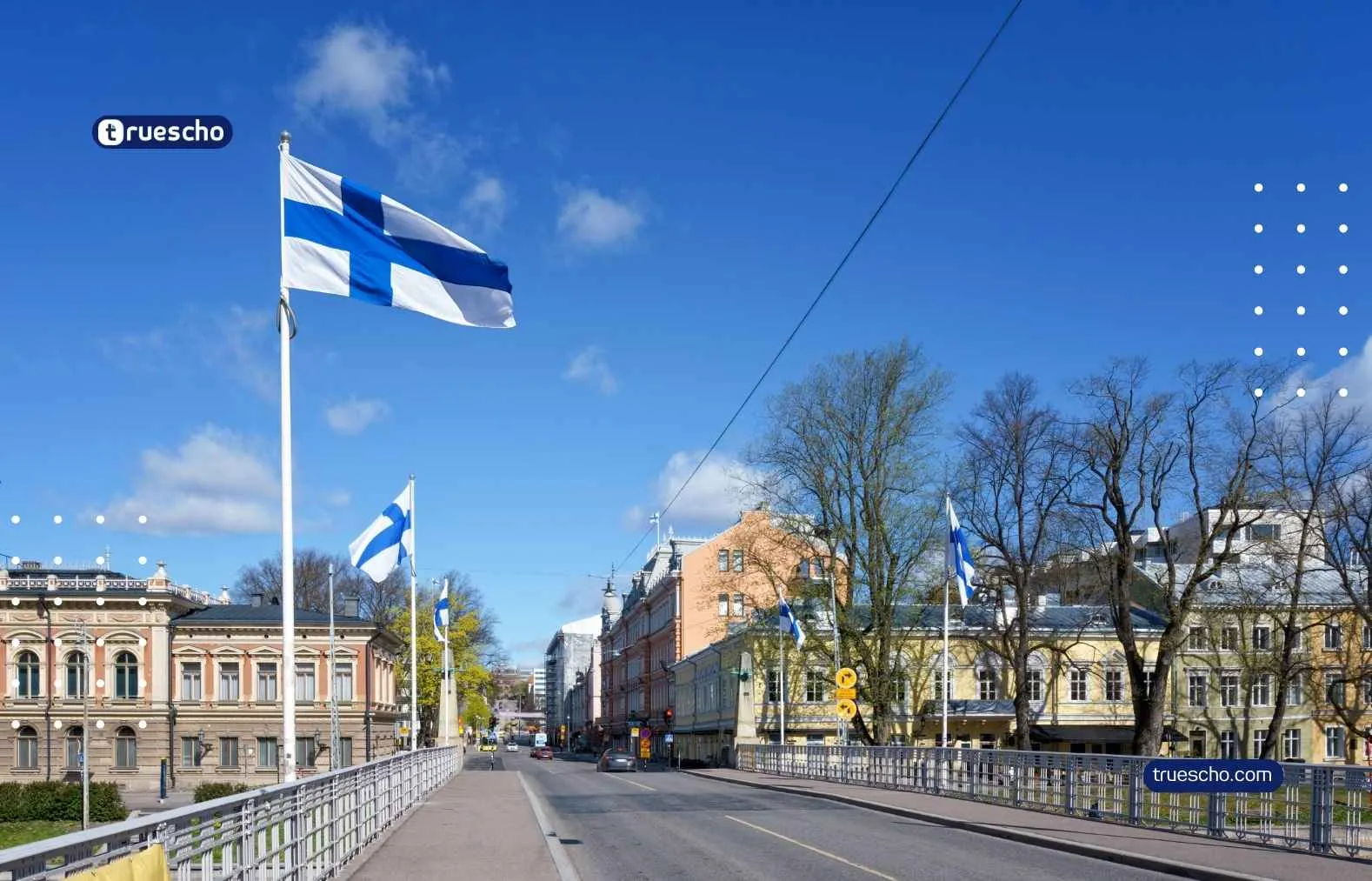
Study in Finland for international students 2026: a complete guide to universities, programmes, tuition fees, living costs, scholarships, admission requirements and student residence permits.
Finland is becoming an increasingly popular study destination for international students. It is not only known for having one of the best education systems in the world, but also for its safety, natural beauty, strong infrastructure, and calm lifestyle.
If you are looking for a country that combines high-quality education, a clean and organized environment, and an open, tolerant society, Finland is definitely worth serious consideration.
In this guide, you will find:
- An overview of higher education in Finland
- The main universities and popular study fields
- Admission requirements for Bachelor’s, Master’s and PhD degrees
- Tuition fees, living costs and available scholarships
- Working during and after your studies
- Step-by-step application process
- Practical tips especially for students from the Arab region
By the end, you should have a clear picture: is Finland a good fit for you, and what are the concrete steps to start your journey?
You can also explore the Study in Switzerland
2. Overview of Higher Education in Finland
Finnish higher education institutions are divided into two main types:
2.1 Universities
These focus on academic education and research. They offer Bachelor’s, Master’s and Doctoral programmes in fields such as:
- Natural sciences
- Engineering and technology
- Medicine and health sciences
- Social sciences
- Education
- Law and humanities
2.2 Universities of Applied Sciences (UAS / Polytechnics)
These institutions are more practice-oriented and closely linked to the labour market. They combine theoretical studies with:
- Practical training
- Internships
- Real-life projects with companies
Finland has several internationally recognized universities, including:
- University of Helsinki
- Aalto University
- Tampere University
- University of Oulu
- University of Jyväskylä
- LUT University
Many of these institutions rank well globally and maintain strong research outputs and industry partnerships.
3. Main Advantages of Studying in Finland
3.1 High-Quality Education and Student-Centered Learning
The Finnish education system is often highlighted as one of the best in the world. At university level, you will notice:
- Focus on understanding and critical thinking rather than memorization
- Modern teaching methods that encourage group work, projects and independent study
- Close and relatively informal relationships between students and professors
3.2 Safe and Well-Organized Country
Finland is consistently ranked among the safest countries worldwide. Crime rates are low, public services are efficient and cities are clean and well-organized. This gives international students a strong sense of security and stability.
3.3 Beautiful Nature and Balanced Lifestyle
Finland is famous for:
- Lakes, forests and clean air
- Snowy winters and beautiful summers
- The aurora borealis (Northern Lights) in northern regions
People value work–life balance, and outdoor activities like skiing, hiking, cycling and swimming are part of daily life.
3.4 International and Tolerant Environment
In major student cities such as Helsinki, Tampere, Turku and Oulu, you will meet students from many parts of the world. Universities support international students through:
- Orientation weeks
- Student tutors
- International student associations and clubs
4. Top Universities and Popular Fields of Study
Some of the most notable universities that welcome international students are:
- University of Helsinki – Strong in natural sciences, medicine, law, social sciences and humanities.
- Aalto University – Highly regarded in engineering and technology, business and economics, as well as arts, design and architecture.
- Tampere University – Multidisciplinary, combining technology, health and society, with many English-taught Master’s programmes.
- University of Oulu – Known for engineering, information technology and natural sciences.
- University of Jyväskylä – Strong in education, psychology, sports sciences, information systems and business.
- LUT University – Focused on technology, energy, sustainability and business.
Besides these research universities, there are many Universities of Applied Sciences offering practical programmes in:
- Engineering and technology
- Business and administration
- Health care and nursing
- Social services
- Tourism and hospitality
You can also explore the Study in South Korea
5. Study Fields for International Students
For students coming from the Arab world and other regions, some of the most commonly chosen English-taught fields include:
5.1 Engineering and Technology
- Electrical Engineering
- Mechanical Engineering
- Civil Engineering
- Environmental Engineering
- Telecommunications
- Energy Engineering
- Industrial Engineering
5.2 Computer Science and IT
- Computer Science
- Software Engineering
- Data Science
- Artificial Intelligence and Machine Learning
- Cybersecurity
- Information Technology
5.3 Business and Economics
- International Business
- Business Administration
- Marketing
- Finance
- Supply Chain Management
- Entrepreneurship
5.4 Natural Sciences
- Physics
- Chemistry
- Biology
- Environmental Science
- Geosciences
5.5 Social Sciences and Humanities
- Political Science
- International Relations
- Education
- Psychology
- Media and Communication
- Sociology
5.6 Health and Nursing (Mainly at UAS)
- Nursing
- Public Health
- Physiotherapy and related applied health programmes
Each university publishes an updated list of its English-taught programmes every year, so always check the latest information on official websites or national portals.
6. Language of Instruction and Finnish Language Courses
6.1 Studying in English
Most international students study in English, especially at:
- Master’s level – many programmes are fully taught in English
- A growing number of Bachelor’s programmes at both universities and UAS institutions
Programmes clearly state their English language requirements (e.g. minimum IELTS or TOEFL scores, or other accepted proofs).
6.2 Learning Finnish and Integration
You can complete your degree entirely in English, but learning basic Finnish can:
- Improve your daily life and communication
- Increase your chances of finding part-time and full-time jobs
- Help you integrate better into Finnish society
Most universities offer Finnish language courses for international students, often starting from beginner level and sometimes free of charge.
7. Admission Requirements
7.1 Bachelor’s Programmes
Typical requirements for Bachelor’s studies include:
- A secondary school certificate equivalent to Finnish upper secondary education
- A satisfactory overall grade or GPA (varies by programme and university)
- Proof of English proficiency (e.g. IELTS, TOEFL or equivalent)
- In some cases, entrance examinations, online tests or interviews
Some programmes rely on joint entrance exams, while others focus more on school grades and language certificates.
7.2 Master’s Programmes
Master’s programmes (usually 2 years) generally require:
- A relevant Bachelor’s degree in a related field
- A good academic record
- English language proficiency (for example, IELTS 6.5 or 7.0, depending on the programme)
- A CV/resume summarizing your education and experience
- A motivation letter explaining why you chose the programme and your future goals
- Sometimes, recommendation letters from professors or employers
- In certain programmes (e.g. business, applied fields), relevant work experience
7.3 Doctoral (PhD) Studies
Doctoral programmes in Finland are research-oriented and usually do not charge tuition fees. They typically require:
- A Master’s degree in a relevant discipline
- A clear research interest or proposal
- A supervisor or research group willing to host your project
- Evidence of research potential (thesis, publications, strong references)
- Funding through a scholarship, research project, or employment contract
You can also explore the Study in Australia
8. Tuition Fees in Finland
Since 2017, non-EU/EEA students in English-taught Bachelor’s and Master’s programmes must pay tuition fees.
- Typical fees: around 8,000–20,000 EUR per academic year, depending on the programme and institution.
- EU/EEA students are usually exempt from tuition fees for most regular degree programmes.
- Doctoral programmes generally do not charge tuition fees for any nationality, and many PhD students receive a salary or scholarship.
Always confirm the exact fee on the official programme page.
9. Scholarships and Tuition Waivers
9.1 University Scholarships
Most Finnish universities offer scholarship schemes for non-EU/EEA students, often in the form of:
- Full tuition waivers (100%)
- Partial waivers (for example 50%, 75% or other discounts)
Scholarship decisions are based on:
- Academic performance and grades
- Quality of the motivation letter
- Overall strength of your application
- Sometimes interviews or additional tasks
Usually, you apply for the scholarship at the same time as you apply for the programme.
9.2 Other Funding Options
You may also find:
- Scholarships linked to specific research projects or departments
- External funding from foundations, NGOs or governments
Competition is strong, so it is smart to apply to more than one university and scholarship when possible.
10. Cost of Living in Finland
Finland is not a low-cost country, but with good planning it is manageable.
10.1 Monthly Living Costs
Average monthly expenses for a student:
- Around 900–1,200 EUR per month in many cities
- Slightly higher in Helsinki and metropolitan areas
This usually covers:
- Accommodation
- Food and groceries
- Local transportation
- Internet and phone
- Personal expenses (clothes, leisure, books, etc.)
10.2 Financial Requirements for Residence Permit
To obtain a student residence permit, you must prove that you have enough funds to live in Finland. The guideline is:
- At least 800 EUR per month
- Equivalent to 9,600 EUR per year
You can prove this with:
- Bank statements
- Scholarship or grant decisions that clearly cover living costs
You also need to show how you will pay tuition fees if they are not covered by a scholarship.
10.3 Typical Expense Breakdown (per month)
- Student housing (shared): 300–500 EUR
- Food and groceries: 200–300 EUR
- Local transport: 40–60 EUR (with student discounts)
- Internet and mobile: 20–40 EUR
- Other expenses: 100–200 EUR
Living in a smaller city, sharing accommodation and cooking at home can reduce your budget significantly.
11. Working During and After Your Studies
11.1 Part-Time Work While Studying
With a student residence permit, you are allowed to work part-time within certain limits. At the time of writing:
- You may work up to an average of 30 hours per week over the year.
- In some periods (e.g. holidays) you can work more if the yearly average stays within the limit.
Important notes:
- Part-time work will help, but usually won’t cover all expenses.
- Job opportunities are better if you have basic Finnish skills, especially outside international companies or the tech sector.
11.2 Staying and Working After Graduation
After graduation, you can apply for a residence permit to search for a job or start a business. If you find suitable employment, you can then switch to a work-based residence permit.
Graduates in IT, engineering and some business areas have good opportunities, especially if they combine strong English with some Finnish.
You can also explore the Study in Spain
12. Application Process: Step-by-Step
12.1 Choose Field and Institutions
- Define your field of interest (e.g. Data Science, Mechanical Engineering, International Business).
- Search for English-taught programmes in that field at Finnish universities and UAS institutions.
- Compare: content, duration, tuition fees, scholarships, and city.
12.2 Check Admission Requirements
Read each programme’s page carefully:
- Required previous degrees and fields
- Minimum grades or GPA
- Language test scores
- Additional requirements: portfolio, motivation letter, recommendations, entrance exam, etc.
Take note of all deadlines and plan backwards.
12.3 Prepare Documents
Common required documents:
- Passport
- High school certificate (for Bachelor’s) or university degree (for Master’s/PhD)
- Official transcripts (translated by a certified translator if needed)
- English language test results
- CV/resume
- Motivation letter / statement of purpose
- Recommendation letters (if required)
- Portfolio or samples for arts/design programmes
12.4 Submit Online Application
Most programmes use online application systems. There you will:
- Create an account
- Fill in your details
- Upload scanned documents
- Pay any application fees if applicable
Make sure all uploads are clear and complete.
12.5 Evaluation and Admission Decision
After submission, the institution will review your application. You may be invited to:
- Online interview
- Entrance exam or additional tasks
Then you will receive:
- A conditional offer
- A final offer
- Or a rejection (in which case you can apply elsewhere or in the next round)
12.6 Apply for Residence Permit
Once accepted:
- Apply for a student residence permit
- Provide: admission letter, passport, financial proof, health insurance, tuition payment/scholarship proof
- Visit a Finnish mission / visa center to give biometrics and show original documents
12.7 Prepare for Arrival
Before travelling:
- Apply early for student accommodation
- Book your flight after residence permit approval
- Organize documents and keep them with you
- Get mentally ready for a new culture, climate and academic system
13. Student Life in Finland
13.1 Accommodation
Most students live in:
- Student housing managed by local housing foundations
- Shared apartments with other students
These options are cheaper than private rentals and usually well connected to campuses.
13.2 Climate and Seasons
Finland has a northern climate:
- Long, cold winters with snow and short daylight hours
- Short but beautiful summers with long days and even midnight sun in some regions
Proper winter clothing and a positive attitude are essential to adapt.
13.3 Culture and Social Life
Finnish people may seem quiet or shy at first, but they are generally:
- Kind
- Honest
- Respectful
Universities offer many clubs and associations (sports, culture, hobbies, academic fields). Joining them is a great way to build friendships and feel at home.
14. Special Tips for Students from the Arab World
- Strengthen your English early Academic reading and writing in English are essential; start preparing before you arrive.
- Prepare for winter seriously Invest in a good coat, boots, gloves and hat. Learn how to walk safely on ice and snow.
- Learn basic Finnish Even simple greetings and phrases will help you integrate and improve job chances.
- Plan your finances carefully Combine tuition, living costs and emergency funds. Be realistic about what you can afford.
- Apply for multiple scholarships Do not rely on just one scholarship; apply widely and write strong, personalised motivation letters.
- Use your student years wisely Join projects, internships, research and student organizations to build your CV and your network.
- Take care of mental health Stay in touch with family, build a support circle locally, and use university counseling services when needed.
You can also explore the Study in the Netherlands
15. Frequently Asked Questions (FAQ)
Is it possible to study in Finland for free? For non-EU/EEA students, Bachelor’s and Master’s programmes usually have tuition fees. However, if you receive a full tuition waiver and manage your living costs carefully, your studies can be almost tuition-free. At PhD level, tuition fees are typically not charged and funded positions are common.
Do scholarships cover living costs? Most university scholarships cover tuition only. Some may include an allowance, but this is not guaranteed. Plan to cover at least part of your living costs through savings, family support or part-time work.
Can I bring my family with me? It is possible, but you must show higher financial resources to support your spouse and children. Many students prefer to start alone and consider family reunification later.
How good are job prospects after graduation? Job prospects depend on your field, language skills and networking. Graduates in IT, engineering and some business fields with English plus some Finnish usually have good chances.
16. Conclusion: Is Finland the Right Choice for You?
Finland offers a powerful combination of:
- High-quality, modern higher education
- Safe, clean and well-organized cities
- Strong research and technology sectors
- Beautiful nature and a balanced lifestyle
At the same time, you need to be ready for:
- Tuition fees (unless covered by a scholarship)
- Relatively high living costs
- A cold, dark winter season
- The need to learn some Finnish for long-term employment
If you are willing to prepare well, work hard academically and actively integrate into local life, studying in Finland can be a life-changing experience and a strong investment in your future.
17. Official Sources and Useful Links
- Official Study in Finland portal – information about universities, programmes, scholarships and student life https://www.studyinfinland.fi
- Studyinfo – official Finnish portal for searching programmes and applying to universities and universities of applied sciences https://studyinfo.fi
- Finnish Immigration Service (Migri) – information on residence permits and financial requirements for international students https://migri.fi
Scholarships Expert
Writer at Truescho Blog — We provide trusted content about scholarships, study abroad, and immigration.