
Online Courses Catalog
Explore thousands of online courses from MIT, Harvard, Princeton and more — free and paid, self-paced or instructor-led.
25,649 courses available
25,649 results — page 158 of 1069

Fintech: IoT and APIs in the Financial Industry
The University of Texas at Austin
This course provides an in-dept review of the technology of payments, API, open banking, insurtech and Internet-of-Things in finance.
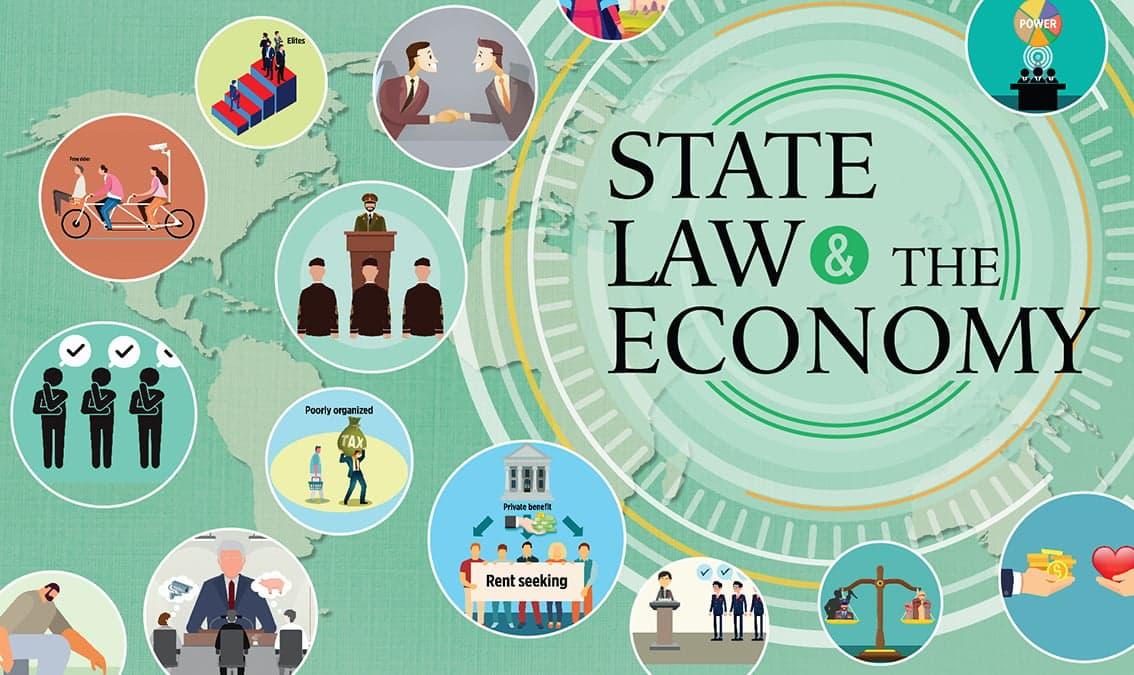
State, Law and the Economy II
The University of Hong Kong
Part II of this course provides an in-depth exploration of the political and economic factors that influence power dynamics, governance, and growth across various political systems. Spanning four weeks, students will gain a comprehensive understanding of authoritarian rule, one-party governance, and their economic consequences, the implications of rent-seeking behavior and the factors that contribute to the rise and decline of nations. By the end of this course, students will be equipped with...

VITARA:Thèmes spécifiques de la gestion des réformes : gérer un programme de réformes
The International Monetary Fund
La Formation virtuelle pour une meilleure gestion des recettes fiscales (en anglais, Virtual Training to Advance Revenue Administration, ou VITARA) est le résultat d’une initiative conjointe entreprise par quatre organisations internationales : le Centre interaméricain des administrations fiscales (CIAT), l’Organisation intra-européenne des administrations fiscales (IOTA), le Fonds monétaire international (FMI) et l’Organisation de coopération et de développement économiques (OCDE). Le module...

VITARA - Reform Management Specific Topics: Managing A Reform Program
The International Monetary Fund
Virtual Training to Advance Revenue Administration (VITARA) is a joint initiative of four international organisations: the Inter-American Center of Tax Administrations (CIAT), the Intra-European Organisation of Tax Administrations (IOTA), the International Monetary Fund (IMF) and the Organisation for Economic Co-operation and Development (OECD). VITARA Reform Management Specific Topics: Managing a Reform Program introduces tools and methods in planning, monitoring and reporting tax administr...

VITARA - Reform Management Fundamentals: Setting up a Reform Program
The International Monetary Fund
Virtual Training to Advance Revenue Administration (VITARA) is a joint initiative of four international organisations: the Inter-American Center of Tax Administrations (CIAT), the Intra-European Organisation of Tax Administrations (IOTA), the International Monetary Fund (IMF) and the Organisation for Economic Co-operation and Development (OECD). VITARA Reform Management Fundamentals: Setting Up A Reform Program explains key concepts of reform management, the process of developing a reform pr...

VITARA - Principes de base de la gestion des réformes : établir un programme de réformes
The International Monetary Fund
La Formation virtuelle pour une meilleure gestion des recettes fiscales (en anglais, Virtual Training to Advance Revenue Administration, ou VITARA) est le résultat d’une initiative conjointe entreprise par quatre organisations internationales : le Centre interaméricain des administrations fiscales (CIAT), l’Organisation intra-européenne des administrations fiscales (IOTA), le Fonds monétaire international (FMI) et l’Organisation de coopération et de développement économiques (OCDE). Le module...

Virtual Training to Advance Revenue Administration (VITARA) - Organization
The International Monetary Fund
This course helps build knowledge and understanding of critical features in the organizational design of tax administrations.

VITARA - Institutional Governance
The International Monetary Fund
This course introduces the internal and external governance frameworks for tax administrations. It covers topics such as the principles of accountability and transparency, governance safeguards, external oversight, internal controls, governance responsibilities for senior leaders in a tax administration as well as organizational considerations in the development and implementation of the governance framework.

VITARA - Human Resource Management
The International Monetary Fund
This course provides fundamental knowledge on Human Resource Management matters within a tax administration including among others HRM strategy and its implementation, HRM organizational models, HRM functions and the key areas of an effective HRM system.

VITARA - Compliance Risk Management
The International Monetary Fund
This self-paced course provides fundamental knowledge on modern Compliance Risk Management (CRM) good practices. The strategic goal of CRM is to steadily increase the level of voluntary compliance over time by identifying and prioritizing risks and implementing treatments to address the risks. In this module, you will learn how adopting a systematic approach to CRM supports tax administrations to deliver this core function and achieve their overall goals successfully.

Modelo de estimación de la brecha tributaria de IVA del RA-GAP
The International Monetary Fund
Aprenda a usar el modelo de estimación de la brecha tributaria de IVA que utiliza el Fondo Monetario Internacional.

Virtual Training to Advance Revenue Administration - Strategic Management
The International Monetary Fund
If you are a tax administrator looking to develop your skills or simply catch up on the latest in tax administration, enroll this first module of the VITARAx Courses! Get to know the strategic management and its techniques, tools, and procedures, and the guidelines for strategic management implementation, regardless of the size or composition of your tax administration.

Viabilité et gestion de la dette des pays à faible revenu
The International Monetary Fund
Quels sont les outils pour évaluer la viabilité de la dette ? Comment les pays pourraient-ils gérer efficacement leurs dettes souveraines ? Pour répondre à ces questions, ce cours combine la théorie avec des exercices pratiques.

Cuentas nacionales trimestrales e Indicadores económicos de alta frecuencia
The International Monetary Fund
Aprenda a compilar cuentas nacionales trimestrales (CNT) de alta calidad y oportunas, así como indicadores de alta frecuencia de actividad económica (IAFAE).

RA-GAP VAT Gap Estimation Model
The International Monetary Fund
Learn how to use the VAT gap estimation model used by the International Monetary Fund
Public Sector Debt Statistics
The International Monetary Fund
The course examines coverage and accounting rules for public sector debt, valuation, classification, important methodological issues, and the sources and methods used for compiling the statistics.

Quarterly National Accounts and High-Frequency Indicators of Economic Activity
The International Monetary Fund
Learn how to compile timely and high-quality Quarterly National Accounts (QNA) and High-Frequency Indicators of Economic Activity (HFIEAs).

Public Debt, Investment, and Growth: The DIG and DIGNAR Models
The International Monetary Fund
This online course, presented by the Institute for Capacity Development and the Research Department, explains how to analyze the relation between public investment, growth, and public debt dynamics, using two dynamic structural models: the Debt, Investment, and Growth (DIG) model and the Debt, Investment, Growth and Natural Resources (DIGNAR) model. The course presents and discusses the key pieces of these models (the investment-growth nexus, the fiscal adjustment, and the private sector resp...

Public Debt Dynamics under Uncertainty
The International Monetary Fund
This online course, presented jointly by the Institute for Capacity Development and the Fiscal Affairs Department, provides an overview of how to assess public debt dynamics under uncertainty. That is, the course discusses how to think about public debt projections when we acknowledge uncertainty about the key variables that underly debt projections (GDP growth, interest and exchange rates, and primary balances).

Pronóstico y Análisis de los Ingresos Públicos (RFAx)
The International Monetary Fund
Presentado por el Departamento de Finanzas Públicas del FMI, este curso ofrece aprendizaje práctico que ayudará a los estudiantes a desarrollar conocimiento básico sobre los distintos modelos y técnicas cuantitativos que pueden utilizarse para pronosticar ingresos públicos y llevar a cabo análisis de políticas tributarias, mientras exploran asuntos relacionados, tales como las características de un buen marco institucional y los principios clave de la legislación tributaria.

Programmation et Politiques Financières, Première Partie: Analyse des Comptes Macroéconomiques
The International Monetary Fund
Un cours sur les comptes macroéconomiques, leurs interrelations, et l’analyse des événements économiques.

Programmation et politiques financières, deuxième partie : conception d’un programme
The International Monetary Fund
Apprendre comment établir des prévisions pour les comptes des principaux secteurs de l’économie et élaborer un programme financier pour un pays faisant l’objet d’une étude de cas.

Programación y políticas financieras, Parte 2: Diseño de programas (FPP.2x)
The International Monetary Fund
Aprenda a realizar pronósticos de cuentas macroeconómicas y a diseñar un programa económico para un estudio de caso de país.

Marco de Sostenibilidad de la Deuda para los Países de Bajo Ingreso (MSD PBIx)
The International Monetary Fund
Este curso en línea, presentado en conjunto por el Instituto de Capacitación del FMI, el Departamento de Estrategia, Políticas y Evaluación y el Banco Mundial, ofrece un resumen general del Marco de sostenibilidad de la deuda para los países de bajo ingreso (MSD PBI o LIC DSF, por su sigla en inglés) del Banco Mundial y el Fondo Monetario Internacional.